

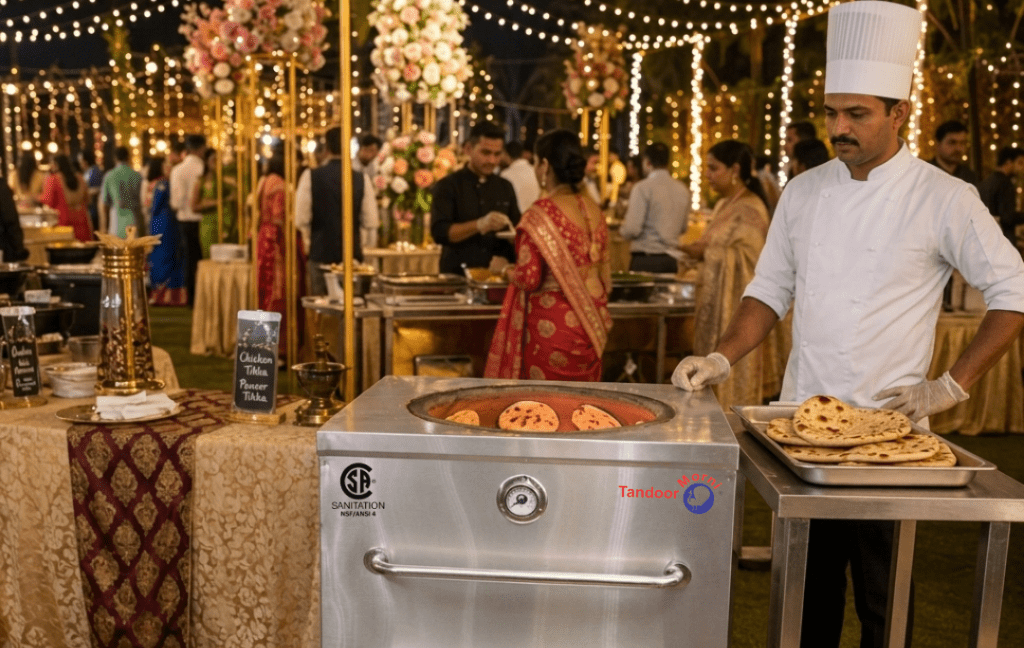
In 1992, when no one was doing the job properly, Bitu, a Canadian entrepreneur, began to make clay ovens for Indian restaurants. Thirty-three years later the market he established has evolved into one of the fastest growing in North American food service. This is what that kind of long-term business conviction looks like.
There is a pattern among founders who build enduring businesses: they choose markets that the mainstream ignores, develop the expertise to serve those markets properly, and then wait — sometimes for decades — for the rest of the world to catch up. Mr. Bitu, the founder of Tandoor Morni, fits this pattern precisely.
In 1992, Bitu identified a problem that Indian and Middle Eastern restaurant operators across North America were navigating in silence: they needed certified commercial tandoor ovens — the clay cylinder at the heart of authentic Indian cuisine — and there was essentially no reliable source for certified equipment in the US or Canada. The tandoor ovens available were built to South Asian cooking specifications, not North American regulatory ones. They worked as cooking appliances. They did not work as certified commercial kitchen equipment.
Bitu built the company to solve that problem. Tandoor Morni, headquartered in Tampa, Florida, is now the only manufacturer in North America with tandoor ovens certified to both NSF/ANSI 4 — the standard governing commercial food preparation equipment in the US — and CSA Z83.11, the Canadian standard for gas appliances in commercial kitchens. That dual certification took years of investment and independent testing. It is not something a competitor can replicate quickly. And it is becoming more commercially significant every year.
The Certification Investment No One Else Made
Certification is unglamorous. It costs money. It requires submitting equipment to independent testing laboratories, producing detailed technical documentation, and maintaining compliance over time. For a small manufacturer serving a niche market in the early 1990s, the business case for pursuing both NSF/ANSI 4 and CSA Z83.11 was not obvious. The certification holds no value in South Asia — most tandoor oven manufacturers have never needed it. For North American commercial kitchen operators, it is not optional.
Commercial kitchens in the US and Canada are regulated environments. Every gas appliance installed in a commercial food service environment must meet certification standards before health departments and fire marshals will approve a kitchen permit. An uncertified gas appliance — including an uncertified tandoor oven — can block a permit application regardless of how good the cooking is. Tandoor Morni’s certified equipment eliminates that barrier at the point of procurement.
What makes this particularly significant for restaurant operators is the timing. A permit denial because of non-compliant equipment typically happens after a restaurant has already signed a lease, fit out the kitchen, and invested in staff. Discovering the compliance issue at that stage means replacing equipment under time and budget pressure — a scenario that genuinely disrupts openings and sometimes kills them entirely. Operators who source Tandoor Morni’s certified commercial range before opening sidestep this scenario completely. The certification paperwork exists. The inspector has a reference standard. The process moves forward.
This is a straightforward competitive advantage, but it took thirty years of consistent investment to create it. The company made the certification decision early, maintained it through changing standards, and now operates the only certified commercial tandoor product range in North America. When a restaurant operator in Houston or Toronto sources their commercial kitchen equipment and needs a certified tandoor oven, the choice is effectively made for them.
The Market That Finally Grew Into the Product
It is estimated that the North American halal food market was valued at USD 100.11 billion in 2024 and will grow to USD 226 billion by 2033. That trajectory — driven by a growing South Asian diaspora, expanding Muslim communities, and mainstream consumer interest in halal and Indian food — has created the restaurant sector demand that Tandoor Morni was positioned for before anyone was paying attention.
When Bitu started the company in 1992, there were far fewer Indian and Middle Eastern restaurants in North American cities. The communities that needed certified tandoor equipment existed, but the regulatory pressure to source certified equipment was lighter and more variable. Over thirty years, as the restaurant sector grew and inspection standards tightened, the market moved toward Tandoor Morni’s position rather than away from it.
The growth of the halal restaurant segment also brought a secondary effect: larger institutional buyers. Hotel kitchen procurement teams, stadium catering operations, and franchise restaurant groups — categories that barely existed as tandoor oven customers in 1992 — are now active purchasers. These buyers have stricter equipment compliance requirements than individual restaurant operators, and they source from manufacturers who can produce certification documentation without delay. Tandoor Morni’s thirty-year head start on that documentation is exactly what this buyer category requires. The company did not change its approach to serve institutional buyers; the institutional buyers moved to a position where Tandoor Morni’s approach was the prerequisite.
Today the company operates nine showrooms across the US and Canada — Tampa, FL; Edison, NJ; Houston, TX; Elk Grove Village, IL; Algona, WA; Boulder, CO; Manteca, CA; Washington, DC; and Mississauga, ON — serving a customer base that ranges from single-location Indian restaurant operators to hotel kitchen buyers and food truck operators. Every commercial tandoor in its range carries the NSF/ANSI 4 certification required for US commercial kitchens, with the T-Series additionally certified to CSA Z83.11 for Canadian operations. The product range has expanded to cover commercial, catering, and residential applications. The certification foundation has not changed because it doesn’t need to.
Building a Distribution Network Before It Was Fashionable
Nine physical showrooms across North America is a significant investment for a manufacturer in what is still a specialist market. Most comparable manufacturers in adjacent commercial kitchen equipment categories would operate through distributor networks rather than owned showrooms. Tandoor Morni’s decision to build a showroom network reflects a specific understanding of how commercial kitchen equipment purchases work.
Restaurant operators making a significant equipment purchase — and a commercial tandoor oven represents a meaningful capital outlay — want to see the equipment before committing. They want to talk to someone who knows the product, understands the certification requirements, and can advise on installation, gas supply, and ventilation. The showroom network provides this in nine major cities, making Tandoor Morni accessible to the restaurant operators in those markets at the point of decision.
The CH04, for instance, is the company’s mid-size commercial gas tandoor. Running on both natural gas and propane, it carries NSF/ANSI 4 certification and is designed for Indian, Pakistani, and Middle Eastern restaurants requiring sustained high-volume service. A restaurant operator evaluating the natural gas tandoor oven can see it in operation at a showroom, understand the installation requirements, and make the purchase with confidence rather than ordering from a catalogue and hoping for the best.
What Thirty Years of Market Patience Looks Like
From a business strategy perspective, what Tandoor Morni represents is a study in patient market development. The company identified a real need, invested in the credentials required to serve it properly, built the distribution infrastructure to reach its customers, and maintained that position through three decades of gradual market growth.
The payoff is a market position that is genuinely difficult to replicate. Certification cannot be purchased quickly. Showroom networks cannot be built overnight. Thirty years of customer relationships in the South Asian and Middle Eastern restaurant community are not a resource a new entrant can assemble in a product cycle. Tandoor Morni has all three, and the market it serves is growing at nearly 10% per year.
Businesses built on proprietary certification, established distribution, and long-term customer trust in specialist markets tend to be more durable than those built on technology or trend. The tandoor oven is no fad. It is a cooking technology that has been used for 5,000 years and is able to produce food that will not be replicated by any other appliance. The certification that makes it commercially viable in North America took decades to establish. The combination is not something that gets disrupted by the next product cycle.
There is also an underappreciated element of brand equity in longevity itself. When an Indian restaurant operator is sourcing a commercial tandoor oven and discovers that one manufacturer has been building certified equipment in North America since 1992 — before most of the current restaurant operators in the sector were running their first kitchen — the tenure communicates something that no marketing claim can replicate. It communicates that the company has seen equipment fail, understood why, fixed it, and kept customers cooking for over three decades. In a market where equipment reliability directly determines whether a restaurant opens on time and passes inspection, that history is its own form of certification.
That is the kind of business Mr. Bitu built in 1992. The market spent thirty years growing into it. From a strategic standpoint, that is exactly the right order of operations.
