

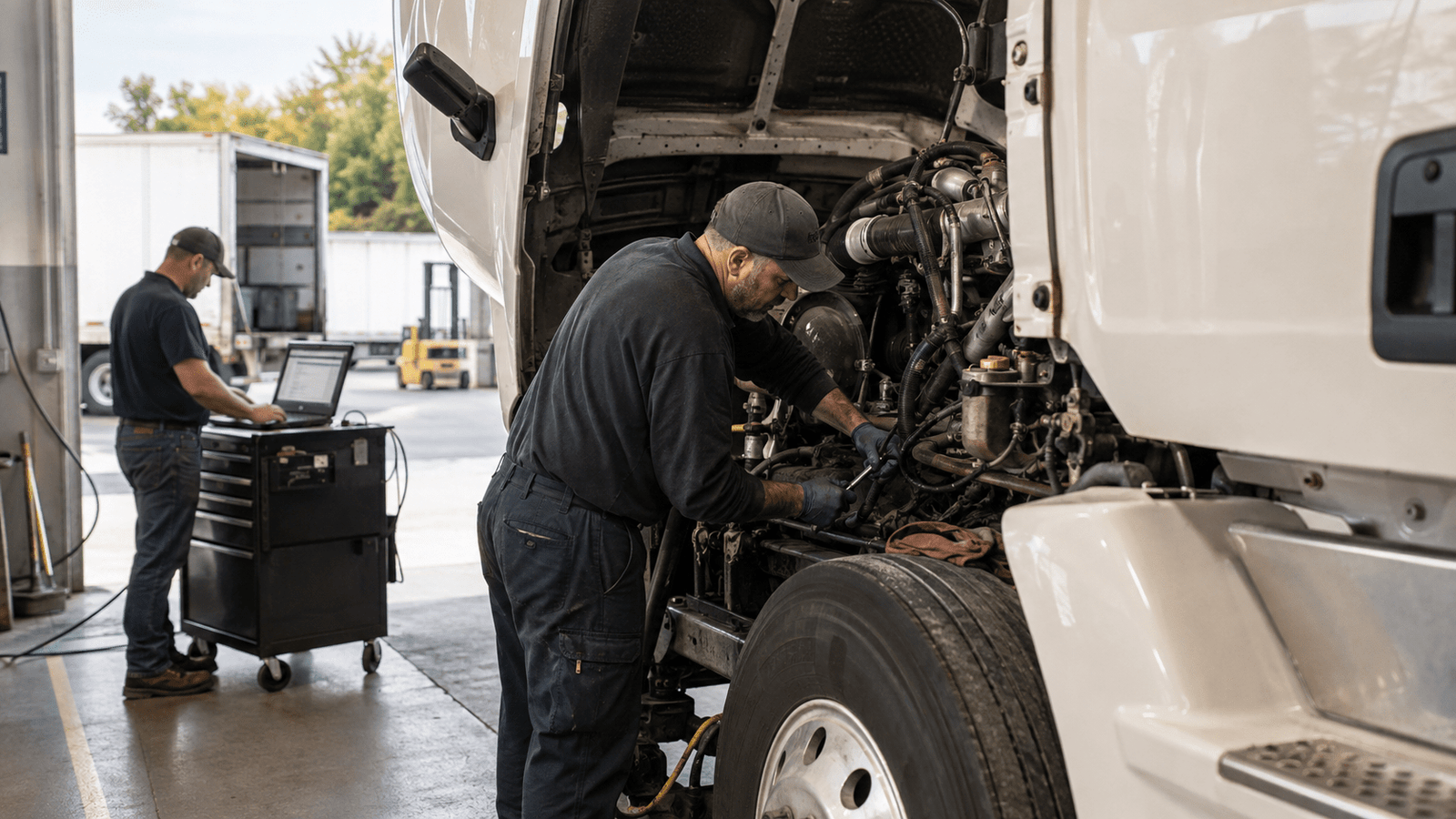
For companies that depend on commercial vehicles, fleet expenses have traditionally been treated as an operating necessity. Trucks are purchased or leased, fuel bills are monitored, repairs are approved, and insurance premiums are paid. As long as vehicles remain productive and transportation costs stay reasonably close to budget, leadership may assume the fleet is performing as expected.
That approach is becoming increasingly difficult to justify.
Rising operating costs, expensive equipment, longer vehicle lifecycles and pressure to improve margins are forcing businesses to examine what their vehicles actually cost over their entire working lives. That is turning total cost of ownership, or TCO, from a fleet-management calculation into an increasingly important business metric.
Purchase Price Tells Only Part of the Story
The most visible fleet expense is the vehicle itself. It is also one of the easiest costs to measure.
A company knows what it paid for a truck, the financing terms and approximately how long it expects to keep the asset. What becomes harder to see are the expenses accumulating after the vehicle enters service.
Fuel, scheduled maintenance, unscheduled repairs, tires, insurance, permits, financing costs and depreciation all contribute to ownership cost. Less obvious expenses can be equally important.
A vehicle that is unavailable because of a breakdown may still have a driver on the payroll. Deliveries may need to be reassigned. Customers may experience delays. Dispatchers and managers spend time reorganizing schedules. A replacement vehicle may need to be rented.
None of those expenses changes the original purchase price, but all of them change the economics of owning the vehicle.
This is why businesses increasingly need to evaluate vehicles as productive assets rather than simply capital purchases.
TCO Connects Operations With Financial Performance
Total cost of ownership creates a common framework for expenses that otherwise appear in different parts of a company’s financial records.
A maintenance department may focus on repair spending. Procurement may concentrate on acquisition costs. Operations may track utilization and downtime. Finance may monitor depreciation and cash flow.
Each department can make a reasonable decision based on its own numbers while still producing a poor outcome for the business overall.
For example, keeping an older truck for another year may appear financially responsible because it avoids purchasing a replacement. But if that truck experiences increasingly expensive repairs, consumes more fuel and spends more time unavailable for work, the apparent savings can disappear.
Conversely, replacing vehicles too aggressively can increase capital costs and prevent a business from capturing the full productive value of assets that still have years of economical service remaining.
TCO gives management a way to evaluate both decisions using the same financial lens.
Businesses looking to build this broader view can start with a detailed fleet total cost of ownership framework that incorporates acquisition, operating expenses, maintenance, depreciation and other lifecycle costs rather than evaluating individual expenses in isolation.
Downtime Is a Business Cost
One of the biggest weaknesses in traditional fleet budgeting is the treatment of downtime.
Repair invoices are easy to record. Lost productivity is not.
When a revenue-producing vehicle is unavailable, the financial impact depends on what that vehicle was expected to accomplish. A service company may miss customer appointments. A distributor may delay deliveries. A construction business may leave employees or equipment waiting at a jobsite.
The repair might cost $2,000, but the operational disruption surrounding that repair can make the real financial impact considerably larger.
This distinction becomes especially important when comparing maintenance strategies.
Preventive maintenance creates visible expenses. A truck is intentionally removed from service, technicians perform scheduled work, parts are replaced and the company receives an invoice.
Reactive maintenance can initially appear less expensive because money is not spent until something fails. The problem is that failures occur according to component condition rather than the company’s operating schedule.
A TCO approach encourages businesses to consider both the repair cost and the cost of losing productive capacity.
Cost Per Mile Creates Better Comparisons
Absolute spending numbers can also be misleading.
A vehicle costing $25,000 annually to operate may appear expensive until management discovers that it travels twice as many productive miles as another vehicle costing $18,000.
Normalizing expenses against utilization creates more useful comparisons.
Cost per mile is particularly valuable for commercial fleets because it allows companies to compare vehicles of different ages, configurations and duty cycles using a consistent operating metric.
The same principle can be applied beyond mileage. Depending on the business, management may evaluate cost per delivery, cost per service call, cost per operating hour or cost per unit of revenue generated.
The objective is the same: connect asset spending to productive output.
Once businesses begin making that connection, fleet decisions become easier to evaluate alongside other investments competing for capital.
Maintenance Data Has Financial Value
Modern fleet technology is also making TCO easier to measure.
Maintenance management platforms, telematics systems, fuel programs and digital work orders can provide detailed information about individual vehicles that was difficult to assemble when records were spread across paper files and spreadsheets.
That information allows businesses to identify patterns.
Management can see which vehicles repeatedly require unscheduled repairs, which assets consume excessive fuel, where maintenance costs are increasing and whether certain equipment configurations perform better under specific operating conditions.
This changes maintenance records from administrative documentation into business intelligence.
The strongest fleet organizations are not simply collecting more data. They are using that information to determine where capital produces the best return.
Replacement Decisions Become More Objective
Few fleet decisions illustrate the value of TCO better than vehicle replacement.
Replacing a truck based entirely on age can be inefficient. So can keeping every vehicle until a major mechanical failure forces retirement.
A lifecycle approach considers how the economics of an asset change over time.
Depreciation is generally greatest earlier in ownership, while maintenance and reliability costs tend to become more significant as equipment ages. Somewhere between those two curves is an economically favorable replacement window.
That point will not be identical for every company or vehicle.
Duty cycle, annual mileage, maintenance quality, resale value, financing structure and operational requirements all influence the calculation.
TCO does not eliminate judgment from the replacement decision. It gives executives better information on which to base that judgment.
Fleet Strategy Belongs in the Business Conversation
Companies that operate only a few vehicles may not think of themselves as fleet businesses. Yet if those vehicles are necessary to deliver products, reach customers or perform services, their performance directly affects the company’s financial results.
That makes fleet management more than a transportation issue.
It is an asset-management issue, a capital-allocation issue and ultimately a profitability issue.
As businesses become more disciplined about measuring operating performance, total cost of ownership provides a practical way to connect everyday vehicle decisions with broader financial objectives.
The question for leadership is no longer simply how much a truck costs to purchase.
The more useful question is how much that truck costs to own, operate and keep productive — and how much value it generates for the business before it is ultimately replaced.
