

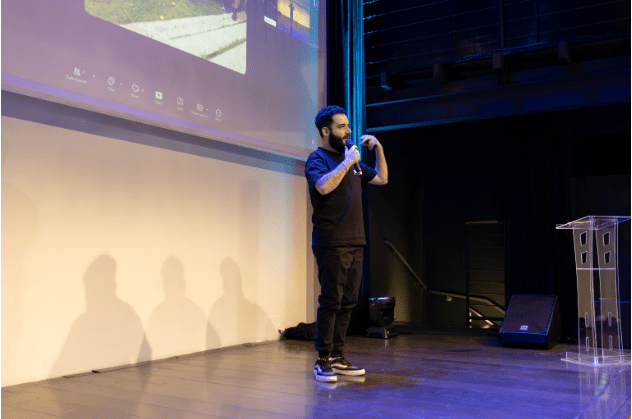
Picture this: A packed ballroom, a six-figure budget in play and the room buzzing with important stakeholders. There’s absolutely no room for improvising or last-minute fixes here. So what really sets apart a stage that’s instantly forgotten, from one people bring up for years afterward?
In all honesty, every CEO has sat through at least one event that just missed the mark. The microphone might have dropped out mid-sentence. The lighting strained everyone’s eyes or made the presenters look like they were getting interrogated instead of celebrated. Sometimes everything just felt rushed, awkward or smaller than it should’ve. Those things never happen by chance. They happen when companies treat staging as just another box to tick, rather than a strategic, central piece of their show.
Here’s a truth that gets forgotten: Every event is a big brand moment. It’s a rare, live opportunity to bring people, message and company culture together in front of a real audience, no safety net. Corporate meetings and events pump more than $621 billion into the U.S. GDP every year. That figure keeps climbing as businesses swing back to in-person events after years of experimenting with hybrid setups. If staging falls short, that massive spend doesn’t just underperform, it can actually damage the brand. Here are five staging mistakes CEOs and their teams keep repeating, and what you should do instead.
Mistake #1: Treating AV as a line item instead of a strategy
This is the big one. It happens almost every time. Someone, usually early on, decides that handling audio, video and lighting can be left for later, after they’ve sorted out the venue, catering and invitations. That’s completely backward. Technical production isn’t just a support feature tacked onto the experience, it’s the entire event. If people can’t hear the speakers, see the slides or even find the stage, all that careful planning goes right out the window.
Get your production pros in the room early and everything changes. Industry experts put it bluntly: Don’t leave AV for the end. Bring the professional audio visual company and production team in while the format, layout and content are still taking shape. When you start early with rigorous planning, testing, redundancy and real expertise, you actually stop technical disasters from wrecking anything in front of the crowd. That’s the reason companies like AlliantEvents.com exist. They specialize in the technical parts most execs ignore until something crashes; sound design, video and lighting, stuff that can transform an ordinary event into something unforgettable. Lock them in during the early planning, not the week before the event. That’s the most powerful move a CEO can make if they truly care about how their event feels.
Mistake #2: Skipping rehearsal because “there’s no time”
Rehearsal is the first thing to get cut when the schedule’s tight. The thinking is, “we’re smart people, what could possibly go wrong?” But things do go wrong. A solid technical rehearsal is where broken video cues, weird transitions and microphone dead spots are discovered, far better than realizing it in front of hundreds of people.
Look at the big players. NVIDIA’s CEO Jensen Huang took the stage for a major 90-minute keynote at the massive CES 2026 event: Production that was impeccably smooth, broadcast globally and left zero space for mistakes. That polish isn’t magic. It comes from practicing, building systems with fail-safes and running through every possible problem before the lights come on. Smaller companies don’t need a Las Vegas-sized budget to take this approach. Just a dedicated rehearsal, even if it’s bare-bones, is what keeps everything flowing smoothly, instead of forcing the CEO to fumble through tech failures while the whole board looks on.
Mistake #3: Cramming too much onto one stage
It’s all too easy, especially at company-wide meetings, to try and fit every single product update, award, shout-out and guest lecture into one marathon agenda. The result? A draining, endless session that leaves people exhausted and the company’s key message diluted or forgotten.
Think about it: Audiences now come in with high standards. They’ve seen enough generic launches, under rehearsed demos and events that end without a point. Trimming the agenda and keeping things clear and focused is always a better move than overloading it. If the goal is a big product reveal, give it the spotlight, don’t bury it after forty minutes of housekeeping. And given the numbers, with per attendee costs projected hitting $169 per day back in 2025, you really don’t want to waste that money on an event people immediately forget.
Mistake #4: Ignoring how the room feels
Lots of focus lands on stage design. But things like room acoustics, sightlines and how people flow in and out are often overlooked, and that can make or break an event. A stunning LED wall does nothing for someone stuck behind a pillar. Gorgeous graphics are wasted if the sound bounces off the ceiling and garbles every word.
Look at Google’s I/O 2025 keynote, where CEO Sundar Pichai took the stage at Shoreline Amphitheater: A massive outdoor space, a huge crowd and a live stream going out worldwide. The production team had to make sure both the in-person and online audiences got clear sound, good visuals and a well-paced show. Most events aren’t that huge, but the principle stands: You can’t separate the room from the message. Walk the space with your production crew before finalizing any floor plan. You’re almost guaranteed to catch problems that no digital layout would ever reveal.
Mistake #5: Having no backup plan when something breaks
Things go sideways. Wires get crossed. Laptops choke, microphones crap out and disaster seems to wait for the most inopportune moment. The problem isn’t when things break, it’s not having a backup lined up. If you don’t build redundancy in, a thirty-second snag can turn into a ten-minute panic with everyone watching.
And this isn’t theoretical. At the 2025 Oscars, one of the biggest live shows of the year, Hulu’s broadcast froze just as major awards were announced. This led to instant outrage on social media and lost exposure for advertisers. If an event with that much money and backup can still go wrong, so can yours. With hybrid and livestreamed formats now standard, this kind of risk is everywhere. Having backup mics, a second video operator and a simple plan for what happens if the screen dies are cheap insurance compared to the alternative, which is your CEO standing in awkward silence while your investors or clients look on.
Mistakes are not hard to avoid
None of these mistakes are complicated or hard to avoid once you name them. Rushed AV planning, no rehearsal, crowded agendas, ignoring how the space works and no backup plan. They all happen for the same reason: People treat staging as an afterthought instead of a major part of their event strategy.
The CEO’s or company founders who are nailing their events, whether it’s a headline tech keynote or a regional annual meeting, share one habit: They bring in real staging pros early, and they rehearse like it counts, because it does. At the end of the day, an event is a one-take shot where your company’s brand is front and center. You have to treat staging with as much seriousness as the message itself. It’s not an optional detail anymore.
