

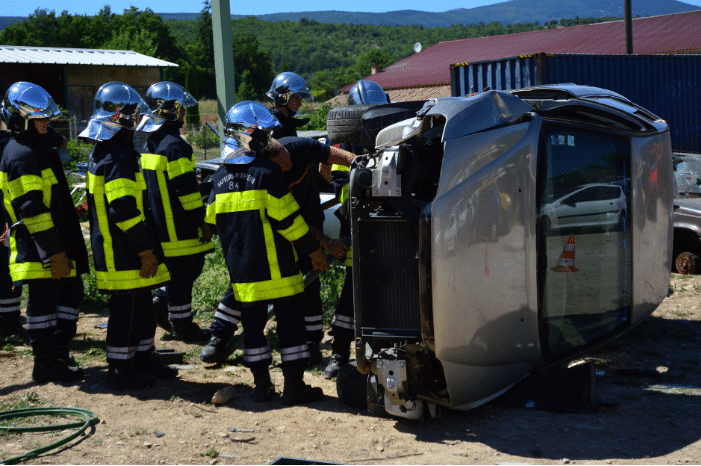
Georgia recorded 1,797 traffic fatalities in 2024, according to provisional data from the Governor’s Office of Highway Safety. That figure marks a 3% increase over 2023 and translates to roughly 4.9 deaths every day on state roads. More telling: the Georgia Department of Transportation logged an estimated 146,000 injury collisions last year—just over 400 per day—even as new vehicles rolled off assembly lines equipped with collision-avoidance systems their 2015 counterparts could not imagine.
The gap between what the engineers promise and what drivers experience after a crash has never been wider. Lane-keeping assist and automatic emergency braking now come standard on most sedans and crossovers. Forward-collision warning lights blink amber when a driver drifts too close to the car ahead. Yet the phones in our laps, the miles-per-hour we carry into merge zones, and the liability policies we carry—often state minimums of $25,000 per person—have not kept pace with the technology under the hood.
This piece examines 2024 crash data, seasonal risk patterns across Georgia, and what those trends mean for someone whose Tuesday morning commute ends with a rear-end collision on I-285 or a T-bone at a Gwinnett County intersection. The numbers tell part of the story. The recovery timeline tells the rest.
Why Georgia’s Roads Keep Getting More Dangerous — Even as Vehicles Get Safer
Federal safety regulators have documented steady improvements in crash survivability. The Insurance Institute for Highway Safety rates more vehicles “Top Safety Pick” each model year, and the National Highway Traffic Safety Administration’s five-star crash-test program now includes pedestrian protection and crash-avoidance as scored categories. Airbags deploy in milliseconds. Crumple zones absorb energy. Seatbelt tensioners lock faster than human reflex.
None of that has bent Georgia’s injury-collision curve downward.
Part of the answer sits in driver behavior. The AAA Foundation for Traffic Safety released survey data in late 2023 showing that 42% of drivers nationwide admitted to reading a text or email behind the wheel in the prior month. Anecdotal reports from Georgia State Patrol troopers working I-75 through Henry County describe drivers scrolling social feeds at 70 mph, eyes down for three or four seconds at a time—enough to travel the length of a football field blind.
Another part sits in the roads themselves. Metro Atlanta’s freeway system was engineered for a population that peaked around 3.5 million in the early 1990s. The region now exceeds 6 million residents. Interchanges that once handled 80,000 vehicles a day now process 200,000, and the friction points—the Tom Moreland Interchange, the Downtown Connector’s I-75/I-85 merge, the I-20 flyover near Six Flags—have not been rebuilt at scale.
Speed differentials compound the problem. A driver merging onto I-285 at 45 mph encounters through traffic moving at 70 mph in the right lane and 55 mph in the left because of congestion a half-mile ahead. The vehicle behind that merging driver expects 65 mph. Someone changes lanes without checking the mirror. Someone else brakes hard. A rear-end collision follows, and the lane-departure warning that might have helped never triggers because no lane line was crossed.
The insurance and medical systems have not caught up. Georgia remains a tort state with no mandatory personal-injury protection. Drivers who buy only the state-minimum $25,000/$50,000 liability policy leave themselves exposed if they cause a crash, and leave the other driver scrambling if that minimum does not cover emergency-room bills, imaging, and the first two months of physical therapy. The gap between a modern vehicle’s crashworthiness and an old liability policy’s limits has become a chasm.
The I-285 Perimeter Effect: Where Metro Atlanta’s Risk Concentrates
GDOT publishes annual collision summaries by route and milepost. The 2024 data (still preliminary as of this writing) show predictable concentrations. The I-285 Perimeter logged more than 6,000 reported crashes—injury and property-damage combined—between January and November. Not every mile carries equal risk.
The Tom Moreland Interchange, where I-85 and I-285 meet in a stack of ramps northeast of the city, consistently ranks among the state’s most dangerous junctions. Drivers enter the interchange at speed, navigate four or five decision points in less than a mile, and exit onto a road whose name may have changed twice. Rear-end collisions dominate. A driver committed to the wrong lane brakes hard to avoid missing the exit. The driver behind cannot stop in time.
The Downtown Connector—the shared I-75/I-85 corridor through the center of Atlanta—sees a different pattern. High speeds, heavy truck traffic, and abrupt lane shifts create sideswipe and merge-zone crashes. The stretch between the Techwood Drive exit and the I-20 split logged 14 fatalities in 2024, most involving either a pedestrian struck after a breakdown or a secondary collision after an initial wreck blocked the left lane.
The I-20 corridor west of downtown, especially near the Fulton Industrial Boulevard exit, has become a hotspot for commercial-vehicle collisions. Freight traffic moving between the intermodal yards and the distribution centers along Riverside Parkway mixes with commuter cars, and speed enforcement has grown inconsistent. GDOT’s crash maps for that segment show a cluster of jackknife and underride incidents, the kind that produce catastrophic injuries even when the passenger vehicle’s occupants are belted.
Crash location determines more than just which tow truck arrives. It determines which police agency writes the report, which court hears a lawsuit if one is filed, and whether the plaintiff’s attorney has worked that courthouse before. A collision on the Perimeter in DeKalb County follows a different procedural path than one on the Connector in Fulton County or one on I-75 in Clayton County. An attorney who knows the metro court systems and understands how judges in those jurisdictions handle contributory-negligence arguments has an advantage when negotiating with an insurance adjuster who also knows that same courthouse. That is one reason injured drivers often seek a car accident lawyer in Atlanta with litigation experience across multiple metro counties rather than a generalist working from a single suburban office.
Seasonal Spikes: Summer Heat, Holiday Travel, and the January Ice Window
Georgia’s collision frequency does not distribute evenly across the calendar. NHTSA’s Fatality Analysis Reporting System data for the Southeast show predictable peaks. July and August consistently post the highest raw crash totals, driven by vacation travel, teen drivers on summer break, and the simple fact that more vehicles occupy the roads when school is out and families take long weekends.
The summer peaks tend to involve rear-end and sideswipe collisions—high frequency, moderate severity. Drivers are moving, often in stop-and-go traffic on coastal routes like I-95 near Savannah or on mountain roads in North Georgia near Helen and Blue Ridge. Attention wanders. Following distances shrink.
December and early January bring a different risk profile. The volume may be slightly lower than July, but the severity increases. The Governor’s Office of Highway Safety reported 147 fatalities in December 2024 alone, a 19% spike over the December 2023 count. Holiday travel, impaired driving (both alcohol and drowsy driving after long office parties), and the state’s periodic brush with ice and black ice all converge. Georgia sits far enough south that winter weather arrives unpredictably, and many drivers do not carry experience driving on ice. A quarter-inch of freezing rain on I-85 north of the Perimeter can shut down the city for a day and produce dozens of multi-car pileups.
January adds another variable: black ice. Clear skies and sub-freezing overnight temperatures create invisible patches on bridges and overpasses. A driver crosses the Chattahoochee River on I-285 at 60 mph, hits a frozen section in the right lane, loses traction, and spins into the median. The car behind cannot stop on the same ice. By the time the sun comes up, eight vehicles are involved.
Seasonal severity matters because it shapes injury patterns. A summer rear-end collision on dry pavement at 35 mph typically produces soft-tissue injuries—whiplash, lumbar strain, maybe a concussion if the headrest was poorly positioned. A January black-ice collision involving multiple impacts and a lateral spin can fracture vertebrae, tear ligaments, and cause traumatic brain injury even when the speeds are similar. The medical treatment timelines differ, and so do the insurance payouts.
The 72-Hour Medical Window — and Why Most Drivers Miss It
Adrenaline is a liar. A driver walks away from a crash scene feeling sore but functional, declines the ambulance, drives home, takes ibuprofen, and goes to bed. Forty-eight hours later, the neck pain has spread into the shoulders. The headache that seemed like stress is now constant. The lower back stiffness makes it hard to stand up from a chair.
Soft-tissue injuries follow a predictable arc. Whiplash symptoms—neck pain, reduced range of motion, headache—often do not peak until 24 to 72 hours after the collision. Ligament and tendon strains in the lumbar spine, the rotator cuff, or the knees may not produce significant pain until inflammation fully sets in. Concussion symptoms can be subtle at first: a little fogginess, trouble concentrating, mild nausea. By day three, those symptoms have intensified, but the window for documenting the mechanism of injury has started to close.
Georgia law does not mandate personal-injury protection coverage, which means most drivers do not have the automatic $10,000 or $25,000 medical-payment cushion that PIP states provide. If you are injured in a collision caused by another driver, you are relying on that driver’s liability coverage to pay your bills. The at-fault driver’s insurer will scrutinize every gap. A driver who waits a week to see a doctor gives the insurance adjuster an argument: maybe the neck pain came from sleeping wrong, not from the collision.
Documentation starts the day of the crash. If you leave the scene without an ambulance ride but feel anything—soreness, stiffness, a mild headache—visit an emergency room or an urgent-care clinic that same day. The medical record will note that you presented within hours of the collision and will describe your complaints in your own words. That record becomes a baseline. When you follow up with a primary-care physician or a specialist two days later, that second visit links directly back to the ER note.
Chiropractic evaluation often plays an early role in post-collision care, especially in rear-end crashes where spinal alignment and soft-tissue strain are the primary concerns. A chiropractor trained in accident cases will document range-of-motion limitations, palpate for muscle spasm and ligament tenderness, and create a treatment plan that includes both passive modalities (adjustment, ultrasound, electrical stimulation) and active rehabilitation (strengthening exercises, posture correction). Insurance adjusters are more likely to accept chiropractic claims when the initial visit occurs within 72 hours of the crash and when the chiropractor’s notes specifically reference the collision as the mechanism of injury. That is why many injured drivers seek an Atlanta car accident chiropractor who understands how to document findings in a way that supports both clinical recovery and the insurance claim process.
The 72-hour window is not a legal deadline. You can still recover damages if you wait a week or two. But every day that passes without medical documentation is a day the defense attorney will highlight during settlement talks or at trial.
What the Average Settlement Number Doesn’t Tell You
Online forums and television ads love to throw around settlement figures. “The average car-accident settlement in Georgia is $20,000.” “Our firm recovered $1.2 million for a client injured in a Buckhead intersection crash.” Both statements might be true. Neither tells you much.
National data from the Insurance Research Council suggest that injury-claim payouts across all U.S. states cluster in a wide band. Minor soft-tissue cases with short treatment durations—three to six weeks of physical therapy, no imaging abnormalities—often settle in the $3,000 to $8,000 range when liability is clear and the claimant is cooperative. Moderate cases involving longer treatment, MRI-confirmed disc bulges or herniations, and some lost wages might reach $15,000 to $40,000. Severe cases—fractures, surgery, permanent impairment, significant lost income—can push into six figures, but those cases also take longer to resolve and often require litigation.
Georgia-specific data are harder to pin down because most settlements do not become part of the public record. A plaintiff who accepts a $35,000 offer from State Farm before filing a lawsuit never generates a court docket. We see only the cases that go to trial or produce a reported appellate opinion, and those cases skew toward the contested and the catastrophic.
The variables that drive settlement value are easier to list than to quantify:
- Liability clarity: Was fault obvious (rear-end collision, red-light runner), or is there a credible argument that both drivers share blame?
- Policy limits: If the at-fault driver carries only $25,000 in coverage, that is your ceiling unless you can reach the driver’s personal assets or tap your own underinsured-motorist policy.
- Treatment duration and cost: Six weeks of physical therapy costs less than six months. An ER visit, two orthopedic consults, and an MRI cost more than an urgent-care visit and a prescription for muscle relaxants.
- Lost wages: A construction worker who misses eight weeks of work has a larger economic claim than an office worker who can log in from home.
- Permanent impairment: A torn rotator cuff that requires surgery and leaves residual weakness is worth more than a resolved lumbar strain.
The “average” collapses all those variables into a single number that applies to almost no one. A driver recovering from a low-speed parking-lot fender-bender should not expect $20,000. A driver whose cervical spine injury required fusion surgery should not accept $20,000.
If You’re Hit This Week: Four Steps That Actually Move Your Case Forward
Most drivers have never been in a collision that produced an insurance claim. When it happens, the procedural fog is thick. Here is what actually helps:
- Secure a police report if the crash meets the threshold. Georgia law requires a written report if anyone is injured, if any vehicle must be towed, or if property damage appears to exceed $500—which includes nearly every collision at speed. If police do not come to the scene, you must file a report with the local agency within 24 hours. That report is your first piece of documentation and often determines which driver is cited for following too closely, failing to yield, or another violation.
- Photograph everything before the cars move. Take wide shots showing the entire intersection or roadway. Take close-ups of each vehicle’s damage from multiple angles. Photograph skid marks, debris, broken glass. If there are visible injuries (lacerations, swelling), photograph those too. Photograph the other driver’s license plate, insurance card, and driver’s license if they cooperate. Most phones timestamp and geolocate every photo, which creates a record of when and where the documentation was made.
- Collect witness information on the spot. If someone stopped to help, ask for a name and phone number. Write down the license plate of the car they were driving. Witnesses disappear fast, and tracking them down a week later is hard. Their observations matter, especially in intersection collisions where each driver has a different story about who had the green light.
- Notify your own insurer within 24 hours even if you believe you are not at fault. Your policy requires prompt notice, and failing to notify can jeopardize your uninsured-motorist or underinsured-motorist coverage if the other driver turns out to lack adequate insurance. You are not admitting fault by reporting the collision to your carrier; you are preserving your rights.
Beyond those four steps, resist the urge to give a recorded statement to the at-fault driver’s insurance company in the first 48 hours. Adjusters are trained to call quickly, while you are still rattled, and to extract statements that can be used to minimize the claim later. You have no legal obligation to provide a statement before consulting an attorney or at least waiting until you understand the extent of your injuries.
What 2025 Looks Like: Distraction, Litigation Backlogs, and Insurance Pushback
Several trends will shape Georgia collision outcomes over the next year.
Distraction is not going away. Smartphones have been in cars for more than a decade, yet the crash data show no sign that drivers have learned to ignore them. Georgia’s hands-free law, which took effect in 2018, prohibits holding a phone while driving but allows hands-free use. Enforcement is inconsistent. State Patrol can cite a driver for texting, but only if the violation is observed directly—no red-light camera can prove it. Apps that block notifications while driving exist, but adoption remains low. Until either behavior changes or enforcement becomes universal, expect distraction-related rear-end and intersection collisions to remain steady.
Civil-court backlogs have not cleared. The COVID-19 pandemic shut down jury trials across Georgia for most of 2020 and much of 2021. Courts reopened, but the backlog of cases remained. As of late 2024, many metro Atlanta counties were scheduling civil trials 18 to 24 months out from the date the case was filed. That delay works in favor of insurers, who know that a plaintiff facing two years of uncertainty may accept a lower settlement to avoid the wait. It also means that cases filed in 2025 may not reach trial until 2027, and memories fade over two years.
Insurers are tightening settlement strategies. Across the industry, carriers have adopted more aggressive claims-handling tactics. Lowball initial offers—sometimes 20% to 30% of the claimant’s documented medical bills—are common. Adjusters routinely question whether treatment was necessary or whether the chiropractor’s care should have ended after four weeks instead of twelve. Independent medical examinations, in which the insurer sends the claimant to a doctor of the insurer’s choosing, have become standard in cases involving more than $10,000 in claimed damages. The IME physician’s report almost always finds that the claimant has reached maximum medical improvement and requires no further care, even when the treating physician disagrees.
The response to these trends is documentation. A claimant who kept a daily pain journal, who followed every treatment appointment, who saved every pay stub showing lost income, and who took time-stamped photos of bruising and swelling has a stronger case than one who relied on memory and the goodwill of the adjuster. The adjuster has no goodwill. The adjuster has a file with a reserve dollar amount and a supervisor who wants that amount reduced.
Georgia’s roads will not become less crowded in 2025. New-vehicle sales will continue to emphasize safety features that reduce crash severity but do not eliminate crashes. Drivers will keep looking at their phones. Seasonal weather will still produce ice and fog. The legal and insurance systems will still favor defendants who can afford to wait and plaintiffs who can prove every element of their claim with paper.
The 400 injury collisions that happen today in Georgia will produce a range of outcomes. Some drivers will accept an early offer, close the claim, and move on. Others will spend a year in treatment, negotiate for months, and settle on the courthouse steps. A few will go to trial. The difference between those outcomes often comes down to decisions made in the first 72 hours—what was documented, who was consulted, and whether the injured driver understood that the crash was not just a bad Tuesday morning but the beginning of a process with its own deadlines, pressure points, and pitfalls.
