

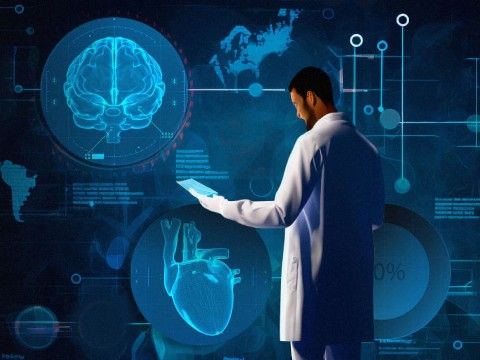
Healthcare is generating more data today than ever before. Every patient interaction, laboratory result, imaging scan, prescription, wearable device reading, insurance claim, and physician note contributes to a growing digital ecosystem. While this wealth of information has enormous potential, raw data alone does not improve patient care. The real value lies in transforming massive datasets into meaningful insights that help clinicians make better decisions at the point of care.
This transformation is made possible through healthcare analytics. By combining artificial intelligence (AI), machine learning, predictive modeling, and advanced reporting, healthcare organizations can identify trends, predict outcomes, reduce operational inefficiencies, and personalize treatments. The journey from collecting “big data” to making informed bedside decisions is changing how hospitals, clinics, and physician practices deliver care.
Modern EHR Software, analytics platforms, and intelligent automation tools are making this transition easier than ever before. Instead of relying solely on intuition or historical experience, clinicians can now leverage evidence-driven insights in real time.
In this article, we’ll explore practical healthcare analytics use cases that are already improving patient outcomes, streamlining operations, and supporting value-based care.
Understanding Healthcare Big Data
Healthcare big data refers to the enormous volume of structured and unstructured information generated across the healthcare ecosystem. These data sources include:
- Electronic Health Records (EHRs)
- Medical imaging
- Laboratory results
- Claims and billing information
- Pharmacy records
- Genomic data
- Wearable devices
- Remote patient monitoring systems
- Patient surveys
- Social determinants of health
Managing these datasets manually is nearly impossible. Advanced analytics platforms process millions of records within seconds, identifying relationships that would otherwise remain hidden.
Instead of asking, “What happened?” healthcare organizations can now answer:
- Why did it happen?
- What is likely to happen next?
- What should we do about it?
These insights allow providers to move from reactive healthcare toward predictive and preventive care.
Why Healthcare Analytics Matters
Healthcare analytics helps organizations improve three critical areas simultaneously:
- Better clinical outcomes
- Improved operational efficiency
- Lower healthcare costs
Hospitals no longer need to depend solely on retrospective reports. Real-time dashboards enable clinicians and administrators to monitor patient conditions, identify bottlenecks, and intervene before problems escalate.
For example, predictive algorithms can identify patients at high risk of readmission before discharge, allowing care teams to arrange follow-up appointments and home monitoring.
This proactive approach benefits both patients and healthcare organizations.
Practical Healthcare Analytics Use Cases
1. Predicting Patient Deterioration
One of the most valuable applications of healthcare analytics is identifying patients whose condition may worsen within hours.
Analytics systems continuously monitor:
- Heart rate
- Blood pressure
- Oxygen saturation
- Respiratory rate
- Laboratory trends
- Medication history
Machine learning models recognize subtle changes that humans may overlook.
When risk thresholds are exceeded, clinicians receive alerts that enable early intervention.
This has significantly reduced ICU transfers and prevented avoidable complications in many healthcare organizations.
2. Reducing Hospital Readmissions
Hospital readmissions remain one of the biggest financial and clinical challenges.
Analytics platforms evaluate hundreds of variables including:
- Chronic conditions
- Medication adherence
- Previous admissions
- Social risk factors
- Follow-up history
- Insurance information
Using predictive models, providers can identify patients most likely to return after discharge.
Care managers can then provide:
- Medication counseling
- Telehealth follow-ups
- Home health services
- Remote monitoring
- Patient education
These targeted interventions improve outcomes while reducing penalties associated with excessive readmissions.
3. Personalized Treatment Plans
Healthcare is moving away from one-size-fits-all medicine.
Analytics integrates:
- Patient history
- Genetics
- Lifestyle factors
- Medication responses
- Clinical guidelines
Physicians receive recommendations tailored to each patient’s unique characteristics.
Instead of relying on generalized treatment pathways, providers can make highly individualized decisions that improve outcomes while minimizing adverse events.
4. Population Health Management
Population health focuses on improving outcomes across large patient groups rather than individual encounters.
Healthcare organizations analyze:
- Chronic disease prevalence
- Vaccination rates
- Preventive screening compliance
- Geographic disease trends
- Social determinants
These insights help identify communities requiring targeted interventions.
For example, analytics may reveal increasing diabetes rates within a specific ZIP code, prompting outreach programs focused on nutrition, education, and preventive care.
5. Clinical Decision Support
Modern EHR Software increasingly includes clinical decision support powered by analytics.
Rather than replacing physicians, these tools enhance decision-making by providing:
- Drug interaction alerts
- Allergy warnings
- Evidence-based treatment recommendations
- Duplicate test prevention
- Preventive care reminders
Clinicians receive actionable information within their workflow without disrupting patient interactions.
This improves safety while reducing medical errors.
6. Emergency Department Optimization
Emergency departments frequently experience overcrowding.
Analytics helps hospitals predict:
- Patient arrival patterns
- Seasonal demand
- Staffing requirements
- Bed availability
- Admission rates
Administrators can allocate staff more efficiently and reduce waiting times.
Some hospitals also use predictive analytics to anticipate influenza outbreaks or respiratory illness surges, allowing proactive resource planning.
7. Operating Room Efficiency
Operating rooms represent one of the most expensive hospital resources.
Analytics helps optimize:
- Surgical scheduling
- Procedure duration estimates
- Equipment utilization
- Staffing allocation
- Recovery room capacity
Even small improvements in operating room efficiency can generate significant cost savings while increasing patient throughput.
8. Revenue Cycle Optimization
Healthcare analytics extends beyond clinical care.
Revenue cycle teams analyze:
- Claim denials
- Coding accuracy
- Reimbursement trends
- Payment delays
- Insurance patterns
Analytics identifies recurring issues before they impact revenue.
Organizations can reduce denied claims, improve cash flow, and strengthen financial performance.
9. Improving Coding Accuracy
Medical coding directly affects reimbursement, compliance, and reporting.
Traditional manual coding is time-consuming and susceptible to human error.
Modern AI Medical Coding Software analyzes physician documentation using natural language processing (NLP).
The software can:
- Suggest ICD-10 codes
- Recommend CPT codes
- Detect documentation gaps
- Reduce coding errors
- Improve coding consistency
Rather than replacing certified coders, AI supports them by automating repetitive tasks and allowing greater focus on complex cases.
This leads to faster claim submission and improved reimbursement accuracy.
10. Chronic Disease Management
Patients with diabetes, hypertension, heart failure, and COPD require continuous monitoring.
Analytics combines data from:
- Wearable devices
- Home monitoring equipment
- EHR records
- Pharmacy information
Providers receive alerts when patients demonstrate signs of deterioration.
Early interventions reduce emergency visits and hospitalizations while improving long-term outcomes.
The Role of Artificial Intelligence in Healthcare Analytics
Artificial intelligence is transforming healthcare analytics from descriptive reporting into predictive intelligence.
AI algorithms can:
- Analyze millions of patient records
- Detect hidden patterns
- Predict disease progression
- Recommend personalized treatments
- Forecast hospital resource needs
- Identify fraud
- Improve diagnostic accuracy
Unlike traditional reporting systems that summarize historical information, AI continuously learns from new data.
The result is more accurate predictions and increasingly intelligent clinical support.
Integrating Analytics with EHR Systems
Analytics is most effective when integrated directly into clinical workflows.
Modern EHR Software serves as the primary source of patient information while analytics engines transform that information into actionable insights.
Examples include:
- Automatic sepsis alerts
- Preventive screening reminders
- High-risk patient identification
- Medication safety warnings
- Disease progression forecasting
Instead of reviewing separate reports, clinicians receive decision support during patient encounters.
This seamless integration improves adoption while reducing clinician burden.
Analytics and Practice Operations
Clinical excellence alone does not guarantee organizational success.
Healthcare organizations must also optimize operations.
Modern Practice Management Software generates valuable operational analytics covering:
- Appointment scheduling
- No-show rates
- Provider productivity
- Revenue collection
- Claims processing
- Resource utilization
- Patient wait times
Administrators can quickly identify inefficiencies and implement data-driven improvements.
For example, analytics may reveal frequent appointment cancellations on specific days, enabling scheduling adjustments that maximize provider utilization.
Real-Time Dashboards Improve Decision-Making
Healthcare executives increasingly rely on interactive dashboards rather than static reports.
Real-time dashboards display:
- Emergency department occupancy
- Bed utilization
- Average length of stay
- Readmission rates
- Revenue performance
- Appointment volume
- Clinical quality metrics
Instead of waiting weeks for monthly reports, leaders can monitor organizational performance continuously.
This enables faster responses to emerging challenges.
Predictive Analytics Supports Preventive Care
Preventive medicine is becoming one of healthcare analytics’ greatest strengths.
Predictive models identify individuals likely to develop:
- Diabetes
- Heart disease
- Kidney disease
- Stroke
- Cancer complications
Providers can intervene earlier through:
- Lifestyle counseling
- Preventive screenings
- Medication adjustments
- Care coordination
Earlier intervention improves outcomes while reducing long-term healthcare costs.
Healthcare Analytics Improves Patient Experience
Patients increasingly expect personalized, convenient care.
Analytics enhances patient engagement by supporting:
- Personalized appointment reminders
- Medication adherence notifications
- Tailored educational materials
- Telehealth follow-ups
- Patient portal recommendations
Organizations also analyze patient satisfaction surveys to identify improvement opportunities.
Better experiences often translate into stronger patient loyalty and improved health outcomes.
Challenges of Healthcare Analytics
Although analytics offers enormous benefits, implementation is not without obstacles.
Common challenges include:
Data Quality
Incomplete or inconsistent records reduce analytic accuracy.
Interoperability
Healthcare data often resides across multiple disconnected systems.
Privacy and Security
Organizations must comply with HIPAA and other privacy regulations while protecting sensitive patient information.
Staff Adoption
Technology succeeds only when clinicians trust and use its recommendations.
Comprehensive training and intuitive interfaces are essential.
Bias in AI Models
Analytics models must be carefully monitored to avoid introducing bias into clinical decision-making.
Continuous validation ensures fairness and accuracy across diverse patient populations.
The Future of Healthcare Analytics
Healthcare analytics continues evolving rapidly.
Emerging innovations include:
- Generative AI clinical assistants
- Digital twins for patient simulation
- Precision medicine analytics
- Federated learning
- Real-time genomic analysis
- Autonomous documentation
- Predictive hospital command centers
As computing power increases and interoperability improves, healthcare organizations will gain even deeper insights from increasingly diverse data sources.
Rather than overwhelming clinicians with information, future analytics platforms will deliver concise, context-aware recommendations directly within clinical workflows.
Conclusion
The healthcare industry is moving beyond simply collecting data toward using it intelligently. The transition from big data to bedside decisions is transforming patient care, operational efficiency, and financial sustainability.
Healthcare analytics enables providers to predict patient deterioration, reduce readmissions, personalize treatment plans, optimize hospital operations, improve coding accuracy, and support preventive medicine. When integrated with modern EHR Software, Practice Management Software, and AI Medical Coding Software, analytics becomes an indispensable tool that empowers clinicians rather than replacing them.
The future of healthcare belongs to organizations that can effectively convert vast amounts of information into timely, evidence-based decisions. By embracing analytics and artificial intelligence responsibly, providers can deliver safer, more personalized, and more efficient care—ultimately improving outcomes for patients while strengthening the healthcare system as a whole.
About Author:
Nathan Bradshaw is a Digital Health and Healthcare IT writer with over 10 years of experience covering electronic health records (EHR), medical billing, revenue cycle management (RCM), practice management, telehealth, artificial intelligence in healthcare, and healthcare interoperability. He specializes in translating complex healthcare technology topics into practical, evidence-based content that helps providers, practice administrators, and healthcare leaders make informed decisions.
