

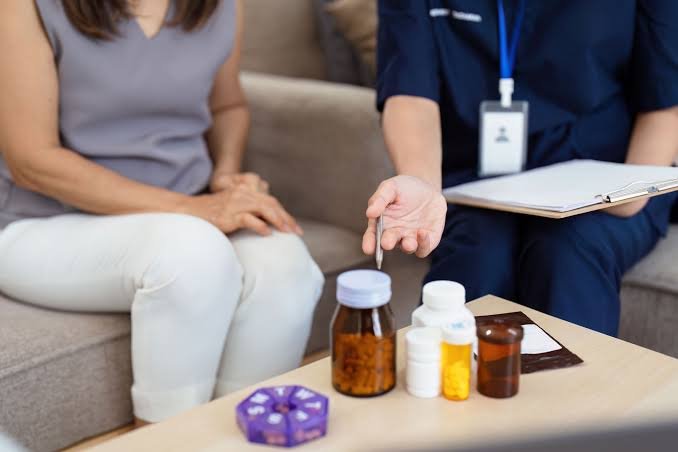
Sixty years ago, a patient seeking help for opioid dependency had almost nowhere to turn. Today, that same person can be prescribed a non-addictive blocking medication, check in with a counselor over a smartphone app, and access peer support before breakfast. That shift didn’t happen by accident. It happened because of six decades of hard-won science, policy battles, and clinical courage that most people never hear about.
The history of medication-assisted treatment is not a straight line. It is a story full of reversals, moral panics, and genuine breakthroughs. Understanding where MAT came from helps explain why it works, why it’s still misunderstood, and where it’s going next.
The Birth of Methadone Maintenance in the 1960s
Methadone did not start as an addiction treatment. The drug was originally developed as an analgesic in Germany in 1937, and by 1949 it had been repurposed as a potential heroin treatment by the United States Public Health Service at its hospital in Lexington, Kentucky. It sat mostly on the shelf after that, used for pain management, not dependency.
Everything changed in 1964. Rockefeller University physicians Vincent P. Dole, Marie E. Nyswander, and Mary Jeanne Kreek developed methadone as a maintenance treatment in New York City to combat a heroin epidemic occurring at that time. Their core insight was radical for the era: opioid dependency was a metabolic disease, not a character flaw. Methadone could correct that disrupted biochemistry, not just mask withdrawal.
Introduced as a medical response to the heroin epidemic in New York, methadone was approved by the Food and Drug Administration (FDA) in 1972 for the long-term medication treatment of opioid addiction, according to a policy brief published by the Rockefeller Institute of Government. That approval gave methadone a formal regulatory home, but it also gave it a cage: dispensing was restricted to tightly controlled opioid treatment programs, which meant patients had to show up in person, often daily, at a licensed clinic. That structure worked for many people. It excluded many others.
Buprenorphine Changes the Access Equation
For three decades after methadone’s approval, the treatment landscape barely moved. Then Congress passed the Drug Addiction Treatment Act of 2000, and the picture changed completely.
In 2002, buprenorphine and buprenorphine-naloxone became the first medications to be approved under a new federal law that permits long-term opioid treatment in settings other than opioid treatment clinics. Any qualifying physician could now prescribe buprenorphine from an office, a primary care practice, even a rural health clinic.
This was a significant departure from the methadone model. Buprenorphine has a better safety profile than methadone, and the ability to prescribe it in office facilities as opposed to only in opioid treatment programs improves access to care and earlier initiation of treatment, as documented in Psychiatric Services. The SAMHSA data tells the same story: after buprenorphine’s introduction, opioid treatment programs and non-OTP facilities with a specially trained physician on staff began offering MAT for opioid use disorder with buprenorphine, per SAMHSA’s national treatment facility survey data, expanding the provider base considerably. Then came a third option: in October 2010, extended-release, injectable naltrexone was approved by the FDA to treat and prevent relapse in clients with opioid use disorder following medical withdrawal management.
By 2010, there were three FDA-approved medications for opioid use disorder. The clinical toolkit was set. The next problem was getting it to people who needed it.
The Three-Wave Model of MAT Evolution
Looking back across six decades, a clear pattern emerges. Call it the Three-Wave Model of MAT Evolution, a framework that makes the current digital moment easier to place.
- Wave One (1964 to 2001): Centralized, clinic-based treatment anchored to methadone. High accountability, low accessibility. You had to go to the treatment.
- Wave Two (2002 to 2019): Distributed prescribing through office-based buprenorphine. Better reach, but still dependent on in-person visits and provider availability.
- Wave Three (2020 to present): Telehealth, mobile apps, and digitally supported care coordination. The treatment comes to the patient, at least in part.
Each wave didn’t replace the one before it. Methadone clinics still operate. Office-based buprenorphine is still the backbone of outpatient MAT. But every new wave expanded who could realistically access care, and that’s the thread that connects all three.
“mHealth can engage patients suffering from addiction in ways that benefit patients without adding substantial burden on health care providers.” — Research team behind a hybrid implementation-effectiveness study of mobile health in primary care addiction treatment, published in the Journal of Medical Internet Research, 2018.
Digital Tools Enter the Recovery Space
The pandemic forced a rapid, unplanned experiment in remote MAT delivery. Regulators relaxed rules on telehealth prescribing for buprenorphine. Clinics that had never offered a virtual visit suddenly had to. Most found that patients showed up and stayed engaged. That experience accelerated what was already a growing trend.
Researchers began publishing rigorous data on what digital support can actually do inside a medication-assisted recovery program. A peer-reviewed quasi-experimental study from 2025, published in JMIR mHealth and uHealth and indexed in PubMed Central, examined the OARS software platform, which gives patients real-time access to their appointment data, urine toxicology results, and educational content alongside messaging and journaling features. The research found measurable improvements in treatment engagement when patients used the platform alongside standard clinic care.
Consider Marcus, a counselor at a Cincinnati outpatient clinic who managed caseloads entirely through paper charts and phone tag as recently as 2019. By 2023, his patients could message him between sessions, flag a craving in real time through an app, and receive a same-day callback without anyone driving anywhere. The clinical relationship didn’t disappear. It got a longer reach.
The research is honest about limits, too. Residential stability is significantly associated with higher mobile app engagement, while frequent injection drug use is associated with lower engagement. Mobile device proficiency was not a significant barrier when in-person training was provided. Results indicate that people who use opioids can meaningfully engage with mHealth apps, especially when supported by structural factors such as stable housing. That finding matters. Digital tools are not a universal fix. They work better for some patients than others, and the best programs build that reality into their design rather than pretending an app alone closes every gap.
What This History Means for Patients Choosing Care Today
If you’re evaluating treatment options right now, this history gives you a practical lens.
- Ask about medication options. A quality program should be able to discuss methadone, buprenorphine-based treatments, and naltrexone. No single medication fits every patient, and a program that only offers one path deserves a follow-up question.
- Ask about digital support between sessions. Whether it’s a patient portal, a messaging tool, or a structured check-in app, between-visit support has an evidence base behind it. Find out what’s available.
- Ask about individualized planning. The shift from Wave One to Wave Three is, at its core, a shift from one-size programs to person-centered care. The best clinics carry that philosophy into every intake conversation.
- Check for licensed providers. Office-based buprenorphine requires specific federal authorization. Ask whether the prescribers are credentialed for MAT.
| Era | Primary Medication | Key Access Change | Regulatory Milestone
|
|---|---|---|---|
| 1964 to 1972 | Methadone (research phase) | Hospital and clinic only | FDA approval for OUD, 1972 |
| 2002 | Buprenorphine / Suboxone | Office-based prescribing allowed | Drug Addiction Treatment Act of 2000 |
| 2010 | Extended-release naltrexone (Vivitrol) | Any licensed prescriber can order | FDA approval, October 2010 |
| 2020 to present | All three, plus digital support | Telehealth and mHealth integration | Pandemic-era DEA rule relaxations |
The Road Ahead
MAT’s next chapter is being written right now, and it’s less about new molecules than about better delivery. Telehealth rules that expanded during the pandemic are being made permanent in some states. Peer support specialists, people with lived recovery experience, are being credentialed and embedded into clinical teams. The research on mobile tools keeps building.
The core principle that Dole and Nyswander argued in 1964 has held up through all of it: opioid dependency responds to medical treatment, and that treatment works best when people can actually get to it. Six decades in, the field is still working out what “accessible” really means. The answer keeps getting bigger. That’s the whole point.
If you’re looking for a program that reflects where this science actually stands, start by asking hard questions. The programs worth your trust will welcome them.
