
Close Menu
CEOColumnCEOColumn
    What's Hot

    Why Preventive Healthcare Is Becoming a Competitive Advantage for Modern Businesses

    August 7, 2026

    The Health Checks Busy Professionals Should Not Keep Postponing

    August 7, 2026

    The Hidden Health Risks of a High-Stress Professional Lifestyle

    August 7, 2026
    Facebook X (Twitter) Instagram
    Facebook X (Twitter) Instagram
    CEOColumnCEOColumn
    Subscribe
    • Home
    • News
    • BLOGS
      1. Health
      2. Lifestyle
      3. Travel
      4. Tips & guide
      5. View All

      Why Preventive Healthcare Is Becoming a Competitive Advantage for Modern Businesses

      August 7, 2026

      The Health Checks Busy Professionals Should Not Keep Postponing

      August 7, 2026

      The Hidden Health Risks of a High-Stress Professional Lifestyle

      August 7, 2026

      Age and Knee Surgery: Is There an Average Age for Knee Replacement?

      August 6, 2026

      Why Pop-Up Retail Still Works So Well at Busy Events

      July 27, 2026

      Alexandrite as a Meaningful Gift

      July 21, 2026

      Timeless Elegance: The Essential Guide to Day Dresses

      July 17, 2026

      Art of High-End Glass in Modern Interior 

      July 17, 2026

      A Complete Relocation Strategy for Remote Entrepreneurs Moving to Thailand

      August 7, 2026

      What Makes a Private Jet Brokerage Genuinely Worth Working With

      July 31, 2026

      Why California CEOs Keep Choosing Summerlin, Nevada

      July 20, 2026

      How to Plan a Fun-Filled Day in Pigeon Forge

      July 9, 2026

      The Executive’s Guide to Getting Real Value From an Annual Conference

      July 22, 2026

      How Australians Pay for Online Games: Safety and Fees Explained

      July 11, 2026

      Understanding the Value of Professional Legal Guidance

      June 18, 2026

      How Attorneys Balance Negotiation and Litigation Strategies

      June 18, 2026

      How to Prepare Your Family Vehicle for a Comfortable and Sun-Safe Road Trip

      August 7, 2026

      Are Lab Grown Diamond Rings the Right Choice for You?

      August 5, 2026

      What Are the Four Elements of a Negligence Claim in Alabama?

      August 5, 2026

      The Best Lab Grown Diamond Jewelry Retailers to Consider

      August 5, 2026
    • BUSINESS
      • OFFLINE BUSINESS
      • ONLINE BUSINESS
    • PROFILES
      • ENTREPRENEUR
      • HIGHEST PAID
      • RICHEST
      • WOMEN ENTREPRENEURS
    CEOColumnCEOColumn
    Home»News»The 2025 Playbook for Responsible Tech Disposal: How to Turn Clutter into Value

    The 2025 Playbook for Responsible Tech Disposal: How to Turn Clutter into Value

    OliviaBy OliviaOctober 3, 2025No Comments4 Mins Read

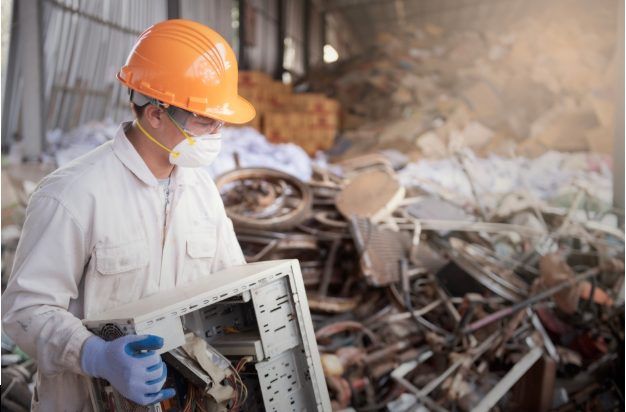
    Old phones, retired laptops, piles of chargers, dead headsets, and a tangle of mystery cables—if your home or office has a “tech drawer,” you’re not alone. The global stream of discarded electronics keeps growing, and the smartest response isn’t to stash it or toss it in the bin—it’s to channel it into a documented, secure, environmentally sound process. That’s where professional electronics end-of-life handling shines: it safeguards your data, keeps hazardous materials out of landfills, and recovers metals and plastics that can be reused.

    Below is a clear, practical guide you can use today—whether you’re a household clearing space or a business standardizing how devices exit your fleet.

    Table of Contents

    Toggle
    • Why electronics don’t belong in general waste
    • The quick triage that saves you time (and headaches)
    • How professional processing actually works (plain English)
    • For households: a weekend-ready checklist
    • For offices and multi-site teams: a scalable, no-drama workflow
    • What to avoid (common pitfalls)
    • Signals of a trustworthy provider
    • Frequently asked (straight answers)
    • Ready to act?

    Why electronics don’t belong in general waste

    Hidden hazards. Lithium batteries can short, overheat, or ignite; screens and circuit boards contain components that require specialized handling.
    Lost value. Devices contain copper, aluminum, steel, glass, and sometimes precious metals. In the right system, those materials re-enter manufacturing.
    Data risk. Unwiped drives, phones, and tablets can leak personal and business information. A reputable downstream process includes verifiable data destruction.

    The quick triage that saves you time (and headaches)

    1. Separate “works” vs. “doesn’t.” Working items may be reused or donated; non-working units should head straight to a recycler.
    2. Back up and sign out. Log out of accounts, remove SIMs/SD cards, and factory-reset. For computers, either securely wipe the drive or remove it for shredding.
    3. Handle batteries carefully. Don’t puncture cells. If you detach them, tape terminals and store in a non-metal container.
    4. Document essentials. A simple note (make/model/serial, condition, location) plus a quick photo helps with valuation, certificates, and audit trails.

    How professional processing actually works (plain English)

    • Intake & inventory: Items are logged to maintain chain-of-custody.
    • Data destruction: Drives are wiped using auditable methods or physically shredded.
    • Dismantling: Batteries, boards, screens, plastics, and metals are separated safely.
    • Material recovery: Commodities move to licensed downstream processors; hazardous fractions go to specialized facilities.
    • Certificates & reporting: You receive documentation suitable for compliance, ESG, or IT asset records.

    For households: a weekend-ready checklist

    • Gather everything with a plug, battery, or circuit board (phones, laptops, tablets, monitors, cables, routers).
    • Back up, sign out, and factory-reset devices; remove SIMs/SD cards.
    • Bundle cables and small accessories in labeled bags.
    • Note items that still work (possible reuse) vs. recycle-only.
    • Book a certified collection or drop-off and keep your receipt/certificate.

    For offices and multi-site teams: a scalable, no-drama workflow

    • Create a lightweight asset log. Columns for device type, asset tag/serial, condition, and location are enough.
    • Decide reuse vs. recycle. Redeploy recent models; route obsolete or damaged units to recycling.
    • Schedule pickups. Quarterly or biannual collection days prevent storerooms from turning into e-graveyards.
    • Require certificates. Ask for recycling and data destruction documentation—this protects you during audits and RFPs.
    • Standardize battery handling. Centralize containers for loose cells and ensure terminals are taped.

    What to avoid (common pitfalls)

    • General trash or mixed skips. Fire risk, contamination, and potential fines.
    • “It might be useful later” hoarding. Depreciation outpaces any hypothetical reuse; set a regular off-ramp.
    • Undocumented buyers. No receipt = no proof; insist on chain-of-custody and licensed downstreams.
    • Loose lithium cells. Always isolate and tape terminals; never crush or compact.

    Signals of a trustworthy provider

    • Transparent intake: Photo logging, serial capture, and itemized receipts.
    • Data guarantees: Written methods (e.g., software wipe standards) or physical shredding with serial-matched reports.
    • Clear downstreams: Licensed facilities with environmental controls.
    • Timely paperwork: Certificates that map to your inventory for easy reconciliation.

    Frequently asked (straight answers)

    Is age a problem?
    No. Even ancient gear yields recyclable materials. Reuse value may be low, but recycling value persists.

    What about cables and adapters?
    Absolutely include them—copper and aluminum add up, and pros handle mixed cable streams efficiently.

    Can I recycle broken screens and old CRTs?
    Yes—through the right channels. These require specific handling; don’t landfill them.

    Will I get documentation?
    Reputable services provide receipts and, where relevant, recycling and data destruction certificates.

    Ready to act?

    If you want a service that handles batteries safely, destroys data properly, and closes the loop with certificates you can keep on file, consider starting with e waste recycling for a simple, documented process that scales from single households to multi-site teams. If you’re just beginning to sort through drawers and storerooms and want a concise primer you can share with colleagues, here’s an accessible entry point that demystifies e waste from intake to final reporting.

    Share. Facebook Twitter Pinterest LinkedIn Tumblr Telegram Email
    Previous Article7 Cybersecurity Lessons We Can Learn From C3PAO’s Protocol Expertise
    Next Article Smarter Handling of Spent Catalytic Converters: A 2025 Field Guide for Drivers, Shops, and Fleets
    Olivia

    Olivia is a contributing writer at CEOColumn.com, where she explores leadership strategies, business innovation, and entrepreneurial insights shaping today’s corporate world. With a background in business journalism and a passion for executive storytelling, Olivia delivers sharp, thought-provoking content that inspires CEOs, founders, and aspiring leaders alike. When she’s not writing, Olivia enjoys analyzing emerging business trends and mentoring young professionals in the startup ecosystem.

    Related Posts

    The 6 Best PDF Signing & Sharing Tools For HIPAA Compliance In 2026

    August 7, 2026

    How to Safely Relocate Your Project Car and Home Garage Workshop

    August 7, 2026

    What Is Zero Depreciation Cover and How It Changes Your Claim Payout

    August 6, 2026
    Add A Comment
    Leave A Reply Cancel Reply

    You must be logged in to post a comment.

    Latest Posts

    Why Preventive Healthcare Is Becoming a Competitive Advantage for Modern Businesses

    August 7, 2026

    The Health Checks Busy Professionals Should Not Keep Postponing

    August 7, 2026

    The Hidden Health Risks of a High-Stress Professional Lifestyle

    August 7, 2026

    The 6 Best PDF Signing & Sharing Tools For HIPAA Compliance In 2026

    August 7, 2026

    How to Prepare Your Family Vehicle for a Comfortable and Sun-Safe Road Trip

    August 7, 2026

    How to Safely Relocate Your Project Car and Home Garage Workshop

    August 7, 2026

    A Complete Relocation Strategy for Remote Entrepreneurs Moving to Thailand

    August 7, 2026

    Retention Engineering: Community-Driven Loyalty Models in High-Volume Digital Platforms

    August 6, 2026

    Common Shipping Challenges That a Shipping API Can Solve

    August 6, 2026

    Age and Knee Surgery: Is There an Average Age for Knee Replacement?

    August 6, 2026
    Recent Posts
    • Why Preventive Healthcare Is Becoming a Competitive Advantage for Modern Businesses August 7, 2026
    • The Health Checks Busy Professionals Should Not Keep Postponing August 7, 2026
    • The Hidden Health Risks of a High-Stress Professional Lifestyle August 7, 2026
    • The 6 Best PDF Signing & Sharing Tools For HIPAA Compliance In 2026 August 7, 2026
    • How to Prepare Your Family Vehicle for a Comfortable and Sun-Safe Road Trip August 7, 2026

    Your source for the serious news. CEO Column - We Talk Money, Business & Entrepreneurship. Visit our main page for more demos.

    We're social. Connect with us:
    |
    Email: [email protected]

    Facebook X (Twitter) Instagram Pinterest LinkedIn WhatsApp
    Top Insights

    Why Preventive Healthcare Is Becoming a Competitive Advantage for Modern Businesses

    August 7, 2026

    The Health Checks Busy Professionals Should Not Keep Postponing

    August 7, 2026

    The Hidden Health Risks of a High-Stress Professional Lifestyle

    August 7, 2026
    © Copyright 2025, All Rights Reserved
    • Home
    • Pricacy Policy
    • Contact Us

    Type above and press Enter to search. Press Esc to cancel.

    Go to mobile version