
Close Menu
CEOColumnCEOColumn
    What's Hot

    Price Elasticity for FMCG Brands: How to Measure It Properly and Use It at the Negotiating Table

    October 7, 2026

    5 Key Quality Indicators to Look for When Buying BPC-157 Peptide in 2026

    October 7, 2026

    Red Sea Days and Desert Nights in Hurghada

    October 7, 2026
    Facebook X (Twitter) Instagram
    Facebook X (Twitter) Instagram
    CEOColumnCEOColumn
    Subscribe
    • Home
    • News
    • BLOGS
      1. Health
      2. Lifestyle
      3. Travel
      4. Tips & guide
      5. View All

      Sell the Fix, Not the Product: A Simple Rule for B2B Pitches

      October 6, 2026

      Research Peptide Blends: Why Multi-Compound Formulas Are Gaining Attention

      October 2, 2026

      What to Check Before Trusting Reviews for a Nearby Dentist

      October 1, 2026

      Legal Steps to Take After a Port Richey Motorcycle Accident

      October 1, 2026

      Best Shampoo for Dandruff: Top Picks for a Healthy Scalp

      October 5, 2026

      Orient Watches Explained: Features, Functions and Design Details

      September 24, 2026

      How to Choose Red Wedding Flowers That Actually Match Your Venue

      September 19, 2026

      How to Help Your Older Parents Without Feeling Overwhelmed

      September 10, 2026

      Red Sea Days and Desert Nights in Hurghada

      October 7, 2026

      Luxury Crewed Yacht Charters in Greece: A Complete Guide to Private Yacht Holidays

      October 2, 2026

      Flying from the US to Guadalajara: what to see and do in Mexico’s cultural capital

      September 2, 2026

      Black Friday travel deals: How to plan a trip around the sale window

      September 2, 2026

      Language Barriers While Traveling: What Actually Helps in Real-World Conversations?

      September 29, 2026

      How therapeutic techniques can vary from one practitioner to another

      September 29, 2026

      Turning Anger Into A Boundary Statement

      September 11, 2026

      4 Strategies for Faster Trial Prep Without Loosing Accuracy

      August 27, 2026

      5 Key Quality Indicators to Look for When Buying BPC-157 Peptide in 2026

      October 7, 2026

      Can You Go to Rehab Without Putting Your Career on Hold?

      October 7, 2026

      7 Instagram View Stories Viewers for Creators and Small Businesses: Features Compared

      October 7, 2026

      How to Be a Boss in Every Area of Your Life

      October 7, 2026
    • BUSINESS
      • OFFLINE BUSINESS
      • ONLINE BUSINESS
    • PROFILES
      • ENTREPRENEUR
      • HIGHEST PAID
      • RICHEST
      • WOMEN ENTREPRENEURS
    • Audit
    CEOColumnCEOColumn
    Home»News»Price Elasticity for FMCG Brands: How to Measure It Properly and Use It at the Negotiating Table

    Price Elasticity for FMCG Brands: How to Measure It Properly and Use It at the Negotiating Table

    OliviaBy OliviaOctober 7, 2026Updated:October 7, 2026No Comments5 Mins Read

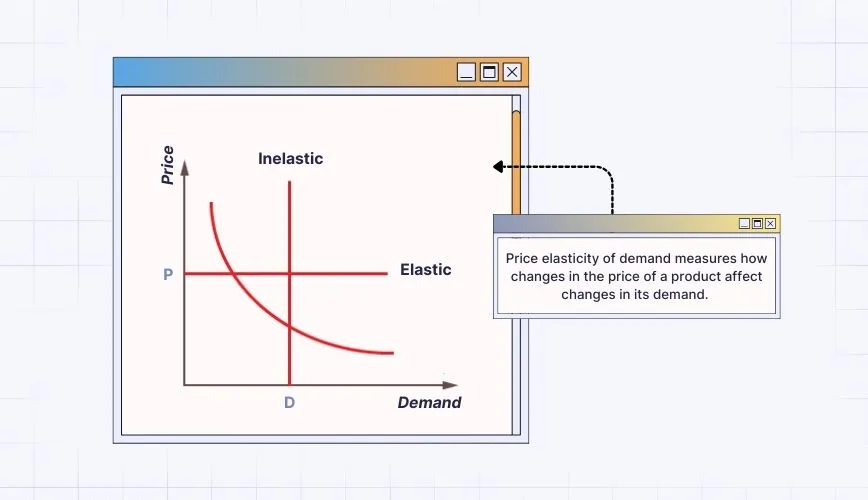
    Price elasticity tells an FMCG brand how much volume it will lose or gain for each percentage change in price. Measuring it properly means separating three things most teams blend together: own-price from cross-price effects, regular-price from promotional-price response, and one retailer or channel from another. Get those separations right and elasticity becomes the most useful number in a retailer negotiation or a cost-driven price increase. Get them wrong and it becomes a number that justifies whatever the team already wanted to do.

    Table of Contents

    Toggle
    • What elasticity actually measures
    • Regular price and promo price are different animals
    • Elasticity varies by retailer and channel
    • Using elasticity in a retailer negotiation
    • Deciding where to take a cost-driven increase
    • Common mistakes

    What elasticity actually measures

    Own-price elasticity is the percentage change in a product’s volume divided by the percentage change in its own price. An elasticity of -1.5 means a 10% price increase cuts volume by roughly 15%. Cross-price elasticity measures how your volume responds to someone else’s price, whether a rival brand, the retailer’s private label or a sibling SKU in your own range. A positive cross-price elasticity means the products are substitutes: when the rival gets more expensive, some of its buyers come to you.

    Both matter because shoppers never see your price in isolation. They see it on a shelf next to four alternatives. A brand that estimates own-price elasticity without controlling for competitor prices will often misread how sensitive its own shoppers are, because some of the volume swings it attributes to its own price actually came from competitors moving theirs.

    Regular price and promo price are different animals

    The most common mistake is pooling all price variation into one estimate. Promotional price cuts are temporary and visible. They are often supported by displays and feature ads, and they trigger stockpiling. Regular (base) price changes are permanent and quieter, and shoppers adjust to them over months.

    As a result, promotional response is usually much steeper than base price response. If a model sees a 25% temporary price cut deliver a big volume spike and treats that as the general price response, it will predict that a 5% permanent increase is a disaster. Hypothetically, a brand might find a promotional elasticity around -3 and a base price elasticity closer to -0.8. Those numbers are illustrative, but the gap between them is the point: a blended figure is wrong for both decisions.

    The fix is structural. Model base price and promotional discount depth as separate variables, and add display, feature and multibuy flags so the model doesn’t credit the price cut with what the end-of-aisle display did.

    Elasticity varies by retailer and channel

    The same SKU meets different shoppers in a discounter, a premium supermarket, a convenience store and an online marketplace. Discounter shoppers tend to be more price-aware. Convenience shoppers are paying for immediacy. Online, a comparison is one click away, and competitors’ dynamic pricing means the reference price can move daily.

    A national elasticity averages all of this together and is rarely useful for any single account. Estimating by retailer, or at least by channel cluster, needs more data, but weekly scan data by retailer usually provides it. Where one retailer shows little price variation, a hierarchical model that borrows strength from similar accounts gives a steadier estimate than modeling that retailer alone.

    The inputs are familiar: two to three years of weekly sell-out by SKU and retailer, shelf and promoted prices recorded separately, competitor prices for the main substitutes, distribution, and media and seasonality as controls. The hard part is that they tend to live in different places, from syndicated panels and retailer portals to trade promotion systems and agency spreadsheets. Brands that treat price elasticity modeling as an always-on capability, refreshed as new weeks of data arrive, avoid rebuilding that pipeline from scratch every time a negotiation lands on the calendar.

    Using elasticity in a retailer negotiation

    Retailers push back on list price increases with a familiar argument: your shoppers will switch. Retailer-level elasticity lets a brand answer with evidence instead of assertion.

    Say a brand needs to pass through a 6% cost increase at one grocery chain. Its base price elasticity at that chain is estimated at -0.9, and cross-price elasticity with the chain’s private label is low. Expected volume loss is roughly 5.4%, but each unit sells for 6% more, so the category’s sales value at that retailer stays broadly flat. The retailer’s cash margin can be protected. That is a very different conversation from “please accept our increase.”

    Cross-price results add a second argument. If the shoppers who trade away mostly move to other brands within the same store, rather than to a competing store, the retailer loses little category value.

    Deciding where to take a cost-driven increase

    Elasticity is rarely uniform across a range. Hero SKUs with loyal buyers can often absorb increases that fringe SKUs cannot. Pack architecture matters too. A brand might take a larger increase on a small single-serve pack, where shoppers compare on absolute price, and a smaller one on the family pack, where they compare on price per unit against private label.

    Price ladders deserve attention as well. If a premium variant sits just above a mainstream one and only the mainstream price rises, the gap narrows and some shoppers trade up. That shift can raise average margin even as total volume dips slightly.

    Common mistakes

    • Treating elasticity as fixed. Shopper sensitivity shifts, especially during periods of broad inflation. Estimates from three years ago may not describe today’s shopper.
    • Ignoring competitor reactions. If the category leader follows your increase within a few weeks, your realized volume loss will be smaller than a model holding competitor prices constant predicts.
    • Confusing timing with causation. When price increases always land in the same season, the model can blame price for a seasonal dip.
    • Reporting one number. A single elasticity per brand hides the retailer, pack and promo differences that drive the actual decision.

    Measured carefully, elasticity stops being an academic figure and becomes something a sales team can take into the room.

    Share. Facebook Twitter Pinterest LinkedIn Tumblr Telegram Email
    Previous Article5 Key Quality Indicators to Look for When Buying BPC-157 Peptide in 2026
    Olivia

    Olivia is a contributing writer at CEOColumn.com, where she explores leadership strategies, business innovation, and entrepreneurial insights shaping today’s corporate world. With a background in business journalism and a passion for executive storytelling, Olivia delivers sharp, thought-provoking content that inspires CEOs, founders, and aspiring leaders alike. When she’s not writing, Olivia enjoys analyzing emerging business trends and mentoring young professionals in the startup ecosystem.

    Related Posts

    Best Child Plan in India: Planning for Your Child’s Financial Future

    October 3, 2026

    Nicholas Iarrapino: Background and Role at the Fischman Azar Group

    October 2, 2026

    What CEOs Should Know About Hedging Currency Exposure in 2026

    October 2, 2026
    Add A Comment
    Leave A Reply Cancel Reply

    You must be logged in to post a comment.

    Latest Posts

    Price Elasticity for FMCG Brands: How to Measure It Properly and Use It at the Negotiating Table

    October 7, 2026

    5 Key Quality Indicators to Look for When Buying BPC-157 Peptide in 2026

    October 7, 2026

    Red Sea Days and Desert Nights in Hurghada

    October 7, 2026

    Can You Go to Rehab Without Putting Your Career on Hold?

    October 7, 2026

    Evaluating Farm Transportation Equipment Through the Work It Must Do

    October 7, 2026

    7 Instagram View Stories Viewers for Creators and Small Businesses: Features Compared

    October 7, 2026

    How to Be a Boss in Every Area of Your Life

    October 7, 2026

    Why More Founders Are Editing Their Own Video Content in 2026

    October 6, 2026

    Boutique Law Firm vs. Big Law: What High Stakes Litigation Demands

    October 6, 2026

    7 Places Roof Leaks Often Start During Heavy Rain

    October 6, 2026
    Recent Posts
    • Price Elasticity for FMCG Brands: How to Measure It Properly and Use It at the Negotiating Table October 7, 2026
    • 5 Key Quality Indicators to Look for When Buying BPC-157 Peptide in 2026 October 7, 2026
    • Red Sea Days and Desert Nights in Hurghada October 7, 2026
    • Can You Go to Rehab Without Putting Your Career on Hold? October 7, 2026
    • Evaluating Farm Transportation Equipment Through the Work It Must Do October 7, 2026

    Your source for the serious news. CEO Column - We Talk Money, Business & Entrepreneurship. Visit our main page for more demos.

    We're social. Connect with us:
    |
    Email: Support@gposting.com

    Facebook X (Twitter) Instagram Pinterest LinkedIn WhatsApp
    Top Insights

    Price Elasticity for FMCG Brands: How to Measure It Properly and Use It at the Negotiating Table

    October 7, 2026

    5 Key Quality Indicators to Look for When Buying BPC-157 Peptide in 2026

    October 7, 2026

    Red Sea Days and Desert Nights in Hurghada

    October 7, 2026
    © Copyright 2025, All Rights Reserved
    • Home
    • Pricacy Policy
    • Contact Us

    Type above and press Enter to search. Press Esc to cancel.