

Getting the Basics Right
Ask five plant engineers what “pump speed” means and you’ll probably get five slightly different answers. Some think in RPM. Some think in flow rate. Some just think about how fast the job needs to get done.
Here’s the thing though. When you’re pumping water, or anything close to it, speed is a fairly simple lever. Turn it up, get more flow. Turn it down, get less. Straightforward.
Thick fluids don’t play by that rule. Once viscosity climbs, adhesives, resins, heavy oils, syrups, slurries, the relationship between speed and performance stops being linear. And that’s where a lot of otherwise well-designed systems start underperforming, sometimes without anyone noticing until a motor trips or a seal fails months later.
This is a topic that comes up constantly in industries like asphalt production, food processing, and chemical handling, where the fluid being moved changes with temperature, batch composition, or even the season. Getting speed wrong isn’t just an efficiency issue. It can shorten equipment life significantly.
How Viscosity Actually Changes What Speed Does
Viscosity is basically a fluid’s resistance to flow. Water has a viscosity of about 1 centipoise. Honey sits somewhere around 10,000 cP. Everything in between behaves differently once you introduce mechanical force.
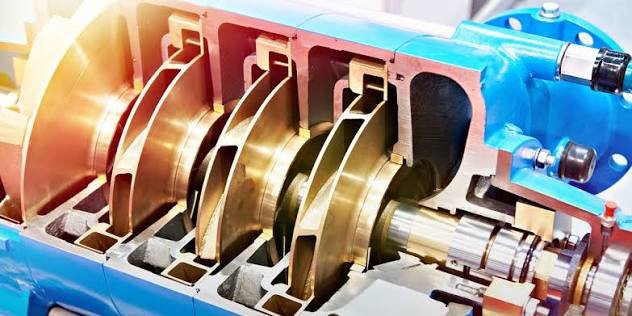
In a centrifugal pump, speed and viscosity fight each other. The impeller relies on velocity to generate flow, and thick fluid resists that velocity. So as viscosity goes up, head, flow, and efficiency all tend to drop at a given speed, even though the pump is drawing more power to compensate. That’s not a design flaw. It’s physics.
Positive displacement pumps respond differently. Since they move a fixed volume per rotation, they’re less dependent on velocity. But speed still matters here too. Run a PD pump too fast on a viscous fluid and the chamber may not have time to fully fill before it discharges. You end up with reduced volumetric efficiency, even though the pump is technically doing what it was built to do.
According to a technical breakdown from the Hydraulic Institute on how viscosity affects pumping, higher viscosity actually reduces internal slip in rotary pumps and can improve volumetric efficiency up to a point. But that benefit comes with a tradeoff: more torque is needed to turn the rotor, and input power climbs. So the pump might move fluid more precisely, but it’s working a lot harder to do it.
Sound complicated? It kind of is. But the short version is this: viscosity doesn’t just slow things down. It changes how the whole system behaves.
Positive Displacement vs. Centrifugal, and Why It Matters Here
Not every pump handles thick fluids the same way, and this is where a lot of selection mistakes happen.
Centrifugal pumps are excellent for low-viscosity, high-flow applications. Water systems, cooling loops, general transfer work. They’re simple, they’re cost-effective, and they hold up well under continuous duty.
Once viscosity rises past a few hundred centipoise, though, centrifugal pumps start losing ground fast. Efficiency drops. NPSH requirements climb. Power draw increases just to maintain output that used to come easy.
Rotary positive displacement pumps, gear pumps in particular, tend to be the better fit for viscous transfer work. They’re less sensitive to viscosity swings, and in some cases actually perform more consistently as fluid thickens, at least within their design range. That’s part of why gear pumps show up so often in asphalt plants, adhesive lines, and heavy oil applications.
This distinction matters because a lot of operations default to whatever pump type they already have on hand, without stopping to ask whether the technology even fits the fluid anymore. If your process has shifted toward heavier feedstocks, or if you’re dealing with seasonal viscosity changes in outdoor equipment, that old pump might be working against you now.
Signs Your Pump Speed Isn’t Matched to the Fluid
Most operators don’t catch a speed mismatch right away. It shows up slowly, in small ways that get written off as normal wear.
A few patterns worth paying attention to:
- Motor temperature running higher than usual, even with no change in load
- Seals failing more often than the maintenance schedule predicts
- Flow rate that doesn’t match what the pump curve says it should
- Excessive vibration or noise that wasn’t there when the fluid was thinner
- Cavitation-like symptoms in a PD pump, which usually points to speed or NPSH issues rather than the pump itself
None of these are dramatic on their own. But together, they usually point to the same root cause: the pump is being asked to run at a speed that doesn’t match the fluid it’s handling.
Here’s a pattern worth remembering. Slower is often better for viscous fluids. That feels backward to a lot of people, especially ones used to thinking about speed as a proxy for output. But with thick fluids, reducing RPM can actually improve chamber fill, cut down on shear damage to sensitive products, and reduce the strain on seals and bearings. You’re not necessarily giving up throughput. You might just be trading a slightly lower speed for a system that runs cooler and lasts longer.
Matching Speed to the Real-World Fluid, Not the Spec Sheet
Viscosity on paper and viscosity in the field aren’t always the same thing. Temperature swings change it. Storage time changes it. Even humidity can affect certain slurries and coatings.
That’s why pump speed shouldn’t be treated as a fixed setting decided once during installation and forgotten. In colder months, for instance, oils and asphalt-related fluids thicken considerably, which changes the ideal operating speed even if nothing else in the system has changed.
Companies that supply industrial pumps for demanding, variable-viscosity applications, including distributors like AMED-US that work across asphalt, water treatment, and general industrial sectors, spend a lot of time helping customers figure out the right series and speed range for their specific fluid conditions, rather than just selling a generic pump off a catalog page. That kind of selection work matters more with viscous fluids than it does with water-thin ones, because the margin for error is smaller.
If you’re working with a distributor or engineer on pump selection, it’s worth asking directly how they’d expect performance to change across your fluid’s temperature range, not just at the “ideal” viscosity listed in a spec sheet. A pump that looks perfect on paper at 70°F might behave very differently in an unheated outdoor tank in January.
Gear pumps, in particular, are worth a closer look for anyone dealing with viscous or shear-sensitive fluids. Viking gear pumps are a common reference point in this space, built specifically around rotary positive displacement principles for handling everything from thin solvents to heavy, abrasive fluids without the efficiency losses centrifugal designs run into.
Getting Speed Right Is Part of the Selection Process, Not an Afterthought
Pump speed isn’t a setting you dial in once and forget about. For high-viscosity applications, it’s one of the core variables that determines whether a system runs efficiently for years or burns through seals and motors well before its time.
The physics isn’t complicated once you see it laid out. Thicker fluids resist velocity in centrifugal pumps, which drags down efficiency at high speeds. Positive displacement pumps handle viscosity better in general, but they still need enough time per cycle to fill completely, which means speed has to stay within a workable range.
Get that range wrong, even by a little, and it shows up eventually. Usually in a maintenance ticket nobody wants to write.
Frequently Asked Questions
Does higher pump speed always mean more flow?
Not with viscous fluids. In centrifugal pumps, speeding up doesn’t reliably increase flow once viscosity climbs, because thick fluid resists the impeller’s velocity. In positive displacement pumps, running too fast can actually reduce flow if the chamber doesn’t have time to fully fill before discharge.
What’s considered a high-viscosity fluid in pump applications?
There’s no single cutoff, but fluids above roughly 200 to 300 centipoise generally start requiring different pump selection or speed adjustments compared to water-thin liquids. Heavy oils, asphalt binders, and syrups often run into the thousands of centipoise.
Are positive displacement pumps always better for thick fluids?
In most cases, yes, especially gear and rotary lobe designs. They’re less sensitive to viscosity changes than centrifugal pumps. That said, PD pumps still have speed limits, and running one too fast on a very thick fluid can hurt volumetric efficiency.
Can slowing down a pump actually save money?
Often, yes. Lower speeds can reduce shear stress on the fluid, cut down on seal wear, and lower motor temperature, all of which reduce maintenance frequency. The tradeoff is usually a modest drop in throughput, which can sometimes be offset by running a slightly larger pump at a gentler speed.
How does temperature affect the right pump speed for a viscous fluid?
Temperature has a major effect on viscosity for most industrial fluids. As temperature drops, viscosity typically rises, which means a speed setting that works fine in summer might be too aggressive for the same fluid in winter. Systems handling outdoor storage or seasonal fluids usually need speed ranges reviewed periodically, not set once.
Why do gear pumps handle viscous fluids better than centrifugal pumps?
Gear pumps move a fixed volume of fluid per rotation regardless of velocity, which makes them far less dependent on the fluid moving fast to generate flow. Centrifugal pumps rely on velocity to create head, and viscous fluid resists that velocity, which is why performance drops off more sharply as fluids thicken.
