

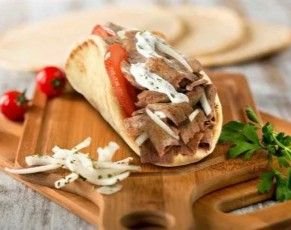
Opening a restaurant that specializes in döner or gyros can be an attractive business opportunity for entrepreneurs entering the fast-food industry. Both concepts revolve around meat cooked on a vertical rotisserie, relatively inexpensive ingredients, quick preparation, and affordable meals. They require less kitchen space than many conventional restaurants and can operate with a small team without compromising service speed.
Gyros restaurants require similar equipment but may introduce additional kitchen stations depending on their menu. Greek-style establishments frequently serve grilled halloumi, souvlaki, Greek salads, roasted vegetables, and other Mediterranean specialties. Preparing these dishes can require additional grills, storage facilities, preparation surfaces, and cooking utensils.
A broader menu increases the initial investment but also creates opportunities to generate revenue beyond the signature dish. Customers visiting in groups may appreciate having several meal options, particularly when some members prefer vegetarian dishes or lighter alternatives.
Commercial space represents another significant opening expense. Döner restaurants frequently operate from narrow storefronts near transportation hubs, universities, office buildings, and busy pedestrian streets. Their business model often prioritizes takeaway orders, reducing the amount of floor space required for customers.
Gyros restaurants can follow the same approach, although some owners prefer creating a casual Mediterranean dining environment. Comfortable seating, decorative lighting, natural materials, and distinctive interior finishes can support higher prices and encourage customers to stay for longer meals.
Owners planning a dine-in establishment should compare restaurant tables and chairs for sale early in the budgeting process. Purchasing durable commercial furniture helps control replacement expenses, while selecting appropriately sized pieces allows the restaurant to accommodate more customers without overcrowding the dining area.
Ventilation and property preparation can significantly affect the opening budget of either business. Installing commercial extraction systems, upgrading electrical connections, modifying plumbing, and meeting local fire safety requirements may cost more than the cooking equipment itself. Renting a property previously occupied by a similar restaurant could eliminate some of these expenses.
Ingredient sourcing also influences startup costs. Döner businesses can often purchase prepared meat cones from specialist wholesalers, eliminating the need to develop recipes and prepare large quantities of meat internally. Gyros operators can use a similar purchasing arrangement or prepare their own seasoned meat to create a more distinctive product.
Preparing meat in-house gives restaurant owners greater control over ingredients and flavor but requires additional labor, preparation time, storage space, and food safety procedures.
Franchising introduces another financial consideration. Established restaurant brands may provide equipment packages, supplier agreements, standardized recipes, marketing materials, and operational training. In return, franchisees typically pay initial fees and ongoing royalties that reduce their earnings.
An independent takeaway döner restaurant will generally have a lower entry cost than a dine-in gyros establishment. However, when both businesses operate with comparable menus, equipment, and floor space, their startup expenses can be remarkably similar.
The Economics of Every Serving: Food Costs, Pricing, and Margins
The profitability of either restaurant begins with the cost of preparing an individual meal. A busy establishment can generate substantial revenue while struggling financially if ingredient costs consume too much of its selling price.
Meat represents one of the largest variable expenses for both döner and gyros restaurants. Döner commonly contains chicken, beef, lamb, or a combination of meats, depending on regional preferences and the restaurant’s positioning. Traditional Greek gyros frequently uses pork or chicken, although beef and lamb variations are also available.
Chicken provides an economical option for both concepts in many markets. Pork can offer similarly attractive purchasing prices where suppliers are plentiful, while premium lamb and beef generally require higher selling prices to maintain satisfactory margins.
The purchasing price of meat does not tell the entire financial story. Cooking causes moisture and fat loss, reducing the weight available for serving. Restaurant owners must calculate ingredient costs based on usable cooked meat rather than the original weight purchased from suppliers.
For example, a restaurant purchasing 20 kilograms of meat at $6 per kilogram spends $120. If cooking reduces the usable weight to 15 kilograms, the actual cost increases to $8 per kilogram of cooked meat. A 150-gram serving then costs $1.20 before adding bread, vegetables, sauces, or packaging.
Portion control becomes particularly important when restaurants serve hundreds of customers daily. An employee consistently adding an extra 20 grams of meat to each of 200 daily orders uses four additional kilograms. Even small deviations from standardized portions can produce considerable monthly expenses.
Bread and vegetables generally account for a smaller share of meal costs. Döner typically combines bread or flatbread with meat, cabbage, lettuce, tomatoes, onions, and sauces. Gyros often includes pita bread, tomatoes, onions, tzatziki, and sometimes French fries.
The inclusion of fries in a gyros wrap can help control overall ingredient costs while providing a substantial meal. Nevertheless, frying introduces expenses associated with cooking oil, equipment cleaning, electricity, and maintenance.
Sauces provide another opportunity to distinguish a restaurant without dramatically increasing ingredient spending. Homemade garlic sauce, spicy dressing, tzatziki, and signature marinades can encourage repeat purchases and strengthen the restaurant’s identity.
Selling prices depend heavily on local customer expectations. Döner has developed a reputation as an affordable and convenient meal in many European markets. Customers may compare prices across several nearby establishments, limiting opportunities to increase prices without offering noticeable improvements in quality or portion size.
Gyros restaurants can sometimes position themselves differently. Authentic Greek ingredients, freshly prepared pita, traditional marinades, and Mediterranean side dishes may justify higher prices, particularly in markets where Greek cuisine faces less direct competition.
Consider an illustrative example in which a döner wrap sells for $8 and costs $2.40 in ingredients and packaging. The restaurant retains $5.60 before accounting for labor, rent, utilities, and other expenses, representing a product-level margin of 70%.
A gyros wrap selling for $9.50 with direct costs of $3 produces a contribution of $6.50 before other expenses. Its product-level margin is approximately 68.4%. Although the döner has a higher percentage margin, the gyros generate more money per sale.
Additional menu items can improve the economics of both businesses. Soft drinks, French fries, extra sauces, desserts, and larger meal combinations increase the average transaction value without requiring the restaurant to attract additional customers.
Gyros establishments may have more opportunities to introduce premium side dishes such as feta salads, grilled cheese, and traditional Greek desserts. Döner restaurants can compensate through larger portions, combination meals, rice bowls, and late-night offers.
Food waste can quickly eliminate these advantages. Large meat cones, fresh vegetables, dairy-based sauces, and prepared ingredients require careful purchasing and production planning. Owners must match preparation quantities with expected demand while following food safety requirements for storage, cooking, and disposal.
The more profitable concept is not necessarily the one with cheaper ingredients. It is the business that earns the strongest contribution per transaction while maintaining sufficient sales volume and controlling waste.
Customer Demand, Daily Sales, and Revenue Potential
Customer demand determines whether attractive product margins translate into meaningful restaurant revenue. A business selling inexpensive meals to hundreds of customers may outperform a premium establishment that earns more from individual orders but attracts considerably fewer visitors.
Döner benefits from widespread recognition across much of Europe and numerous international markets. Its combination of meat, vegetables, bread, and sauces appeals to customers looking for a substantial meal without paying full-service restaurant prices.
The dish also suits several purchasing occasions. Office workers can order döner during lunch breaks, students can purchase affordable dinners, commuters can take meals home, and customers leaving bars or nightclubs can stop for late-night food.
Extended trading hours give döner establishments additional revenue opportunities. A location near nightlife venues may experience its strongest demand after conventional restaurants have closed. Owners must balance these extra sales against staffing expenses, security considerations, and local operating restrictions.
Gyros attracts a similar audience but can also benefit from customers seeking Mediterranean food. Greek-style branding may appeal to diners who associate the cuisine with fresh vegetables, grilled meat, yogurt-based sauces, and casual holiday dining.
Tourist destinations provide particularly interesting opportunities for gyros restaurants. Visitors familiar with Greek cuisine may actively seek recognizable meals, while others may be interested in trying something different from standard fast-food offerings.
Religious and dietary preferences can influence the addressable market of either concept. Döner restaurants serving certified halal meat may attract customers who avoid pork or require halal preparation. Traditional pork gyros cannot serve this segment, although establishments offering suitably sourced and prepared chicken or beef can reach a broader audience.
Location selection should reflect these demand patterns. A döner shop near a university may benefit from affordable pricing and consistent student traffic. A gyros restaurant in an affluent residential district might attract families willing to spend more on combination meals, salads, and takeaway dinners.
Competition can be equally important. Opening another döner restaurant on a street containing several established kebab shops creates immediate pressure on pricing and customer acquisition. A gyros establishment may have an opportunity to differentiate itself in the same area without competing entirely on price.
Nevertheless, limited competition does not automatically indicate an underserved market. The absence of Greek restaurants could reflect insufficient local demand rather than an attractive business opportunity. Entrepreneurs should investigate customer preferences before committing to a location.
Service speed also affects revenue potential. Both concepts benefit from cooking meat continuously and assembling dishes when customers place orders. Experienced employees can prepare wraps within a short period, allowing restaurants to process multiple orders during busy lunch and dinner sessions.
A limited döner menu may provide an operational advantage during peak hours. Offering fewer bread options, standardized toppings, and simple meal combinations reduces preparation time. A gyros restaurant with several grilled specialties and customized dishes may require longer service times.
Delivery presents additional sales opportunities for both businesses. Wraps, sandwiches, meat boxes, and plated meals are relatively straightforward to transport, although packaging quality and delivery times influence the condition in which customers receive their food.
Online orders can significantly increase revenue, but discount promotions and platform commissions may reduce profitability. Restaurants should assess delivery sales independently from direct takeaway purchases rather than treating every transaction as equally valuable.
Average customer spending ultimately determines how much revenue each concept can generate from its traffic. A döner restaurant serving 200 customers daily at an average of $9 generates $1,800. A gyros restaurant serving 160 customers at an average of $12 generates $1,920.
The second business earns more revenue despite serving 20% fewer customers. This illustrates why owners must consider transaction value alongside visitor numbers when evaluating the commercial potential of either concept.
Behind the Sales Numbers: Which Business Keeps More Money?
Monthly operating profit provides a more meaningful comparison than revenue alone. Restaurant owners must account for ingredients, employees, commercial rent, utilities, maintenance, insurance, marketing, packaging, and payment processing expenses.
Labor is particularly important because both concepts generally depend on employees working continuously during busy service periods. A compact döner shop may operate with two or three people per shift, depending on customer traffic, while a larger gyros restaurant might require additional employees to prepare side dishes, manage seating, and handle cleaning.
Staffing costs increase when restaurants extend opening hours. Late-night demand may generate attractive sales, but keeping a kitchen open for several extra hours becomes financially questionable when only a few customers arrive.
Rental expenses can also change the balance between the two businesses. A small takeaway restaurant may generate substantial revenue per square meter, while a dine-in establishment requires additional space for seating, customer facilities, and circulation.
A larger dining area can support higher customer spending, particularly when guests purchase drinks, appetizers, and desserts. However, empty tables continue to generate rental and maintenance expenses regardless of daily sales.
Consider two hypothetical independent restaurants operating 30 days per month. These figures illustrate the financial differences between a high-volume döner shop and a higher-priced gyros restaurant rather than representing industry averages.
The döner restaurant serves 180 customers daily at an average transaction value of $9, generating $48,600 in monthly revenue. Ingredients and packaging cost $14,580, payroll reaches $12,000, and rent costs $3,500. Utilities account for $1,600, delivery commissions for $2,500, and other operating expenses for $3,000.
Total monthly operating expenses reach $37,180, leaving an operating profit of $11,420 and a margin of approximately 23.5%.
The gyros restaurant serves 150 customers daily at an average transaction value of $11, generating $49,500 in monthly revenue. Ingredients and packaging cost $15,840, payroll reaches $13,500, and rent costs $4,500. Utilities account for $1,800, delivery commissions for $2,700, and other operating expenses for $3,200.
Total monthly operating expenses reach $41,540, leaving an operating profit of $7,960 and a margin of approximately 16.1%.
In this scenario, the döner restaurant earns $3,460 more per month despite generating slightly less revenue. Its smaller premises, lower payroll expenses, and simpler operation provide the financial advantage.
These hypothetical operating profits exclude financing costs, depreciation, income taxes, and any separate compensation for the owner’s work. Actual margins could be considerably lower.
The outcome could change if the gyros restaurant increased customer spending without significantly increasing expenses. Selling premium meal combinations, additional drinks, and appetizers could close the profitability gap. Similarly, a döner restaurant facing aggressive local competition might need to reduce prices, weakening its margins.
Break-even calculations help entrepreneurs understand their exposure to weaker sales. Suppose a restaurant has $20,000 in monthly fixed expenses and retains 65% of its revenue after variable costs. It must generate approximately $30,770 in monthly sales before earning an operating profit.
At an average transaction value of $9, the restaurant needs approximately 114 daily transactions over a 30-day month. Increasing the average purchase to $11 reduces that requirement to approximately 94 daily transactions, assuming the same contribution margin.
Equipment maintenance and energy consumption also deserve attention. Vertical rotisseries, refrigeration systems, extraction fans, and fryers operate for extended periods. Choosing appropriately sized equipment and maintaining it regularly can reduce unnecessary consumption and minimize unexpected repair bills.
Long-term expansion introduces additional considerations. A restaurant with standardized recipes, a compact kitchen, limited inventory, and straightforward employee training is generally easier to replicate across multiple locations.
Döner may have an advantage in this respect because owners can reproduce a simple takeaway model without investing heavily in individual restaurant interiors. Gyros businesses can achieve similar scalability by adopting a standardized fast-casual format instead of developing extensive restaurant menus.
Ultimately, operational simplicity can be just as valuable as strong customer demand. Every unnecessary expense increases the number of meals a restaurant must sell before its owner begins earning money.
Which Restaurant Offers the Better Long-Term Investment?
Döner is often the stronger investment for entrepreneurs seeking a relatively low-cost entry into the restaurant industry. Its recognizable product, takeaway-oriented service, straightforward preparation, and broad customer base make it particularly suitable for high-traffic urban locations.
The concept works well when commercial space is expensive and customers prioritize convenience. Owners can focus on a small selection of consistently prepared meals, maintain fast service, and generate revenue throughout several parts of the day.
Gyros may offer greater opportunities for differentiation. Entrepreneurs entering markets dominated by conventional fast-food chains and kebab shops can introduce a distinctive Greek identity, charge higher prices, and build a menu around complementary Mediterranean dishes.
The challenge lies in maintaining financial discipline. A gyros establishment that invests heavily in decoration, staffing, premium ingredients, and an extensive menu may struggle to recover those expenses when customer traffic falls below expectations.
Combining both dishes under one roof represents another business possibility. The shared cooking methods, overlapping ingredients, and similar equipment requirements allow restaurant owners to introduce additional menu options without establishing two separate kitchens.
However, combining concepts can weaken brand identity and complicate inventory management. Customers looking for authentic Greek gyros or traditional Turkish döner may prefer specialist establishments. Additional meat varieties also increase purchasing requirements and potential waste.
Entrepreneurs should study their target market before selecting either concept. Visiting competing restaurants during different trading hours, monitoring customer traffic, comparing menu prices, collecting supplier quotations, and researching commercial rents provide a practical foundation for financial projections.
Testing demand through a food truck, temporary market stall, or shared commercial kitchen can also reveal customer preferences before committing to an expensive lease. Early sales data helps owners identify popular ingredients, appropriate portion sizes, and acceptable selling prices.
From a purely financial perspective, döner generally offers an advantage when the priority is lower overhead, rapid customer turnover, and high-volume sales. Gyros can deliver superior profitability when the restaurant successfully attracts customers willing to pay more for a distinctive food experience without introducing excessive operating costs.
Neither concept guarantees financial success. A well-managed gyros restaurant can comfortably outperform an inefficient döner shop, just as a compact döner establishment can generate more profit than a busy Mediterranean restaurant with excessive overhead.
The best investment is the restaurant that matches local demand with manageable operating expenses, competitive pricing, consistent food quality, and a realistic path toward recovering its initial investment.
