

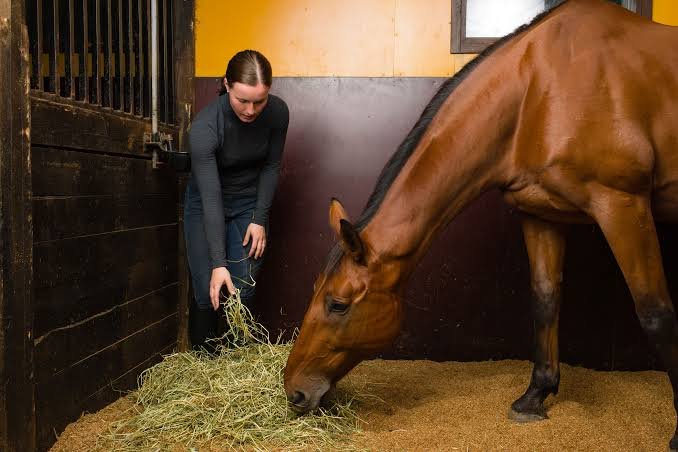
It is 8 p.m. and a horse owner notices she has two bales left. She grabs her phone and types “hay near me.” Google shows a map with three pins. She taps the one with its hours listed, good reviews and a phone number, and she calls.
Hay suppliers, feed stores, horse barns and farms that sell direct all face the same question. When someone nearby searches for what you sell, do they find you or the place down the road?
For a small farm business, the fix is mostly plain work. You do not need a big budget or a marketing department. You need four things in good shape: your Google Maps listing, your reviews, a simple website and a page for each town you serve.
What shows up first when someone searches for a farm business?
For most “near me” searches, Google puts a map at the top with a few businesses pinned on it. Those listings come from Google Business Profile, a free listing Google gives to businesses that serve customers in person.
If you have never claimed yours, start there. Google’s own guide to getting started with Business Profile walks through it. Then fill it out the way you would paint the sign at the end of your driveway, because for a lot of customers this is that sign:
- Pick the category that matches what people search for. A feed store should be listed as a feed store, not only as a farm.
- List the hours you actually keep, including holidays and the weeks you close early. A customer who drives out to a locked gate rarely tries a second time.
- Use a phone number that gets answered. People tap to call straight from the map.
- If you deliver, list the towns you deliver to.
- Add real photos: the barn, the stack, the store front, the trailer you deliver with. People want to see the place they are about to drive to.
- List what you sell: hay types, feed brands, shavings, boarding, lessons.
Then keep it current. Post an update when a new load comes in. Change your hours when the season changes.
Why do reviews matter so much for farm businesses?
When three pins show up on the map, the star rating and the number of reviews often decide which one gets the tap. Reviews also show Google that real people visit and buy from you.
Most happy customers will leave a review if you ask. Few think to do it on their own. So ask:
- At the counter, when someone says they love the hay.
- In a text after a delivery, with a direct link to your review page.
- With a small sign by the register.
Answer every review, the good ones and the rough ones. A short, calm reply to a bad review shows the next customer how you treat people.
Steady asking adds up. Farmers Direct Hay, a Florida hay and feed store we work with, has 99 Google reviews and a 4.7 star average.
Does a farm business still need a website?
Yes, a simple one. Your Google listing gets you noticed. Your website answers the questions that come next. What do you have right now? Do you deliver to my town? How do I order?
A good farm website does a few things well:
- It lists what you sell, in the words customers use, like “timothy hay,” “alfalfa” or “pine shavings.”
- It shows where you deliver.
- It puts your phone number at the top, where a thumb can tap it.
- It loads fast on a phone with one bar of signal, because plenty of your customers are searching from a truck or a barn aisle.
A pretty site that takes forever to load on a country road still loses the call.
Should you build a page for each town you serve?
If you deliver to or draw customers from several towns, yes. People in the next town over often type the town name into the search, like “hay delivery” plus the town. A page on your site for each town you serve gives Google a clear match for that search.
Put real details on each page: which days you deliver there, any minimum order, any delivery fee, and what people in that town usually order. Copying one paragraph and swapping the town name helps nobody, and Google tends to ignore pages like that.
What does this look like when it works?
Here is where Farmers Direct Hay stood when we last checked the numbers, on November 13, 2026:
- Google search sent their website 156 clicks in April 2026, the first month the new site was live. In October it sent 989, their best month so far.
- In the 28 days ending November 9, people tapped the call button on their Google listing 154 times. That is about 50% more than the 28 days before.
- On Google Maps, they showed up in 98% of the hay and feed searches we checked, from 49 spots reaching 30 miles north, south, east and west of their store.
- From April to early November 2026, at least 66 brand new paying customers came in through the marketing. Those customers have spent more than $80,000 so far, before tax and after refunds.
All of that came from the plain work above, done in order and kept up week after week.
Where should a small farm business start?
If you only have one free afternoon this month, do three things:
- Claim and fill out your Google Business Profile.
- Ask your ten best customers for a review.
- Make sure your phone number and hours match everywhere they appear online.
Work on the website and town pages when you can. If you would rather hand it off, find someone who does farm marketing and ask them to show you real numbers from a real farm client before you sign anything.
Old McDonald Marketing is a farm marketing agency for hay suppliers, feed stores and horse barns. It is a brand of Young & Wise Media, LLC.
