

Your smile does a lot more than you think. Most people see orthodontic treatment as a cosmetic fix, a way to straighten teeth so photos look better. But the research tells a different story. Proper teeth alignment touches everything from how well you sleep at night to how confidently you walk into a boardroom. For busy professionals and health-conscious adults who want to get the most out of every area of their life, understanding the full picture of orthodontic benefits is genuinely worth your time.
Below are eight concrete ways that straight teeth and a correct bite affect your career, your mental health, and your body, backed by science and practical insight.
1. Your First Impression at Work Gets a Measurable Boost
You already know first impressions form fast. What you may not know is how much your smile shapes them. A well-aligned smile is often associated with attractiveness, health, and success, and people with straight teeth are perceived as more confident, approachable, and trustworthy, which can lead to better social interactions, professional opportunities, and overall life satisfaction.
That perception matters whether you’re pitching a client, interviewing for a role, or meeting a new colleague. A confident smile can convey competence, friendliness, and professionalism, qualities that are highly valued in any career. You cannot always control how a room reads you, but you can control the investment you make in the factors that shape that reading.
2. It Reduces the Low-Grade Anxiety That Holds You Back Socially
Social anxiety connected to teeth is more common than most people admit. Many adults quietly avoid situations where they have to speak in front of others, laugh openly, or be photographed because of self-consciousness about misaligned teeth.
Aesthetically improved teeth can reduce social anxiety associated with speaking, laughing, or smiling in public, and people who were once self-conscious about their teeth frequently feel more at ease in social settings after orthodontic treatment. That ease is not trivial. People who are happy with their smiles are more likely to engage in conversations, make new friends, and participate in social events, and this increased social interaction can further enhance self-esteem, creating a positive feedback loop.
3. Aligned Teeth Are Drastically Easier to Keep Clean
Crooked or crowded teeth create overlapping surfaces that are almost impossible to clean properly with regular brushing and flossing. Food and bacteria settle into those gaps and stay there. Over time, that leads to plaque buildup, cavities, and gum disease, which are expensive and painful problems that compound if left unaddressed.
Orthodontic treatment is vital in promoting oral health, and cavities and gum disease are less likely to develop in teeth that are properly aligned because they are easier to clean. Think of it as a maintenance issue. A well-organized surface is simply faster and more effective to maintain than a cluttered one, and the same principle applies directly to your teeth.
The CDC’s oral health data hub offers extensive research on how oral disease prevention reduces long-term healthcare costs for adults.
4. Jaw Alignment Directly Affects How Well You Sleep
This is probably the most underappreciated connection on this list. The position of your jaw determines the size of your airway. When the jaw is out of alignment, that airway can narrow significantly, especially when you lie down at night.
Research has revealed a strong connection between jaw position, the airway, and critical concerns like breathing efficiency and sleep disorders, including obstructive sleep apnea. More specifically, patients with sleep-disordered breathing, such as obstructive sleep apnea, often have their jaw joints positioned further back than normal, creating smaller airway volumes.
And this is not a minor quality-of-life issue. A meta-analysis revealed a significant association between poorer oral health and poorer sleep quality, with a standardized mean difference of 2.166. Poor sleep affects concentration, mood, immune function, and long-term cardiovascular health. Fixing a bite problem can be one of the most impactful things you do for your sleep, without any sleep aids involved.
5. Correct Alignment Can Improve Your Speech and Communication
The way your teeth and jaw come together has a direct effect on how you produce certain sounds. Gaps, overbites, underbites, and crowding all create interference patterns that can make specific consonants and vowels harder to pronounce clearly. For professionals who speak publicly, lead meetings, or record content, this matters more than people realize.
Orthodontic procedures, such as correcting overbites or underbites, can enhance speech intelligibility, and self-esteem can be significantly impacted by improved communication skills after orthodontic treatment, particularly in social and professional contexts.
Clearer speech is a professional asset. You spend less energy self-monitoring, your audience spends less energy decoding, and the entire exchange becomes more productive.
6. A Straighter Smile Supports Better Mental Health Over the Long Term
The link between physical appearance and mental well-being is well-established, and your smile sits at the center of most social interactions you have every single day. The smile confidence that comes with orthodontic treatment can have profound psychological effects, and studies show that individuals who are satisfied with their smile report higher self-esteem and lower levels of anxiety.
There are many mental health benefits associated with adult orthodontics beyond enhanced confidence and self-esteem, and these can include improved social relationships, increased job satisfaction and productivity, and even reduced anxiety and depression. That combination, better relationships, higher job satisfaction, reduced anxiety, is basically the recipe for a healthier day-to-day mental state.
After orthodontic treatment, a self-assured smile can have a long-lasting effect on mental health, and positive psychological impacts last long after therapy ends, impacting how people view themselves in several areas of life.
7. Early Treatment in Children Prevents Larger Problems Later
Parents often wonder whether their child actually needs orthodontic attention now or whether it can wait. In most cases, early intervention is far more cost-effective and less physically complex than corrective work done in adulthood. Jaws and arches are still developing in children, which makes them far more responsive to guided treatment.
The timing of orthodontic intervention can significantly impact sleep-related benefits, and early treatment during childhood and adolescence, when growth is still occurring, offers the greatest potential for improving airway anatomy and preventing sleep-related issues from developing or worsening over time.
Rapid palatal expansion, commonly used in growing patients, has been shown to improve nasal breathing and reduce sleep-related breathing issues, and by expanding the upper jaw, this treatment increases both the width of the dental arch and the volume of the nasal cavity, making breathing easier and more efficient.
If your child is struggling with frequent mouth breathing, crowded baby teeth, or recurring ear or sinus issues, a consultation with an orthodontist is worth scheduling sooner rather than later. Families in British Columbia looking for expert assessment can turn to south surrey orthodontics at Dream Orthodontics, which offers treatment for kids, teens, and adults at all stages.
8. Orthodontic Treatment Today Is More Accessible and Discreet Than Ever
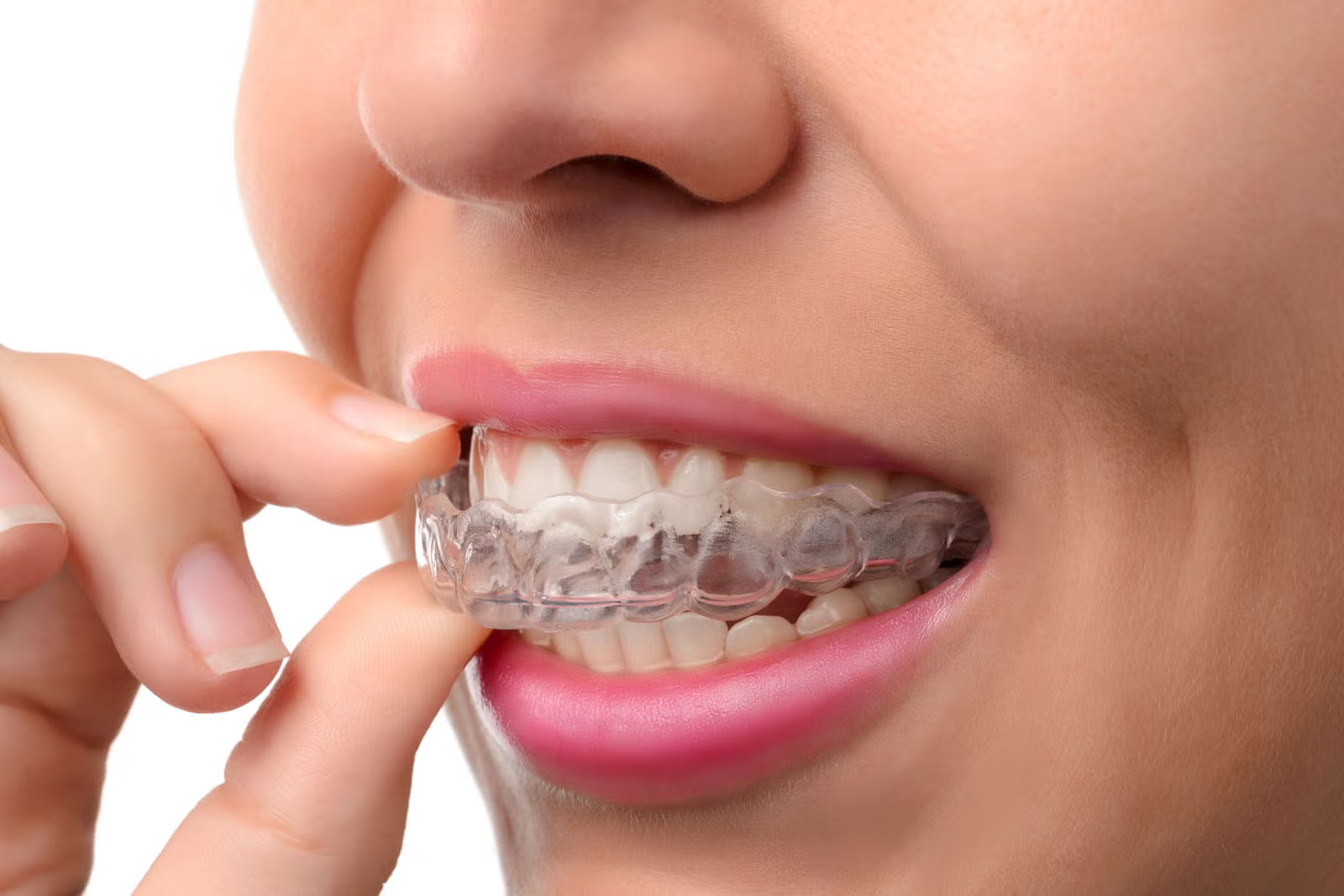
One of the biggest reasons adults put off orthodontic treatment is the image of bulky metal braces. That image is outdated. Modern options include ceramic clear braces that blend with the natural color of teeth and clear aligner systems like Invisalign that are nearly invisible during wear.
Orthodontic treatment is not just for teenagers, and adults too can experience the benefits that lead to a self-esteem boost, with modern orthodontic solutions that are discreet, effective, and accessible for young professionals and parents alike.
Many practices now offer flexible appointment windows, direct insurance billing, and zero-interest financing to remove the logistical and financial barriers that used to stop adults from starting treatment. The American Association of Orthodontists provides a solid overview of the treatment options available to adults and children if you want a neutral, authoritative starting point for your research.
How to Know If You or Your Child Needs Orthodontic Treatment
Not everyone needs extensive intervention, but the signs that suggest you should book a consultation are fairly consistent across age groups. Watch for any of the following:
- Crowded, overlapping, or crooked teeth that make flossing difficult
- An overbite, underbite, crossbite, or open bite
- Jaw pain, clicking, or popping (which may indicate TMJ issues related to bite misalignment)
- Difficulty chewing or biting food comfortably
- Chronic mouth breathing, snoring, or restless sleep
- Visible gaps between teeth or a noticeably asymmetrical smile
- Speech issues that persist beyond developmental norms in children
A board-certified orthodontist can assess your bite and jaw with X-rays and a clinical exam, then outline exactly which issues are present and what options exist to address them. Many offices now offer virtual consultations, so getting a professional opinion has never been easier or less time-consuming.
Putting It All Together
Teeth alignment is not a vanity issue. It touches your sleep, your breathing, your mental health, your communication, and your professional presence. The eight points above show that the benefits of orthodontic treatment ripple outward into almost every area of your life that matters.
Whether you’re a working professional who wants to show up more confidently, a parent evaluating options for your child, or someone who has simply been putting this off for years, the case for acting sooner is strong. The National Institute of Dental and Craniofacial Research offers free, evidence-based resources on oral health and its connection to systemic wellness if you want to explore the science further. Your smile is working for you or against you every single day, and the good news is that fixing it is well within reach.
