

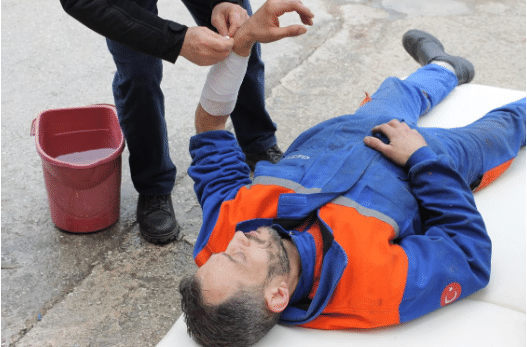
Delivery driving looks simple from the outside, but it is one of the most physically demanding jobs on the road. Drivers spend long shifts behind the wheel, fight through heavy traffic, lift package after package, and race against tight delivery windows. All of that pressure adds up, and when something goes wrong, the injuries can be serious enough to keep a driver off the job for weeks or months.
This is where workplace accident claims earn their keep. A claim pays for medical treatment and replaces a chunk of lost wages while an injured driver heals, and in most cases the driver does not have to prove the employer did anything wrong. Understanding how the system works and getting help from a firm that handles North Carolina workplace accident claims when a case gets complicated can make the difference between a smooth recovery and a financial mess.
The Risks Delivery Drivers Face on the Road
Delivery work carries one of the highest injury rates of any occupation. The Bureau of Labor Statistics puts the nonfatal injury and illness rate for light truck and delivery drivers at about 233 cases per 10,000 workers, far above the national average. The most common hazards include:
- Motor vehicle crashes. Long hours, fatigue, and time pressure put drivers at constant risk of collisions in traffic and while backing out of driveways.
- Overexertion. All that lifting and carrying of heavy boxes drives about 41% of nonfatal injuries, from strained backs to torn muscles.
- Slips and falls. Icy walkways, wet steps, and cluttered porches account for close to 23% of accidents.
- Dog bites. Unsecured pets at residential stops send thousands of drivers to the doctor every year.
What a Workplace Accident Claim Covers
Once a driver files a claim, a legal safety net kicks in. Depending on the state and the injury, benefits usually include:
- Medical care. From ER visits and surgery to prescriptions and physical therapy, a claim picks up the reasonable and necessary treatment so the driver is not stuck paying out of pocket.
- Wage replacement. When an injury keeps a driver off the road, temporary disability benefits step in and cover a big chunk of their usual weekly pay.
- Permanent disability benefits. If an injury sticks around and cuts into what a driver can earn, they can qualify for ongoing compensation.
- Vocational rehabilitation. A driver who can no longer lift or drive may get retraining and career help to move into a new line of work.
- Death benefits. If a crash is fatal, surviving family members receive funeral costs and financial support.
When Another Driver or Property Owner Is at Fault
Because delivery drivers spend their days off-site, someone other than the employer often causes the harm. In those situations, a driver can pursue a separate claim on top of workers’ compensation:
- At-fault motorists. When another driver slams into a delivery van, the injured driver can sue that motorist for pain, suffering, and damages beyond what workers’ comp pays.
- Unsafe property owners. A broken step or an un-shoveled, icy walkway can support a premises liability claim against the homeowner or business.
Claims matter after the fact, but staying safe on the road matters more. Federal vehicle safety guidance urges delivery employers to enforce seat belt use, maintain their fleets, and build realistic routes so drivers are not forced to speed to hit their numbers. Drivers who know those standards can also point to them if an employer’s shortcuts led to a crash.
Employees vs. Independent Contractors
How much protection a driver gets depends heavily on job classification:
- W-2 employees. Drivers who work directly for a company or a traditional courier service are usually covered automatically under state workers’ compensation. There is no need to prove fault before benefits start.
- 1099 independent contractors. Drivers for app-based platforms are often classified as contractors, so they rarely qualify for traditional workers’ comp. They must lean on occupational accident insurance offered by the platform, their own health insurance, or a personal injury lawsuit if another driver caused the crash.
How to Protect Your Claim
If you are hurt on the job, a few quick steps protect both your health and your right to benefits:
- Report the injury immediately. Tell your supervisor or the company the same day, because waiting is a common reason claims get denied.
- See a doctor fast. Get treated right away and ask the doctor to note that the injury happened while you were working. Some delayed symptoms surface days later, so do not brush off new pain or stiffness.
- Save every record. Keep medical bills, crash and incident reports, and all messages with your employer in one place.
Conclusion
Delivery drivers keep the country moving, often at real risk to their own safety. Workplace accident claims exist so that a bad day on the route does not turn into a financial disaster. Know your coverage, act fast after an injury, and get qualified help when a claim gets complicated, and you give yourself the best shot at a full recovery.
