

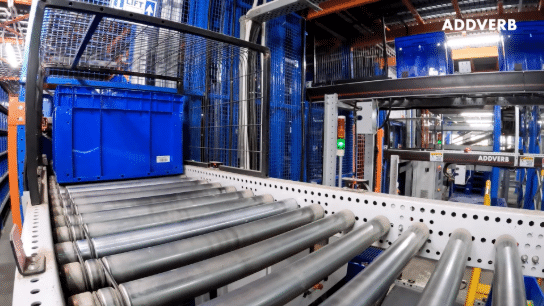
A conveyor used to have one simple job: move a box from A to B. That was enough when warehouse operations followed predictable paths and order volumes were easier to manage. Modern warehouses are different. They handle more SKUs, face tighter delivery windows, and rely on several automated processes at once. A conveyor that cannot respond to those changes can become the very thing that slows the operation down in a USA-based warehouse.
The shift is already visible in the market. According to Grand View Research, the global conveyor systems market was valued at approximately $10.2 billion in 2023 and is projected to reach around $14.3 billion by 2030. The reason is not simply a demand for more conveyors. Warehouses need smarter material movement that can work with the rest of the operation. A material handling conveyor system can now become part of that connected setup, using automated movement, real-time coordination, and data to keep goods moving where they need to go.
Why Are Traditional Conveyor Systems No Longer Enough for Modern Warehouses?
The problem with a traditional conveyor is not that it moves goods poorly. It is that the system may not know what is happening around it. A fixed path can work well when volumes and workflows stay stable. But when orders change, SKUs increase, or picking and packing stations operate at different speeds, that same fixed setup can create delays.
Global e-commerce sales reached approximately $5.8 trillion in 2023 and were expected to surpass $7 trillion by 2025, according to Statista. Higher order volumes put more pressure on every stage of fulfillment. A conveyor that simply runs faster may push more goods toward a bottleneck instead of solving it.
Signs a warehouse may have outgrown its traditional conveyor setup:
- Congestion builds even when the conveyor is running at speed.
- Layout or SKU changes require expensive rework.
- Picking and packing stations cannot keep pace with incoming goods.
- Operators have little real-time visibility into where delays occur.
Traditional vs. Smart Conveyor Systems: What Really Changes?
The biggest difference is not the conveyor itself. It is how the conveyor behaves within the warehouse.
| Category | Traditional Conveyor | Smart Conveyor |
| Movement | Follows fixed paths | Responds to workflow requirements |
| Coordination | Works mainly as standalone equipment | Connects with other warehouse processes |
| Controls | Uses predefined patterns | Uses real-time information |
| Material Flow | Focuses on transportation | Coordinates movement across processes |
| Warehouse Role | Moves goods between points | Becomes part of the automation ecosystem |
This distinction matters because warehouse performance depends on more than one piece of equipment. If goods arrive at the warehouse faster than the picking area can process them, products can start to pile up and cause delays. The same can happen when the picking area sends more goods to packing than the packing stations can handle. A smart conveyor system helps coordinate the movement between these areas so that goods move at a pace the next stage can manage.
How Do Smart Conveyor Systems Improve Material Flow Across Warehouses?
A smart conveyor can use operational data to decide how goods should move through connected warehouse areas. Instead of treating transportation as an isolated activity, the system can support the movement of products between receiving, storage, picking, packing, and dispatch.
A material handling conveyor system can therefore do more than carry products. It can become part of a coordinated workflow that reduces unnecessary manual transfers and gives operators better visibility into material movement. When goods reach the right process at the right time, fewer delays accumulate between warehouse zones in the USA.
The benefit is especially important when several automated processes share the same facility. Better coordination helps prevent one area from creating problems for another and gives the warehouse a more consistent flow of goods.
What Role Does Software Play in Making Conveyor Systems Smarter?
The hardware moves the goods, but software helps determine how that movement fits into the wider operation. A connected control layer can link conveyor activity with warehouse information, workflows, and other automation systems. This allows movement decisions to respond to what the USA-based warehouse needs rather than relying only on predefined instructions.
Key software capabilities include:
- Connecting movement decisions with warehouse and inventory information.
- Coordinating conveyor activity with other automation systems.
- Responding to changing operational requirements.
- Providing better information for material flow decisions.
More than 80% of warehouses still rely on manual processes for some operations, according to the Zebra Technologies Warehousing Vision Study. That leaves room for greater software-led automation. In pharma warehouse automation, for example, connected workflows can help align material movement with defined warehouse processes instead of leaving conveyors to operate separately.
How Can Smart Conveyors Help Warehouses Reduce Operational Bottlenecks?
A warehouse bottleneck in the USA rarely starts and ends at one machine. A delay at receiving can affect storage. A storage delay can affect picking. A picking delay can leave packing stations waiting. By the time the problem becomes visible, several processes may already be affected.
This is where coordinated material movement can make a difference. A material handling conveyor system can help synchronize transfers between warehouse zones so products move according to the requirements of the next process. According to MHI’s Industry Report, 57% of supply chain leaders identified improving efficiency and productivity as a top reason for investing in supply chain technology. Better coordination directly supports that goal by reducing interruptions between connected activities.
How Addverb Enables Intelligent Material Movement Through Smart Conveyor Solutions
Addverb provides top automated material movement solutions in the USA designed to connect transportation, sortation, and automation processes within warehouse operations. Its conveyor portfolio includes solutions for different material movement requirements:
- Pallet Conveyor: Designed to move heavy payloads over long distances.
- Roller Conveyor: A compact option for non-fragile and heavier items.
- Belt Conveyor: Provides traction for controlled acceleration and deceleration while moving products.
The value comes from how these solutions fit into a wider automation environment. Addverb’s best material movement solutions can support synchronized warehouse operations where transportation works alongside other automated processes. This helps warehouses improve visibility, scalability, and the consistency of material flow.
Conclusion
The next generation of warehouse conveyors is not defined by speed alone. It is defined by how well material movement works with everything around it. As order volumes rise and warehouse processes become more connected, conveyors need to support the wider operation rather than simply move products between two points.
A material handling conveyor system can provide that foundation by connecting movement with software, workflows, and automation. For warehouses looking to reduce bottlenecks and build more responsive operations, smarter material movement is becoming a practical requirement rather than an optional upgrade. Addverb helps USA-based warehouses build more synchronized and scalable automation environments through its material movement solutions.
