

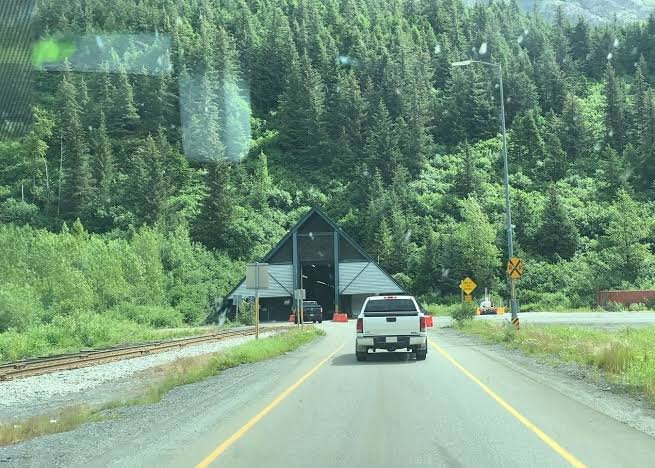
The Whittier tunnel opens on the hour going one direction and on the half hour going the other. Miss your window and you’re sitting in Portage for a while, watching a clock instead of a glacier. That single scheduling quirk is why so many otherwise well-built Alaska itineraries fall apart on the last sixty-three miles.
Here’s the good news: the drive from Anchorage to Whittier is one of the prettiest stretches of pavement in the state, and once you understand how the tunnel works, the whole day gets easy. You’ll learn the timing rules, when to leave Anchorage, how to handle the rail and coach alternatives, and what to do with the ninety spare minutes you’re probably going to have. Because you will have them. Almost everyone does.
I’ve made this drive in rain, in that flat gray light that makes Turnagain Arm look like hammered pewter, and once in late June glare so bright I gave up on sunglasses entirely. The mountain goats didn’t care either way. If you’re building out a broader trip, planning your travel route around a fixed tunnel schedule is the single highest-leverage decision you’ll make, and tour operators like Phillips Cruises publish the details that most first-timers discover too late.
How the Whittier Tunnel Actually Works
The Anton Anderson Memorial Tunnel is roughly two and a half miles long, and it’s shared. Cars, trucks, and the Alaska Railroad all use the same single bore. Trains take priority. That’s not a policy preference, it’s physics: a train doesn’t stop and back out gracefully.
So the tunnel runs on a fixed schedule for vehicles. Traffic flows one direction at a time, alternating, and the pattern holds for most of the day. You arrive, you wait your turn, you drive through on the guide’s signal. There’s no passing lane, no shoulder, and no reason to tailgate the Subaru in front of you.
A few things I’d tell a friend before their first crossing:
- Buy your tunnel pass before you get in line, not while you’re in it. Cell service around Portage is unreliable.
- Headlights on. It’s dark, it’s narrow, and the surface can be wet even on a clear day.
- Use the restroom before you queue. There isn’t one inside the tunnel, obviously, and the wait is real.
- Don’t plan tight. If you’re aiming for a cruise departure, leave a full window of slack.
The tunnel itself is a piece of engineering worth reading up on, and the Alaska Department of Transportation and Public Facilities manages the crossing along with the state’s broader highway system. Their materials are the ones to trust over whatever a forum thread said in 2014.
Should You Drive, Take the Train, or Book a Coach?
Three real options, and I have a clear favorite depending on who’s traveling.
Drive. You keep total control of the timeline and you get the Seward Highway pull-outs, which are the actual point of the trip for a lot of people. The mudflats along Turnagain Arm, the waterfalls, the chance of seeing beluga whales or Dall sheep on the slopes. One caution: this is bear country and moose country, and the National Park Service covers wildlife safety across the parks and public lands it manages. Read it before you go, not after.
Rail. The Alaska Railroad runs a route with big windows and no steering wheel. You watch the scenery instead of scanning for potholes. If you’re traveling with someone who’d rather not drive a mountain highway in the rain, this solves it.
Coach. Comparable to rail in effort, useful when the rail schedule doesn’t line up with your cruise. Less romantic, still comfortable.
My honest pick: drive if you’ve got two or more adults and clear weather in the forecast. Rail if you’ve got kids, or if this is your first trip and you’d rather not learn mountain driving on a deadline. I’d take the train myself on a rainy day and never think twice about it.
The Anchorage-to-Whittier Drive, Broken Down
Sixty-three miles sounds like nothing. It’s roughly an hour and a half without stops, and you should not do it without stops.
| Leg | What You’re Doing | Time to Budget
|
|---|---|---|
| Anchorage to Turnagain Arm | Leaving town, getting your bearings | 30 minutes |
| Turnagain Arm pull-outs | Photos, mudflats, wildlife scanning | 30 to 45 minutes |
| Seward Highway to Portage Glacier Road | Scenic driving, watch for the turnoff | 35 minutes |
| Portage to the tunnel | Queue, pass check, wait for your window | 20 to 60 minutes |
| Tunnel to Whittier | The crossing itself | 10 minutes |
That last row is the one people underestimate. The tunnel doesn’t run on your schedule. It runs on its own.
There’s a smaller version of the same problem on the other side. Once you’re through, Whittier is compact, and finding your boarding location takes minutes, not hours. The stress is all front-loaded into the tunnel timing.
A Sample Timeline That Actually Works
Say your glacier cruise boards late morning. Here’s how I’d build the day, assuming you’re driving yourself.
- Leave Anchorage around 7:00 a.m. Earlier in summer if you want the pull-outs to yourself, which you do.
- Stop at two or three pull-outs along Turnagain Arm. Not five. You’ll lose the day.
- Reach Portage with at least one tunnel window of buffer. If you hit the window, you’re early, which is the goal.
- Cross the tunnel, park, and walk to the marina. Confirm your boarding spot the night before so you’re not guessing.
- After the cruise, reverse it. Check the afternoon tunnel schedule before you commit to a leisurely dinner.
The other thing worth knowing about Whittier, and it caught me off guard the first time: nearly everyone in this town lives in one building. The whole community is under a single roof, which is a practical response to weather that doesn’t cooperate. You can read more about the state’s communities and travel resources through the State of Alaska portal. It’s a strange, wonderful detail, and it explains why Whittier feels different from anywhere else you’ll stop.
Mistakes I See Repeatedly
Booking a cruise and a flight home on the same day when the cruise departs from Whittier. Don’t. The tunnel, the weather, and Alaska’s general disregard for your plans will punish that optimism.
Skipping the buffer because GPS says ninety minutes. GPS has never once accounted for a tunnel queue or a moose standing in the road.
Assuming cell service. Download what you need before you leave Anchorage, including directions, tunnel times, and your booking confirmations. This is the one piece of advice almost every traveler ignores and almost every traveler regrets.
And packing for the forecast instead of for the water. A glacier cruise runs near ice. It’s cold on deck regardless of what Anchorage felt like that morning. Layers, a real jacket, and a hat you’re willing to lose to the wind.
Wrap the Day, Not the Whole Trip
Timing the tunnel is the one variable you can control, so control it early and the rest of the day takes care of itself. Drive if you want the pull-outs and the freedom. Take the rail if you’d rather watch the scenery than manage it. Either way, leave Anchorage earlier than feels necessary, download your maps before you lose signal, and treat the tunnel schedule as fixed rather than negotiable.
Where’s your first stop after Anchorage going to be? Pick it now, before the trip gets loud, because the people who plan one decision in advance are the ones who actually enjoy the rest of the drive.
