

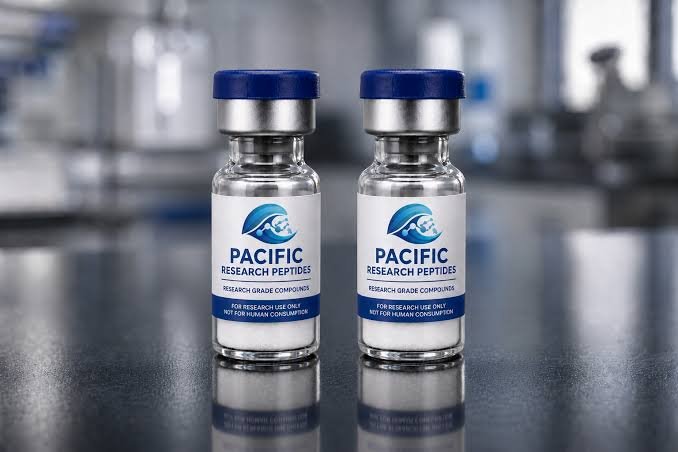
Research peptide blends bring multiple compounds into a single formulation, creating questions that differ from those asked about an individual peptide. A laboratory may want to investigate whether a combination produces an independent, additive, or interacting response in a defined experimental model. That makes formulation details and appropriate controls central to interpreting the results.
Blend-style products also make these questions more visible in supplier catalogs. Names such as Wolverine, GLOW, and KLOW group ingredients under recognizable labels, but a name alone cannot establish what a material contains or how it performs. The scientific value of peptide blends for research depends on verified identity, clearly stated amounts, and a study designed to distinguish the mixture’s effects from those of its components.
What peptide blends are in a research context
A research peptide blend contains two or more specified compounds supplied together for laboratory investigation. The formulation may have a fixed ratio and total amount per container. Those details define the material being evaluated, so they should be recorded alongside the individual compound identities and batch information.
A premixed formulation differs from purchasing individual compounds and combining them within a laboratory protocol. The first approach fixes the supplied composition; the second allows the laboratory to vary it, subject to appropriate characterization and controls. Neither approach is inherently more informative. The choice should follow the research question and the ability to verify the material.
Researchers reviewing research peptides for sale online in the US can explore GenoScience’s catalog to compare individual compounds with listed blend products. Catalog descriptions provide an initial reference, while batch-specific records and the laboratory’s own requirements determine whether a material is suitable for a planned study.
Research use also has a defined boundary. GenoScience describes these products as intended for in-vitro and analytical work, rather than human or veterinary use. In-vitro work takes place outside a living organism. A laboratory formulation should not be presented as a treatment, supplement, or established clinical intervention.
Why researchers compare single compounds with blends
An individual compound provides a simpler starting point for studying an experimental response. Once several compounds are present, a change in the measured endpoint may reflect one component, several independent effects, an interaction, or a feature of the formulation itself. The combined result does not explain its own cause.
Comparing components with the mixture can help separate these possibilities. A study might include an appropriate control, each individual compound, and the combination under matched experimental conditions. The relevant comparisons depend on the assay, and a fixed premixed ratio may limit which questions can be answered.
More compounds also introduce more variables. Differences in component amounts, stability, sample preparation, or analytical interference can affect interpretation. Researchers should select endpoints in advance and document the conditions under which comparisons are made. A striking result deserves examination of those alternatives before a mechanism is assigned.
Synergy is a particular claim, not a synonym for combining ingredients. Establishing it requires a defined model of the expected combined response and evidence that the observed result exceeds that expectation. A blend cannot be described as synergistic simply because its components have different proposed roles.
Examples of peptide combinations listed for research
A BPC-157 TB-500 blend is one example appearing in research supplier catalogs. GenoScience’s Wolverine product page identifies these two compounds and states that the vial labeling names them individually. The page describes Wolverine Stack as a marketing display name. The phrase Wolverine stack peptide therefore identifies a catalog concept rather than a standardized scientific formulation.
TB-500 nomenclature deserves particular attention. GenoScience’s Wolverine description identifies a thymosin beta-4-derived fragment, while some catalog descriptions use broader shorthand. Researchers should confirm the precise sequence and chemical form instead of treating a fragment and the full-length peptide as interchangeable materials.
A GHK-Cu peptide blend introduces a copper-associated peptide component into a multi-compound formulation. GenoScience lists GLOW with BPC-157, TB-500, and GHK-Cu, while its KLOW listing adds KPV. These are examples of supplier-described compositions, not evidence that the mixtures have demonstrated clinical benefits or superior experimental performance.
The same display name may not describe the same formulation across suppliers or product revisions. Even within one catalog, container sizes and variants can differ. A comparison should refer to the exact product specification and batch, rather than rely on a familiar blend name.
Clear labeling and exact compound amounts
A total quantity does not tell a researcher how much of each component is present. For a mixture containing three compounds, the label should distinguish the amount of each from the combined total. It should also make clear whether a number describes mass per vial or concentration in a solution. Those measurements are related but are not interchangeable.
Mass ratios can also differ from molar ratios because compounds have different molecular masses. The study record should specify which basis is being used. Chemical form, salt or counterion information, and the basis of the reported quantity may matter when comparing materials or interpreting an assay.
- Identify every component by a specific chemical name and, where needed, sequence.
- Record each component’s stated amount and the total amount per container.
- Distinguish supplied mass from any separately reported solution concentration.
- Match the product label, lot number, specification, and certificate of analysis.
- Resolve ambiguous names or conflicting amounts with the supplier before selecting the material.
These checks make research peptide blends easier to evaluate and reproduce. If a proprietary description conceals the ingredients or their amounts, the laboratory may lack the information required to attribute an observed response or recreate the experiment.
Why purity and batch documentation matter
Purity is meaningful only when its measurement is explained. A reported percentage may describe the relative signals detected by one analytical method rather than the absolute mass of each compound in the container. A high percentage alone does not establish identity, component quantity, or every other quality characteristic relevant to the study.
For a blend, ask whether testing characterizes the finished mixture or only the individual ingredients before mixing. Component reports can provide useful information, but they do not automatically demonstrate the composition of the final product. The documentation should explain what sample was tested and what the results establish.
A certificate of analysis should be traceable to the supplied lot and identify the methods, results, and reporting basis. Chromatographic and mass-spectrometric information can support different characterization questions; the laboratory should assess whether the available evidence addresses identity, separation, and quantity adequately for its intended application.
Purity should also be distinguished from sterility, endotoxin testing, and other contamination assessments. A purity claim does not substitute for those separate tests. Which characteristics matter depends on the experimental model, and researchers should avoid assuming that an unreported test was performed.
FDA’s discussion of certain peptide-related compounding risks identifies concerns involving impurities, aggregation, and incomplete safety information. Although that discussion concerns human drug compounding, it reinforces why analytical quality must not be confused with demonstrated human safety. Laboratory documentation cannot turn a research reagent into an approved medicine.
Where to explore peptide blends for research use
Begin with the experimental question, then compare the materials available to answer it. Individual compound pages help identify components; blend pages show how a supplier packages them together. Request any missing lot-specific information before deciding that a catalog entry meets the laboratory’s requirements.
Researchers comparing two-component formulations can review GenoScience’s product details before deciding whether to buy Wolverine Peptide Blend online for an appropriate laboratory study. The useful information is the stated composition, labeling, and supporting documentation, rather than assumptions attached to the product name.
For GLOW, KLOW, and other formulations, use the same review process. Confirm the current specification, check the individual amounts, and determine whether a fixed blend supports the comparisons the experiment requires. If the study needs independent variation of each component, separate materials may offer a more suitable design.
Keep the research question ahead of the formulation
Multi-compound formulas create opportunities to examine interactions, but they also increase the information needed to interpret a result. Their appearance in catalogs makes them easier to discover; it does not establish their effectiveness or a measurable trend in scientific adoption.
Useful work with peptide blends for research starts with explicit composition, traceable batch records, and comparisons that can separate component effects from mixture effects. Those foundations allow a laboratory to judge a formulation by the questions it can answer, rather than by the appeal of its display name.
