

You’re at 2 a.m. with 43 open tabs, three PDF folders named ‘final,’ ‘final_v2,’ and ‘actually_final,’ and no memory of which paper made the point you need. The citation is in there somewhere, but so is everything else you downloaded this month. WisPaper, an AI academic agent, works like a file clerk who read your sources.
Name Your Save Convention Before the First Download
The mess usually begins with a filename. A PDF saved as ‘Wang_2023.pdf’ is hard to find months later, when you can’t remember if it was Wang or Zhang. The average literature review loses a key citation because the PDF was saved under an author’s surname the searcher can no longer spell; WisPaper makes the saved set searchable, but it can’t undo a nameless pile.
Search Once, Then Let the Feed Watch the Field
Most search tools are built for one query at one moment. You type, get results, close the tab, and the field keeps moving without you. Reviewers covering a fast-moving topic feel this hardest; re-running the same query by hand every week is a habit nobody sustains, so the review goes stale.
The ‘Actually Final’ Folder Is a Symptom, Not a System
Every ‘actually_final’ folder starts as optimism. A draft, then a revision, then a revision of the revision, and the folder names become a record of indecision instead of a filing system. The problem is that the library lives in the download folder while the notes live in the margins of PDFs you haven’t opened in weeks. When it’s time to write, you’re digging through sediment.
Re-Find the Quote You Only Half-Remember
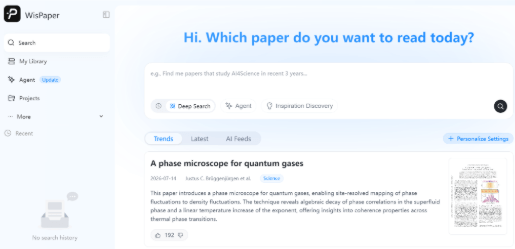
The newer tools attack the half-remembered quote directly, searching the saved text rather than matching a filename. WisPaper’s Deep Search does the same at discovery, matching results to intent rather than a fragile keyword string, and My Library keeps the saved set searchable as it grows. That combination makes an AI academic agent work like a second memory for the review.
Close the Loop Before You Close the Tabs
When the loop closes, the review stops feeling like archaeology. You find the quote, confirm the source, and move on. The gain is modest: the difference between writing and rummaging.
The habits that keep papers findable are cheap, but they have to be set up before the pile grows. A naming rule and a searchable library let a review spend its energy on the argument instead of the file tree.
