

AI video is no longer just a creative experiment. For companies that depend on product demos, social campaigns, training clips, and launch content, tools like Seedance 2.5 raise a practical leadership question: where should AI video fit inside the business workflow?
Business leaders have seen this pattern before. A new AI tool appears, teams test it quickly, and the first reaction is excitement. A few impressive clips circulate internally. Someone suggests using it for marketing. Someone else asks whether it is reliable enough for real campaigns. Then the harder questions begin.
Who writes the brief? Who checks accuracy? Which assets are approved? What can be published, and what should remain a draft? If the company cannot answer those questions, AI video becomes another scattered experiment instead of a useful operating capability.
That is why leaders should look at AI video less as a single creative tool and more as a workflow decision. The value is not only in generating motion. It is in helping teams move from idea to reviewable draft faster, while keeping enough control over brand, product details, and approval.
Why AI Video Is Becoming a Business Issue
Video demand keeps growing across normal business functions. Marketing teams need short-form clips. Product teams need demos. Sales teams need explainers. HR teams may need training material. Founders and executives need visual assets for launches, presentations, and investor updates.
Traditional production still matters, especially for high-stakes campaigns. But not every idea needs a full shoot at the beginning. Many ideas simply need to be tested. Does the product story make sense? Does the pacing work? Does the visual direction match the brand? Does the concept deserve budget?
This is where AI video can reduce waste. A draft can help a team decide earlier. It can also make feedback more specific. Instead of debating a vague concept in a meeting, the team can respond to something visible.
Where Seedance 2.5 Fits
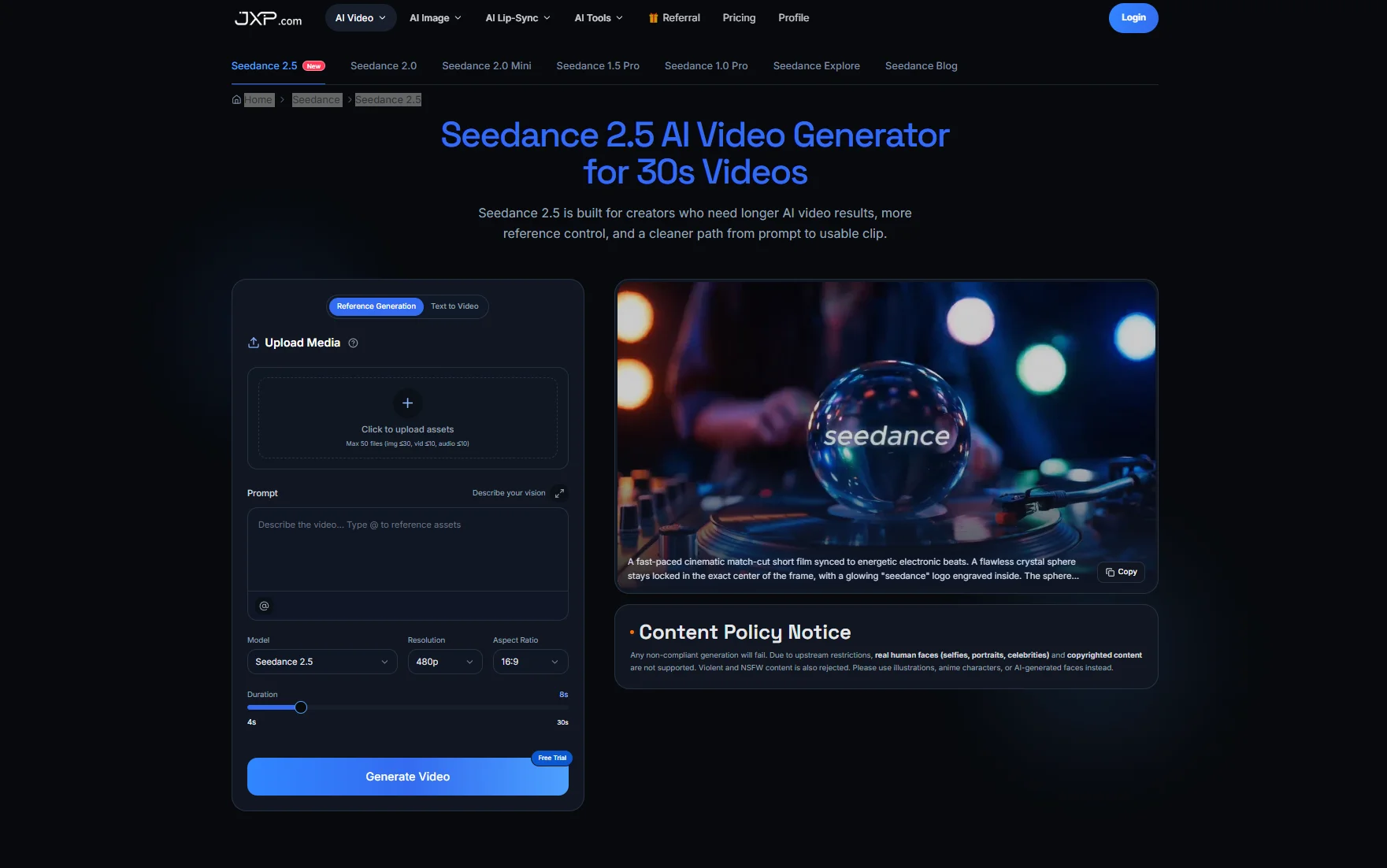
Seedance 2.5 is useful because it gives creators more room to work with structured video ideas. It supports longer 30-second generation, up to 50 reference inputs, and targeted refinement. For business teams, those details matter because a draft has to do more than look interesting for a few seconds.
A product video, for example, needs consistency. The product should not change shape. The scene should not drift away from the brief. A training clip needs clear pacing. A campaign teaser needs a strong opening and a usable ending frame. A sales explainer needs to support the message, not distract from it.
Seedance 2.5 is best understood as a way to create reviewable drafts from written prompts and reference materials. It can help teams test how a message might look in motion before moving into final production.
The Leadership Question: Who Owns the Workflow?
AI video can create confusion when ownership is unclear. If marketing controls the prompt but product owns the details, mistakes can happen. If design reviews style but no one checks factual accuracy, a polished draft may still be wrong. If legal or compliance needs to review certain claims, that step should be built into the process early.
Leaders do not need to micromanage every AI video test. They do need to define the operating rules. A simple framework can help:
- Which teams can create AI video drafts?
- Which assets are approved for reference use?
- Who checks product, brand, and factual accuracy?
- When is a draft internal only?
- What needs review before public publishing?
These questions sound basic, but they prevent many avoidable problems. They also help teams move faster because everyone understands the boundary between experimentation and publication.
Companies should also decide how approved assets are handled. Product screenshots, customer examples, training information, investor-facing visuals, and real UI screens should not be treated as casual prompt material. AI video can speed up the draft stage, but anything that represents the company publicly still needs human verification.
Use AI Video for Drafting Before Production
The strongest business use case is not replacing every video vendor or editor. It is improving the early stage. A team can use AI video to test a campaign idea, build a rough product sequence, prepare options for a stakeholder meeting, or turn a written concept into a visual draft.
For example, a SaaS company planning a feature launch could create three draft directions. One might focus on the interface. One might show a customer workflow. One might use a more cinematic product metaphor. The team can compare the drafts before deciding which direction deserves a real production budget.
This is faster than waiting for a polished concept deck. It also gives executives something clearer to evaluate. They can judge whether the idea supports the business goal before the company spends more time on it.
Why References Matter
Business content often depends on real assets. A product screenshot, brand palette, packaging image, office photo, logo, or customer workflow can all shape the final message. Text alone may not preserve those details.
Reference-based generation helps reduce that gap. A prompt can describe the story, while images or video clips guide the visual identity. This is especially important for companies that cannot afford off-brand or inaccurate content.
A practical Seedance 2.5 business video workflow should therefore begin with asset organization. Teams should know which files are current, which references are approved, and what the generated draft is supposed to demonstrate.
What Leaders Should Watch
AI video can save time, but it can also create new review work if teams use it carelessly. Leaders should watch for three risks.
The first is accuracy. If the video shows a product, service, or process, someone must confirm that the result is truthful. The second is brand consistency. A clip that looks impressive may still feel wrong for the company. The third is operational clutter. If every team creates drafts without naming, tracking, or reviewing them, the workflow becomes noisy.
The answer is not to avoid AI video. The answer is to treat it like any other business process: define the goal, assign ownership, set review standards, and measure whether it saves time or improves decision-making.
Final Thoughts
Seedance 2.5 gives business teams a practical way to test video ideas before full production. Its value is strongest when companies use it for drafts, references, and structured review rather than treating every generated clip as finished content.
For leaders, the question is not whether AI video looks impressive. The better question is whether it helps the organization make clearer creative decisions faster. When the workflow is defined, AI video can become a useful part of content operations instead of another disconnected experiment.
