

Battery Recycling has become one of the most important environmental practices of the modern era, with billions of batteries powering everything from smartphones to electric vehicles to industrial forklifts each year. As the world becomes more dependent on portable power, the volume of spent batteries entering the waste stream continues to climb at an unprecedented pace. Responsible recycling keeps hazardous materials out of landfills, reclaims valuable resources, and supports a circular economy that benefits both businesses and the environment. Understanding how the process works, what types of batteries can be processed, and why proper handling matters helps organizations make smarter, safer choices about how they manage end-of-life power cells.
Why Battery Recycling Matters More Than Ever
The global appetite for batteries has skyrocketed over the past decade, driven by the rapid expansion of consumer electronics, renewable energy storage, and electric mobility. According to the International Energy Agency, demand for lithium-ion batteries alone is projected to grow more than sevenfold by 2030 compared to 2022 levels. Without effective recycling infrastructure, this surge would result in an avalanche of toxic waste, with heavy metals like lead, cadmium, mercury, and nickel leaching into soil and groundwater. Improperly discarded batteries also pose serious fire risks at waste transfer stations and recycling facilities, where damaged cells can ignite and trigger costly blazes.
Beyond the environmental and safety concerns, the materials inside batteries are simply too valuable to throw away. Lithium, cobalt, nickel, and rare earth elements are finite resources, and extracting them from the earth carries significant ecological and geopolitical costs. By recovering these metals through recycling, manufacturers reduce reliance on virgin mining and stabilize the supply chain for clean energy technologies.
The Different Types of Batteries That Can Be Recycled
Not all batteries are created equal, and each chemistry requires a specific recycling approach. A reliable battery recycling program is equipped to handle the full range of cell types that businesses and institutions accumulate over time.
Lead-Acid Batteries
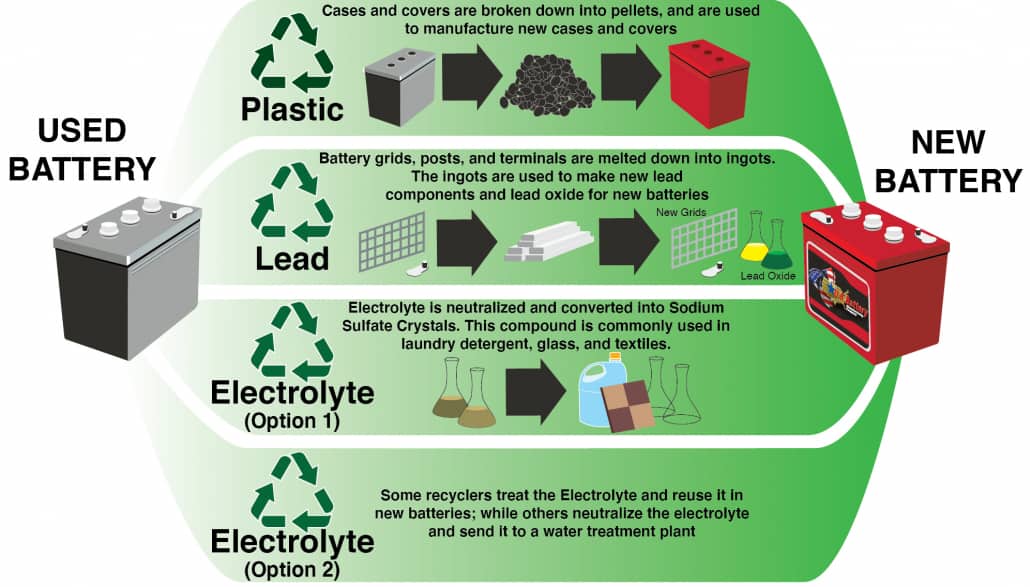
Lead-acid batteries, commonly found in vehicles, backup power systems, and industrial equipment, are among the most recycled products in the world. The Environmental Protection Agency estimates that over 99 percent of lead-acid batteries are recycled in the United States. Their components, including the lead plates, plastic casings, and sulfuric acid, are all recoverable and reusable in new products.
Lithium-Ion Batteries
Lithium-ion batteries power most of today’s portable electronics, from laptops and tablets to power tools and electric vehicles. Because they contain volatile materials and can pose fire hazards if damaged, lithium-ion battery recycling requires specialized handling, transportation, and processing. Facilities equipped to manage these cells use controlled environments to safely extract lithium, cobalt, copper, and other valuable metals.
Nickel-Based and Alkaline Batteries
Older nickel-cadmium and nickel-metal-hydride batteries, along with everyday alkaline cells, can also be recycled through the proper channels. While alkaline batteries are sometimes accepted in standard waste streams in certain regions, recycling them ensures the steel, zinc, and manganese inside are recovered rather than lost to disposal.
How the Battery Recycling Process Actually Works
The recycling process begins long before a battery reaches a processing facility. Proper battery disposal starts with safe collection, where used cells are sorted, taped at the terminals to prevent short circuits, and stored in approved containers. Once collected, the batteries are transported by licensed haulers to a permitted facility that specializes in their specific chemistry.
At the facility, batteries are mechanically separated by type using a combination of automated sorting systems and trained technicians. From there, each chemistry follows a tailored path. Lead-acid batteries are broken apart so the plastic, lead, and acid can be separated and refined. Lithium-ion cells often go through a shredding process inside an inert atmosphere, followed by hydrometallurgical or pyrometallurgical treatment that extracts the metals in usable form. Nickel and alkaline batteries are processed through high-temperature furnaces that recover their metallic content.
Every reputable recycling operation works under strict environmental and safety standards, ensuring that emissions, wastewater, and byproducts are managed responsibly. A certified recycler also provides documentation confirming that the materials were handled in compliance with state and federal regulations.
What Materials Are Recovered Through Battery Recycling
The end goal of any battery recycling effort is material recovery, and the yields can be impressive. From a single ton of spent lithium-ion batteries, recyclers can recover several hundred pounds of valuable metals, including cobalt, nickel, lithium carbonate, copper, and aluminum. These recovered resources flow back into the manufacturing pipeline, where they become new batteries, electronic components, and even unrelated products like construction materials.
Lead recovered from automotive batteries is almost entirely reused to make new lead-acid batteries, creating one of the most closed-loop recycling systems in any industry. Plastic casings are processed into pellets and remolded into new components, while sulfuric acid is neutralized or repurposed. This recovery model demonstrates how recycling can transform what would otherwise be hazardous waste into the building blocks of new infrastructure.
Battery Recycling for Businesses, Schools, and Government Agencies
Organizations of every size generate spent batteries, often in volumes that require structured collection and pickup services. Schools accumulate alkaline cells from classroom devices, hospitals retire backup power systems, government agencies replace fleet vehicle batteries, and businesses dispose of laptop and forklift cells on rolling schedules. Without a dedicated recycling partner, these spent cells can pile up, create storage hazards, and expose the organization to regulatory penalties.
A professional recycle batteries program offers scheduled pickups, secure transportation, proper containers, and full documentation. This kind of partnership is especially valuable for operations subject to environmental compliance audits or those committed to meeting sustainability goals. Used battery disposal handled by a licensed recycler also protects an organization’s reputation, since spent cells can carry traceable information that ties them back to the source.
Building a Cleaner Future Through Responsible Battery Recycling
The future of energy storage depends on closing the loop between battery production and battery recycling. As more vehicles, homes, and businesses shift toward electrification, the volume of spent cells will continue to rise, and so will the importance of recovering the materials inside them. Communities that build strong recycling infrastructure today position themselves to benefit from cleaner air, safer landfills, and a more resilient supply chain tomorrow.
Choosing a trusted recycling partner is the first step toward making that future real. By working with experienced professionals who follow strict safety, environmental, and compliance protocols, organizations can be confident that their spent batteries will be handled the right way from the moment they leave the facility to the moment their materials reenter the manufacturing cycle.
