

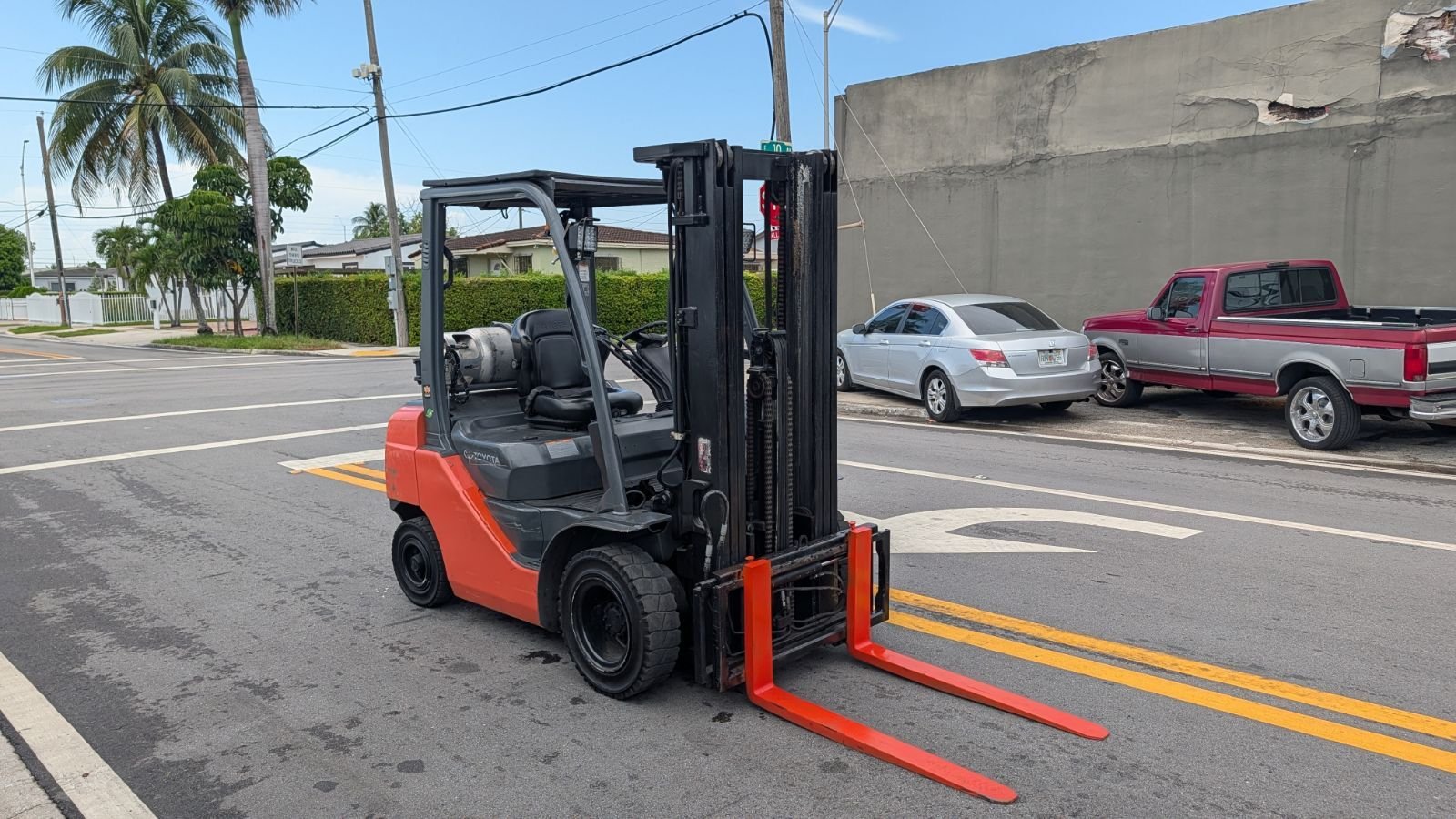
Key Takeaways
A rental can help a business obtain material-handling equipment for a defined period without purchasing and storing a permanent machine. The financial value depends on rental duration, usage, transportation, and contract terms.
The correct forklift is determined by more than maximum load weight. Lift height, load center, attachment weight, terrain, aisle width, overhead clearance, fuel type, and operating environment all matter.
Warehouse forklifts are generally intended for firm, level surfaces. Rough-terrain forklifts and telehandlers are designed for outdoor sites but still require stable ground and proper load management.
Equipment availability and delivery timing should be confirmed before work is scheduled. Same-day or next-day delivery may not be available for every model or location.
The employer remains responsible for operator training and workplace evaluation. Renting a forklift does not transfer that obligation to the rental company.
The operator should inspect the machine before use and remove it from service if it is defective or unsafe. Problems must be reported according to the employer’s and rental provider’s procedures.
Rental quotes should be reviewed for delivery, pickup, fuel, cleaning, attachments, damage protection, taxes, overtime, and other possible charges.
Choosing the Correct Forklift for the Work
Start With the Load and Lift Requirements
The equipment-selection process begins with the material being handled. The renter should know the maximum load weight, dimensions, shape, and center of gravity.
A forklift’s advertised capacity applies under defined conditions. The data plate identifies the rated capacity at particular load centers and lift heights. Capacity may decline when the load is raised higher, positioned farther forward, or handled with an attachment.
An irregular or poorly balanced load can affect stability even when its total weight appears to be below the machine’s stated limit.
Before requesting a quote, document:
- Maximum load weight
- Load dimensions
- Load center
- Required lift height
- Horizontal reach
- Attachment requirements
- Travel distance
- Number of operating shifts
- Expected daily usage
The rental provider needs accurate information to recommend an appropriate machine. Underestimating the load or height can create a serious safety risk and may require an equipment exchange.
Match Tires and Power to the Environment
Cushion-tire warehouse forklifts generally work best on smooth, firm indoor floors. Their compact construction can be useful in narrow aisles and areas with limited turning space.
Pneumatic tires provide additional traction and clearance. They may be appropriate for loading areas, paved outdoor surfaces, or other locations where the ground is less uniform.
Rough-terrain forklifts have larger tires, higher ground clearance, and features intended for outdoor work. They should not be assumed capable of operating safely on every muddy, sloped, sandy, or unstable surface.
Telehandlers use a telescoping boom to move loads outward and upward. Their capacity changes according to boom extension and angle, so operators must use the applicable load chart.
Electric forklifts avoid tailpipe emissions during operation and can be suitable for indoor environments. Battery capacity, charging time, charger availability, and the facility’s electrical service must be considered.
Internal-combustion equipment may be easier to refuel during continuous outdoor work. Gasoline, propane, and diesel engines create exhaust, making ventilation and indoor-use restrictions important.
Coordinating Rental Cost and Delivery
Understanding the Complete Rental Price
A daily, weekly, or monthly rental rate is only one part of the total expense.
The agreement may define how many operating hours are included. BigRentz describes a one-day rental as one eight-hour shift within a 24-hour period, while weekly and monthly terms include defined numbers of shifts.
Additional use may result in overtime charges. Renters should confirm how hours are recorded and what happens when a project runs longer than expected.
The quote may also include or exclude:
- Delivery and pickup
- Fuel or battery charging
- Attachments
- Damage protection
- Environmental fees
- Taxes
- Cleaning
- Tire damage
- Lost keys
- Excess operating hours
- Equipment relocation
- Cancellation or extension charges
A business comparing ownership with rental should include every expected cost. Short-term rental can avoid a large purchase, but repeated rentals over a long period may warrant a separate financial analysis.
Scheduling Equipment for a Miami Site
Businesses arranging a forklift rental in Miami can review warehouse forklifts, telehandlers, rough-terrain models, and high-capacity equipment based on local availability.
The jobsite address should be provided accurately. Delivery planning may depend on road access, gate dimensions, loading space, traffic restrictions, and the ability of the transport vehicle to enter and exit safely.
BigRentz requires its haulers to deliver and retrieve rented equipment. Customer pickup and drop-off are not permitted under its stated policy.
Same-day or next-day delivery may be possible when both the machine and transport are available. A requested time is not a guarantee, so the project schedule should include reasonable allowance for transportation delays.
Miami-area planning may also need to consider heavy rain, standing water, high temperatures, and rapidly changing outdoor conditions. The site supervisor should reassess ground conditions and safe operating limits after severe weather.
The delivery inspection should confirm that the model, capacity, tires, fuel type, attachments, and documentation match the order before the transport vehicle leaves.
Safety Responsibilities Remain With the Employer
Training and Workplace Evaluation
Renting equipment does not authorize an untrained person to operate it.
OSHA states:
“The employer is responsible for implementing a training program.”
Training must include formal instruction, practical exercises, and evaluation of the operator’s performance in the workplace. It must address the specific type of powered industrial truck and the hazards of the location where it will be used.
An online course by itself does not complete the federal training requirement. The employer must determine that the operator can use the equipment safely under actual workplace conditions.
Operator performance must be evaluated at least once every three years. Refresher training is also required after unsafe operation, an accident or near miss, an unsatisfactory evaluation, assignment to a different truck type, or a relevant workplace change.
Telehandlers, warehouse forklifts, and rough-terrain forklifts differ in steering, visibility, controls, stability, and load handling. Familiarity with one type does not automatically establish competence on another.
Inspections and Equipment Condition
The operator should complete the required pre-operation inspection before using the forklift. The procedure should follow the equipment manual, employer policy, and applicable regulations.
Inspection points may include:
- Forks and mast
- Chains and hydraulic components
- Tires and wheels
- Steering and brakes
- Horn and warning devices
- Lights
- Seat belt
- Fluid leaks
- Battery or fuel system
- Data plate
- Attachments
- Controls
The nameplate must be present and legible. It provides information about the truck’s weight, fuel type, maximum capacity, load center, and other operating limits.
A defective or unsafe forklift should be removed from service. The operator should record the problem and notify the supervisor and rental provider.
The rental company may coordinate repair or replacement, but the renter should not make unauthorized modifications or continue operating unsafe equipment to avoid delays.
Using Attachments and Specialized Equipment
Attachments Change Capacity and Handling
Forklifts can use attachments such as sideshifters, fork positioners, clamps, rotators, and approved work platforms. Each attachment changes how the truck performs.
OSHA notes that attachments can affect the forklift’s center of gravity, visibility, and rated capacity. The weight of an attachment generally reduces the amount the truck can lift.
Operators must be trained to use the attachment and understand its limitations. The forklift should have an updated data plate showing the capacity of the machine and attachment combination.
A rented attachment should be confirmed as compatible with the exact forklift. Improvised attachments or unapproved modifications can create tip-over and dropped-load hazards.
Standard forks should not be used for below-the-forks rigging unless the manufacturer has approved the arrangement and an appropriate attachment is used.
Telehandlers and Rough-Terrain Machines
A telehandler combines a forklift-style carriage with a telescoping boom. It can place materials at greater heights or horizontal distances than a standard warehouse forklift.
Capacity changes as the boom extends or rises. The operator must consult the machine’s load chart for the selected attachment, boom angle, and extension.
Rough-terrain forklifts are intended for outdoor construction and industrial sites. Their tires and ground clearance improve mobility, but they do not make the machine immune to rollover.
Before operation, the site should be checked for:
- Soft soil
- Holes and drop-offs
- Slopes
- Overhead lines
- Underground structures
- Pedestrian traffic
- Limited visibility
- Standing water
- Restricted turning space
A machine that works safely in one part of the site may not be suitable for another.
Managing the Rental During the Project
Care, Fuel, and Charging
The rental provider may handle scheduled maintenance and mechanical repairs, but the renter usually retains day-to-day responsibilities.
Operators may need to check fluids, keep the equipment clean enough for inspection, charge batteries, refuel safely, and protect the machine from misuse.
Fuel requirements should be confirmed before delivery. Using the wrong fuel or charging equipment can damage the machine and create hazards.
Electric equipment needs a suitable charging area with adequate ventilation and electrical capacity. Battery charging should be performed by trained personnel following the manufacturer’s procedure.
The rental agreement should explain what happens if the equipment stops working. Renters should know whom to contact, whether troubleshooting is permitted, and how replacement equipment is handled.
Extending or Ending the Rental
A project delay does not automatically extend the agreement. The renter should contact the provider before the scheduled end date if more time is needed.
Extension rates may differ from the original quote. Availability can also affect whether the same machine may remain on site.
Before pickup, remove personal items and project materials from the equipment. Confirm fuel, charging, cleaning, and key-return requirements.
The pickup area must be accessible to the hauler. The renter should communicate gate hours, site contacts, access restrictions, and any change in equipment location.
Photographs and condition records at delivery and pickup can help document the machine’s state. Any known damage or performance issue should be reported accurately.
Evaluating Whether Rental Fits the Project
Rental may be useful for a short project, seasonal demand, temporary replacement, or specialized lift requirement. Ownership may make more sense when equipment is used consistently and the business can support storage and maintenance.
The choice should be based on total cost and operational requirements, not a general claim that one option is always better.
Consider:
- Expected annual operating hours
- Frequency of specialized work
- Storage availability
- Maintenance capability
- Transportation needs
- Capital budget
- Equipment availability
- Technology and emission requirements
- Project uncertainty
A rental can provide flexibility, but it does not replace equipment planning, operator training, or jobsite supervision.
FAQ
Which businesses commonly rent forklifts?
Construction companies, warehouses, manufacturers, distribution centers, event contractors, and industrial facilities may rent forklifts for temporary or specialized material-handling needs.
How does rental affect cash flow?
Rental can replace a large purchase with shorter-term project expenses. The actual effect depends on rates, transportation, usage, extensions, and other contract charges.
Are long-term commitments required?
Rental periods may be daily, weekly, or monthly. Terms vary by equipment and provider, so minimum periods and extension rules should be confirmed in the quote.
Can a forklift be rented for a specialized load?
Yes, if suitable equipment and an approved attachment are available. The provider will need accurate information about the load, height, reach, terrain, and operating environment.
How should a business determine the required capacity?
Identify the load weight, dimensions, load center, lift height, and attachments. Select a forklift whose data plate and load chart authorize the complete lift.
What happens during delivery?
The renter should confirm the equipment matches the order, document its condition, review controls and safety information, and verify that attachments and manuals are present.
Which safety features should be requested?
Required features depend on the truck and workplace. Review the data plate, seat belt, warning devices, lights, backup alarm, overhead guard, tires, brakes, and visibility aids.
What determines the rental rate?
Equipment type, capacity, fuel, tires, attachments, rental duration, location, availability, transportation, and additional services can all affect the quote.
Useful Resources
- BigRentz Forklift Rental Catalog
- BigRentz Rough-Terrain Forklifts
- BigRentz Telehandler Rentals
- BigRentz Equipment Rental FAQs
- OSHA Powered Industrial Truck Training
- OSHA Forklift Data Plates and Capacity
- OSHA Forklift Attachments
- OSHA Pre-Operation Inspection
