

Where the Hay Goes: Cutting Winter Feeding Waste on Prairie Cattle Operations
By late January on a cow-calf place in central Saskatchewan or the Alberta Peace, the hay yard shows how winter is going. Stacks shrink faster than the calendar says they should, and a fair share of what leaves the yard ends up as trampled bedding, wind-blown fines or a frozen ring of manure and stems.
Hay waste rarely comes from one mistake. It builds from feeder design, how many days of feed cows can reach, where feeding happens and how often a tractor has to start. Each of those can be changed without waiting for a better hay crop.
Why Feeder Design Changes What Cattle Waste
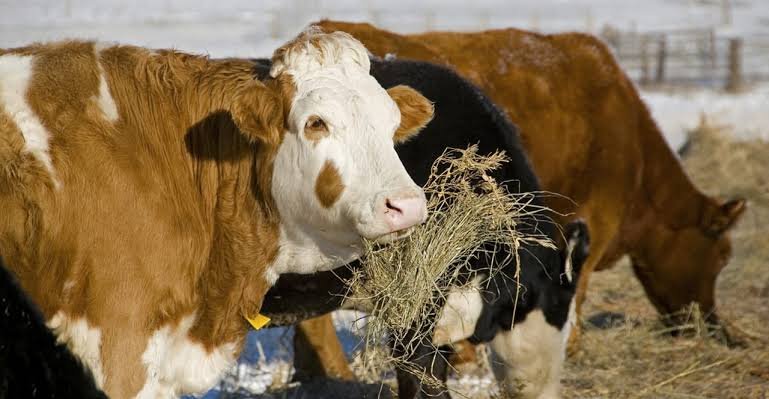
Cattle lose hay by pulling out a mouthful, dropping part of it and standing on what fell. University of Illinois Extension summarizes an Oklahoma State University trial in which a cone feeder lost about 5 percent of bale weight and a conventional ring about 20 percent. Another trial in that summary found cows ate about the same amount whichever feeder they used, so the difference ended up on the ground.
Cone and basket designs hold the bale up or block access to its top third, so tossing hay over a cow’s back gets harder. Plain rings are cheaper and lighter, and plenty will stay in service. For those, Kansas State University’s beef extension team suggests solid sheeting at least 18 inches up from the ground, which helps most late in a bale as it slumps.
Design also decides who eats. Bred heifers and thin cows get pushed off a crowded feeder, and calves will climb into a ring if the gaps allow. Fall-calving herds can put that habit to use with a creep feeder, which Ontario’s agriculture ministry advises placing near a sheltered spot where the herd gathers, behind a narrowed gate that lets calves through and keeps cows out.
Processors, Unrolling and Grazing in Place
Plenty of Prairie herds unroll or process bales instead, which gets cows walking and spreads manure across the field. The Beef Cattle Research Council (BCRC) lists the drawbacks: equipment starts every feeding day, cattle bed down on part of the feed, and an aggressive processor setting loses nutrients when the fines blow away. Kansas State advises unrolling only what the herd will clean up in 12 to 24 hours.
Bale grazing moves the work to fall. In the council’s guidance, bales go out at roughly 25 to the acre on 40-foot centres, with an electric fence giving two to five days of feed at a time because waste climbs with longer periods. Twine and net wrap come off first, since swallowed wrap can kill cattle. Native rangeland and riparian areas are avoided, and a site is bale grazed no more than every fifth year.
Swath grazing applies the idea to an annual crop. Late-maturing barley or oats are swathed just before the first killing frost and fenced into strips the herd cleans up in two or three days. Where snow and freezing rain are heavy, a second wire keeps an iced-down poly wire from letting cows into the rest of the field.
Matching Equipment to Bales, Herd and Labour
A cone sized for round bales is no help with large squares or baleage, and a feeder built for a five-foot bale can be a fight with the bigger bales a newer baler makes. Measure the bales actually in the yard, including the swollen ones from the bottom of the stack.
Herd size changes the arithmetic. A forty-cow herd can manage with a few rings and a loader tractor, while a few hundred cows may justify a processor, or bale grazing that cuts the mornings a tractor must start at minus 35. The BCRC notes that round feeders need a truck or tractor at every feeding, while bale grazing needs one mainly for setup. Unrolled hay suits mature cows in good condition and feeders suit any class, so many herds run both. Hours spent cutting net wrap and clearing snow belong in that comparison too.
Checking a Feeder Before It Comes Home
With a design chosen, check the welds where a cow or loader bucket hits hardest, the tubing’s wall thickness and whether the finish is galvanized or only painted. See whether the feeder comes apart into sections one person can move in snow, whether a loader can drop a bale in cleanly, and whether horned cows fit the head spaces.
Then find out who stands behind it. A panel bent in a cold snap needs replacing within days, so a dealer close by often matters more than a slightly lower price several provinces over. A regional list of cattle and livestock feeder suppliers shows which manufacturers and dealers serve your area. Ask each about bale sizes, parts on hand and local customers you can call. A neighbour who has fed with a model for two winters will mention what the brochure leaves out.
Moving the Feeding Site Before Mud Sets In
A feeder parked in one spot all winter builds its own problem. By March the ground around it is a pack of manure and spoiled hay that the thaw turns to mud just as calving starts. Rings on skids, or ones that can be chained behind a tractor, let the site shift every week or two onto ground that can use the manure.
Placement matters as much as frequency. Rules under Alberta’s Agricultural Operation Practices Act require wintering sites to sit at least 30 metres from a common body of water, such as a creek or slough shared with other landowners, unless a berm or ditch diverts runoff or the manure and bedding are removed before runoff starts. In any province, a slope above a dugout is a poor spot for a winter’s manure.
Before this year’s hay runs low, count the bales leaving the yard each week, weigh a few if a scale is handy, and walk the feeding areas monthly. A bigger leftover pile around one feeder than another, or a bale-grazed field cleaner than the yard, is a comparison worth having on paper when next fall’s bales come in.
