
Close Menu
CEOColumnCEOColumn
    What's Hot

    CPAP Masks in Canada: A Guide to Finding the Right Fit

    October 10, 2026

    Does Travel Insurance Cover Flight Cancellations? Here’s What Travellers Should Know

    October 10, 2026

    Why Granite Sinks Are Worth The Investment For Your Kitchen

    October 9, 2026
    Facebook X (Twitter) Instagram
    Facebook X (Twitter) Instagram
    CEOColumnCEOColumn
    Subscribe
    • Home
    • News
    • BLOGS
      1. Health
      2. Lifestyle
      3. Travel
      4. Tips & guide
      5. View All

      How Fermented Cod Liver Oil Supports Immunity, Heart Health, And Mood

      October 9, 2026

      Are Porcelain Veneers Worth It? Questions to Ask First

      October 9, 2026

      How Do Online Dental CE Courses Help When Clinical Knowledge Needs a Refresh?

      October 9, 2026

      Oral Steroids and Bioavailability: Sublingual vs Swallowing Explained

      October 8, 2026

      How to Plan a Proposal Around Your Partner’s Style

      October 8, 2026

      Best Shampoo for Dandruff: Top Picks for a Healthy Scalp

      October 5, 2026

      Orient Watches Explained: Features, Functions and Design Details

      September 24, 2026

      How to Choose Red Wedding Flowers That Actually Match Your Venue

      September 19, 2026

      Red Sea Days and Desert Nights in Hurghada

      October 7, 2026

      Luxury Crewed Yacht Charters in Greece: A Complete Guide to Private Yacht Holidays

      October 2, 2026

      Flying from the US to Guadalajara: what to see and do in Mexico’s cultural capital

      September 2, 2026

      Black Friday travel deals: How to plan a trip around the sale window

      September 2, 2026

      Language Barriers While Traveling: What Actually Helps in Real-World Conversations?

      September 29, 2026

      How therapeutic techniques can vary from one practitioner to another

      September 29, 2026

      Turning Anger Into A Boundary Statement

      September 11, 2026

      4 Strategies for Faster Trial Prep Without Loosing Accuracy

      August 27, 2026

      CPAP Masks in Canada: A Guide to Finding the Right Fit

      October 10, 2026

      Does Travel Insurance Cover Flight Cancellations? Here’s What Travellers Should Know

      October 10, 2026

      Why Granite Sinks Are Worth The Investment For Your Kitchen

      October 9, 2026

      The Ultimate Guide to Hire an Amazon Agency and Scale Your Store

      October 9, 2026
    • BUSINESS
      • OFFLINE BUSINESS
      • ONLINE BUSINESS
    • PROFILES
      • ENTREPRENEUR
      • HIGHEST PAID
      • RICHEST
      • WOMEN ENTREPRENEURS
    • Audit
    CEOColumnCEOColumn
    Home»BUSINESS»How to Choose the Right Steel Grade for Laser Cutting, and Why Tibnor Stocks Matter

    How to Choose the Right Steel Grade for Laser Cutting, and Why Tibnor Stocks Matter

    OliviaBy OliviaSeptember 21, 2026Updated:September 21, 2026No Comments4 Mins Read

    Advertisement

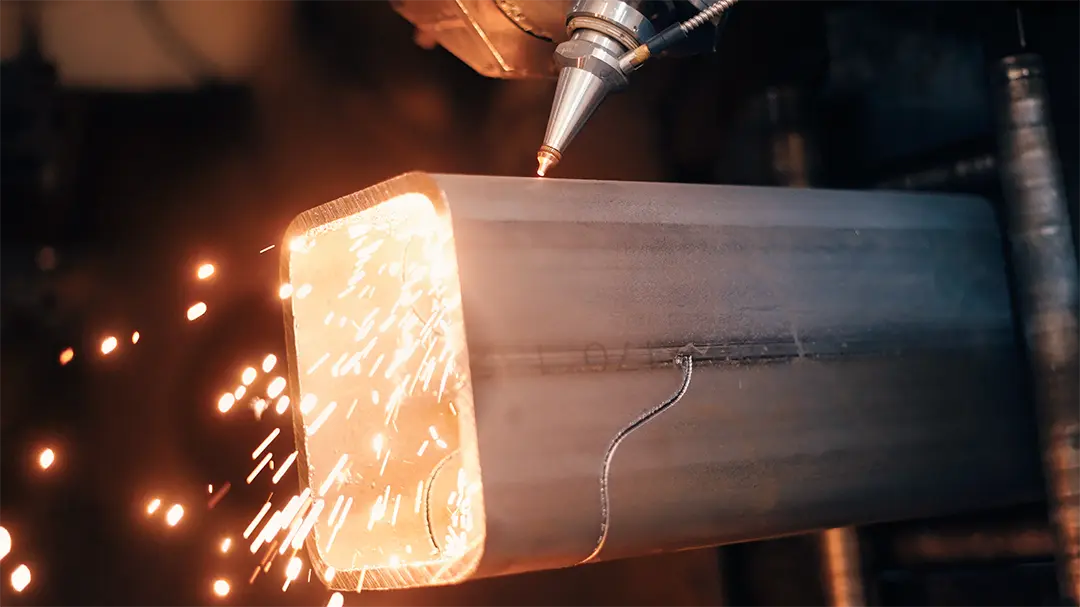
    Not all structural steel is suitable for laser cutting, even when the tensile strength looks right on paper. Grain structure, internal stress, and flatness tolerances decide whether a plate performs consistently on the cutting table or wastes time and material through warping, edge defects, and recalibration.

    Table of Contents

    Toggle
    • Why Flatness Is the First Specification to Check
    • Grain Structure and What It Means for Cut Quality
    • Four Criteria That Should Drive Your Grade Selection
    • Certifications and Standards
    • Stock Availability Changes the Procurement Equation
    • Matching the Grade to the Job

    Why Flatness Is the First Specification to Check

    Flatness comes before yield strength, before price, before almost anything else on the specification sheet. A laser cutting head focuses its beam at a fixed distance from the plate surface. When the plate is not flat, that distance drifts across the sheet, and the focal point shifts away from where it needs to be.

    The result: inconsistent kerf width, rough cut edges, and dross that has to be ground off by hand. On a long production run, even a slight bow forces operators to stop and recalibrate.

    Distributors such as Tibnor, which supplies steel and metals to businesses across Estonia directly from stock, carry material specified for laser work where flatness is held to a defined limit both before and after cutting. One benchmark on the market guarantees a deviation of no more than 3 mm per metre.

    Grain Structure and What It Means for Cut Quality

    Conventional structural steel is rolled to hit a strength target, not to control how the material behaves under a concentrated heat source. Thermomechanically rolled steel is different, the rolling schedule is controlled to produce a fine, uniform grain that changes how the plate reacts to laser energy.

    A finer grain narrows the heat-affected zone along the cut edge. Less surrounding metal is altered by heat, so the edge stays closer to the base material in hardness and does not develop the brittle band that coarser steel can show after cutting. That matters most when the cut part goes straight into a cold-forming operation, because a hardened edge cracks when you try to bend it.

    SSAB Laser® 355ML Plus is a thermomechanically rolled fine-grain plate built for this purpose. It carries a minimum yield strength of 355 MPa and a tensile strength range of 470 to 630 MPa, with a minimum inner bending radius of 1.0 times material thickness at 90 degrees, tight bends without cracking.

    Four Criteria That Should Drive Your Grade Selection

    When specifying steel for a laser cutting job, the decision should follow a clear order of priority.

    • Guaranteed flatness tolerance, verified both before and after cutting, so focal drift never enters the equation.
    • Grain structure, meaning thermomechanically rolled fine-grain plate over conventionally rolled steel where edge quality matters.
    • Cold-forming capability, expressed as inner bending radius relative to thickness, if the part will be folded after cutting.
    • Certification and documentation that carries through to your own end product.

    A plate with excellent yield strength but no flatness guarantee will still cut badly. No downstream grinding recovers the time lost.

    Grain structure governs edge quality and how much finishing work each cut part demands. Two plates can both meet S355 on paper and behave completely differently on the table if one is fine-grained and the other is not.

    If your part stays flat, bending radius is irrelevant, don’t pay a premium for a property you won’t use. But for bent brackets, housings, and profiles, a generous bending radius prevents cracked folds and rejected parts.

    Certification sits last only because it does not affect how the plate cuts. It affects whether you can legally sell what you make from it.

    Certifications and Standards

    For a fabricator supplying certified end products, the paperwork behind the steel is the proof that lets your customer trust the finished component. Documentation should confirm the standard the plate meets, back it with material certificates, and carry CE marking where required.

    SSAB Laser® 355ML Plus conforms to and exceeds EN 10025-4 S355ML and is available with two certificates and CE marking (Source: https://www.tibnor.ee/products/hot-rolled-sheets/ssab-laser-355ml-plus). Under-certified steel pushes liability downstream onto the fabricator who used it.

    Stock Availability Changes the Procurement Equation

    A technically ideal grade is worthless if it arrives three weeks after the production window opens.

    Ordering steel to specification means waiting for a rolling run and a delivery schedule you do not control. Sourcing from a distributor holding laser-grade plate in stock lets you plan around what is physically available now. SSAB Laser® 355ML Plus is stocked in thicknesses from 8.0 to 30.0 mm, widths from 1000 to 3300 mm, and lengths from 2000 to 15000 mm, most jobs in Estonia can be covered from ready stock rather than a lead-time gamble.

    Matching the Grade to the Job

    The right grade for laser cutting is the one with a guaranteed flatness tolerance, a certified fine-grain structure, and documentation that holds up at the fabrication stage. The procurement decision depends on whether that grade is actually available from stock when the production window opens.

    Share. Facebook Twitter Pinterest LinkedIn Tumblr Telegram Email
    Previous ArticleBest Data Science Course in Hyderabad with Placement Assistance: Your Fast-Track to High-Growth AI Careers
    Next Article A CEO’s Guide to Cutting Fuel Haul Costs With Transportation Management Technology
    Olivia

    Olivia is a contributing writer at CEOColumn.com, where she explores leadership strategies, business innovation, and entrepreneurial insights shaping today’s corporate world. With a background in business journalism and a passion for executive storytelling, Olivia delivers sharp, thought-provoking content that inspires CEOs, founders, and aspiring leaders alike. When she’s not writing, Olivia enjoys analyzing emerging business trends and mentoring young professionals in the startup ecosystem.

    Related Posts

    Workplace Injury in Orlando: Reporting, Care, and Recordkeeping

    October 8, 2026

    From Manufacturing to Installation: Where Joint Leak Tightness Testing Matters in Pipe Systems

    October 8, 2026

    How Do Roofing Services Support Better Roof Performance Around Wide Eaves and Overhangs?

    October 5, 2026
    Add A Comment
    Leave A Reply Cancel Reply

    You must be logged in to post a comment.

    Latest Posts

    CPAP Masks in Canada: A Guide to Finding the Right Fit

    October 10, 2026

    Does Travel Insurance Cover Flight Cancellations? Here’s What Travellers Should Know

    October 10, 2026

    Why Granite Sinks Are Worth The Investment For Your Kitchen

    October 9, 2026

    How Fermented Cod Liver Oil Supports Immunity, Heart Health, And Mood

    October 9, 2026

    The Ultimate Guide to Hire an Amazon Agency and Scale Your Store

    October 9, 2026

    Are Porcelain Veneers Worth It? Questions to Ask First

    October 9, 2026

    5 Myths That Derail Disability Claims

    October 9, 2026

    Thailand Travel Essentials: Using eSIM for Smooth Connectivity

    October 9, 2026

    What Makes AI Business Software Useful For Modern Operations

    October 9, 2026

    Optima Tax Relief Compares Tax Attorneys vs. Tax Relief Companies: Which One Do You Need?

    October 9, 2026
    Recent Posts
    • CPAP Masks in Canada: A Guide to Finding the Right Fit October 10, 2026
    • Does Travel Insurance Cover Flight Cancellations? Here’s What Travellers Should Know October 10, 2026
    • Why Granite Sinks Are Worth The Investment For Your Kitchen October 9, 2026
    • How Fermented Cod Liver Oil Supports Immunity, Heart Health, And Mood October 9, 2026
    • The Ultimate Guide to Hire an Amazon Agency and Scale Your Store October 9, 2026

    Your source for the serious news. CEO Column - We Talk Money, Business & Entrepreneurship. Visit our main page for more demos.

    We're social. Connect with us:
    |
    Email: Support@gposting.com

    Facebook X (Twitter) Instagram Pinterest LinkedIn WhatsApp
    Top Insights

    CPAP Masks in Canada: A Guide to Finding the Right Fit

    October 10, 2026

    Does Travel Insurance Cover Flight Cancellations? Here’s What Travellers Should Know

    October 10, 2026

    Why Granite Sinks Are Worth The Investment For Your Kitchen

    October 9, 2026
    © Copyright 2025, All Rights Reserved
    • Home
    • Pricacy Policy
    • Contact Us

    Type above and press Enter to search. Press Esc to cancel.