

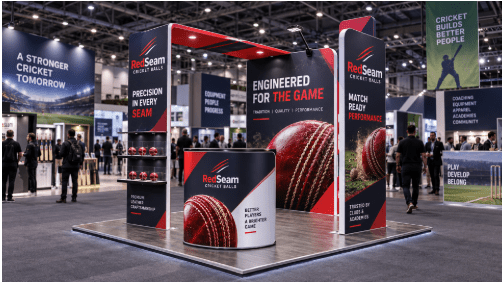
A trade show is more than a place to showcase products. It is an opportunity to introduce your brand, start conversations, generate leads, and create a memorable experience for potential customers. But before visitors speak with your team, they see your booth.
That is why choosing the right trade show displays can have a major impact on how your business is perceived.
A well-planned display gives your brand a professional presence while communicating your message quickly. Whether you are exhibiting at a large industry expo, attending a conference, launching a product, or participating in a local business event, the right display can help you attract attention without making your booth difficult to transport or assemble.
From portable fabric systems and pop-up displays to modular exhibits and backlit solutions, today’s trade show displays are available in a wide range of sizes, styles, and configurations.
The key is choosing a solution that matches your booth space, branding, event goals, setup requirements, and budget.
What Are Trade Show Displays?
Trade show displays are branded exhibit systems used to present a company’s products, services, messaging, and visual identity at exhibitions, conferences, expos, and promotional events.
They can include a combination of:
- Fabric backwalls
- Pop-up display frames
- Modular exhibit systems
- Backlit displays
- Tabletop displays
- Banner stands
- Counters and podiums
- Shelving and product displays
- TV mounts
- Printed graphics
- Lighting
- Replacement graphics
The purpose is not simply to fill an exhibition space. A good display should help visitors understand who your company is, what you offer, and why they should stop and talk to you.
Modern systems are also designed around practical considerations such as portability, quick setup, reusable hardware, graphic replacement, and different booth footprints.
Why Do Trade Show Displays Matter?
Your booth is often the first physical interaction attendees have with your company.
In a busy exhibition hall, visitors may pass dozens or hundreds of exhibitors. You may have only a few seconds to create enough visual interest for someone to slow down and take a closer look.
Effective trade show displays can help you:
Increase Brand Visibility
Large-format graphics give your brand a stronger presence on the show floor. Your logo, colors, headline, product images, and key message can be positioned where attendees can see them from different distances.
Communicate Your Message Quickly
Visitors should not have to read a full paragraph to understand your business.
A strong booth design uses:
- Short headlines
- Clear branding
- Supporting visuals
- Concise value propositions
- Strategic calls to action
This makes it easier for attendees to understand your offering before starting a conversation.
Create a Professional Brand Experience
A clean, organized display can reinforce credibility. Consistent graphics, properly positioned accessories, and an uncluttered layout make the booth feel intentional rather than improvised.
Support Lead Generation
Your display should work together with your sales strategy.
For example, a booth could include a product demonstration area, literature stand, iPad station, meeting space, or branded counter where your team can engage with prospects.
Reuse Your Investment
Many display systems use reusable hardware with replaceable graphics. This allows businesses to refresh their branding or campaign messaging without necessarily replacing the entire structure.
Types of Trade Show Displays to Consider
There is no single display system that works for every exhibitor. The right option depends on your available space, event frequency, branding requirements, transportation needs, and desired presentation.
Here are some of the most common options.
Tension Fabric Displays
Tension fabric displays use a lightweight frame with fabric graphics that stretch over the structure.
They are popular because they combine a clean appearance with relatively simple transportation and setup.
They can work particularly well for businesses attending multiple events because the hardware can be reused while graphics can be updated when needed.
Pop-Up Trade Show Displays
Pop-up displays are designed around collapsible frames that expand into a display structure.
They are useful for exhibitors who prioritize:
- Fast setup
- Portability
- Simple storage
- Reusability
- Professional branding
They can be a practical option for businesses that frequently move between events.
Modular Trade Show Displays
Modular systems provide greater flexibility when compared with simpler portable displays.
Depending on the configuration, modular systems can accommodate different layouts, accessories, counters, shelving, product presentations, and branded areas.
They are especially useful when your booth requirements may change from one event to another.
Backlit Trade Show Displays
Backlit displays use internal lighting to illuminate graphics and create additional visual emphasis.
They can be particularly effective in busy exhibition halls where multiple exhibitors are competing for attention. Backlit systems are available in several sizes and configurations, including larger display formats.
Tabletop Displays
If your exhibition space is limited, a tabletop display can provide branded visibility without requiring a full-size booth structure.
They are suitable for:
- Small exhibitions
- Networking events
- Conferences
- Business presentations
- Compact exhibit spaces
Banner Stands
Banner stands can complement a larger booth or work as standalone promotional signage.
They are useful for highlighting:
- Products
- Services
- Promotions
- Company messaging
- Directional information
- Calls to action
Using a banner stand alongside a main display can also help create additional visual height and messaging zones.
How to Choose the Right Trade Show Display
Choosing a display should begin with your event requirements rather than simply selecting the most visually impressive system.
Consider these factors before placing an order.
1. Start With Your Booth Size
Your available floor space determines how much display structure you can realistically use.
Common display footprints include:
- 8ft displays
- 10ft displays
- 20ft displays
- Tabletop configurations
- Custom modular layouts
A 10ft display is often a practical choice for businesses looking for a balance between visual presence and manageable transportation. Display Solution currently offers multiple 10ft configurations, including straight, curved, and Smart-Fit options.
2. Consider How Often You Exhibit
If you attend several events throughout the year, portability and reusability become especially important.
A lightweight system that packs efficiently can reduce the hassle associated with repeated transportation and setup.
3. Think About Your Setup Team
Ask yourself:
Who will assemble the booth?
If your team is small, choose a system that can be assembled quickly without requiring complicated tools or extensive labor.
Portable fabric and pop-up systems can be particularly useful when setup efficiency is a priority.
4. Plan Your Graphics Carefully
Your graphics should support your marketing objective.
Avoid filling every available area with text. Instead, prioritize:
Brand → Message → Product/Service → Benefit → Call to Action
Your most important message should be visible from the aisle.
5. Think Beyond the Backwall
A booth does not have to stop at the main backdrop.
Depending on your objectives, you can add:
- Counters
- Podiums
- Shelves
- Banner stands
- TV mounts
- iPad stands
- Lighting
- Literature holders
These components can turn a simple backdrop into a more functional visitor experience.
Custom Trade Show Booths vs. Standard Display Systems
For businesses with specific branding or space requirements, custom trade show booths can provide more flexibility than a basic display configuration.
A customized booth can be planned around your:
- Brand identity
- Booth dimensions
- Product presentation
- Visitor flow
- Lead-generation strategy
- Meeting requirements
- Storage needs
- Graphics
- Accessories
This is especially valuable when the goal is to create a distinctive environment rather than simply place a branded backdrop in an exhibition space.
Custom does not necessarily mean complicated. A well-designed booth can combine reusable hardware with custom graphics and accessories to create a professional setup that can evolve with your marketing campaigns.
How Graphics Influence Trade Show Performance
Your hardware creates the structure, but your graphics communicate the story.
High-quality graphics should be:
Easy to Read
Use short headlines and sufficiently large text so attendees can understand your message while walking past.
Consistent With Your Brand
Your booth should look like an extension of your website, marketing materials, packaging, and other customer touchpoints.
Visually Balanced
Avoid overcrowding the display with too many messages.
A strong visual hierarchy makes it obvious where visitors should look first, second, and third.
Focused on Benefits
Instead of simply listing features, communicate what your product or service helps customers achieve.
For example:
Weak:
“Custom Exhibit Solutions”
Stronger:
“Create a Booth That Gets Your Brand Noticed”
The second message gives visitors a clearer reason to pay attention.
Designing a Trade Show Display for Lead Generation
A beautiful booth is valuable, but the ultimate objective for many exhibitors is business growth.
Your display should therefore support the next step in the customer journey.
For example:
Attract → Explain → Engage → Capture → Follow Up
Your graphics attract attention.
Your messaging explains what you offer.
Your staff engages visitors.
A form, QR code, tablet, or other mechanism can capture leads.
Your sales team follows up after the event.
This approach transforms your display from a decorative element into a marketing tool.
Common Trade Show Display Mistakes to Avoid
Even an expensive booth can underperform if the planning is poor.
Too Much Text
Attendees are unlikely to stop and read large blocks of copy.
Keep your primary message concise.
Weak Branding
If visitors cannot immediately identify your company, your display is missing an important opportunity.
Poor Message Hierarchy
Your logo, headline, product information, and CTA should have clear visual priorities.
Ignoring Visitor Flow
Do not position every element randomly.
Think about how people approach, enter, move through, and leave your booth.
Choosing Appearance Over Practicality
A display may look impressive but become frustrating if it is difficult to transport, assemble, store, or reuse.
Forgetting the Call to Action
Tell visitors what to do next.
Examples include:
- Scan to learn more
- Book a consultation
- Request information
- See a product demonstration
- Talk to our team
Trade Show Display Ideas for Different Business Goals
Different businesses attend exhibitions for different reasons.
For Brand Awareness
Focus on large, recognizable graphics, strong branding, and a memorable headline.
For Product Demonstrations
Include shelves, counters, monitors, or demonstration areas that allow visitors to interact with the product.
For Lead Generation
Prioritize clear messaging, staff interaction, QR codes, tablets, and dedicated conversation areas.
For New Product Launches
Make the new product the visual focal point of the booth.
For Frequent Exhibitors
Choose reusable hardware with replaceable graphics so the display can adapt to different campaigns.
How to Make Your Trade Show Display More Effective
You do not necessarily need a larger booth to make a stronger impression.
Instead, focus on the fundamentals:
- Make your brand visible.
Place your company name and logo where attendees can see them quickly. - Use one strong headline.
Tell visitors what you do without making them work for the answer. - Keep graphics clean.
Use high-quality imagery and avoid unnecessary visual clutter. - Create an obvious focal point.
Use a large graphic, product, backlit area, or strong headline to attract attention. - Give visitors a reason to engage.
Demonstrations, samples, interactive screens, and conversations can turn passive traffic into meaningful interactions. - Make the booth easy to navigate.
Leave enough space for visitors and staff to move comfortably.
Are Trade Show Displays Reusable?
Yes. Many modern trade show displays are designed for repeated use.
A reusable display can be particularly valuable for businesses that attend multiple exhibitions because the same hardware can often be transported to different venues.
When branding changes, replacement graphics can also provide a way to refresh an existing display without purchasing an entirely new system. Display Solution offers replacement graphic options as part of its broader display range.
This makes reusability an important factor when comparing the long-term value of different display systems.
What Size Trade Show Display Should You Choose?
The ideal size depends on your allocated exhibit space and how you plan to use it.
8ft displays can work well for compact exhibition spaces.
10ft displays provide a strong balance between footprint, visibility, and portability.
20ft displays offer more room for branding, product demonstrations, meeting areas, and additional accessories.
If you are uncertain, start by checking your event’s exact floor-space allocation and then plan your display around the dimensions provided by the organizer.
Build a Display Around Your Brand, Not Just Your Booth Space
The best trade show displays do more than occupy a designated area on the exhibition floor.
They create a visual environment where your brand can communicate, engage, and start conversations.
Whether you choose a portable fabric display, pop-up system, modular exhibit, backlit display, tabletop solution, or a customized booth configuration, the goal should remain the same:
Make your brand easy to notice, easy to understand, and easy to remember.
A thoughtful display strategy combines the right structure, graphics, messaging, accessories, and visitor experience. When those elements work together, your booth becomes more than signage—it becomes an extension of your marketing strategy.
If your next event requires a larger, more personalized presence, exploring custom trade show booths can help you create a display designed around your brand, space, and business objectives.
Frequently Asked Questions About Trade Show Displays
What are trade show displays?
Trade show displays are branded exhibit systems used at exhibitions, expos, conferences, and business events to showcase a company’s brand, products, services, and marketing message.
What is the most common trade show display size?
A 10ft display is a common choice because it provides a substantial branded area while remaining relatively manageable for transportation and setup. Display Solution offers several 10ft configurations.
Are trade show displays portable?
Many trade show displays are designed for portability. Fabric, pop-up, and other lightweight systems can be transported between events, while larger modular systems may require more substantial transportation.
Can trade show displays be customized?
Yes. Displays can be customized through graphics, sizes, shapes, layouts, accessories, lighting, counters, and other components. Customization allows businesses to build an exhibit around their branding and event objectives.
What is the difference between a trade show display and a custom trade show booth?
A trade show display can refer to an individual display system or complete display solution, while a custom trade show booth typically refers to a more personalized exhibit designed around a company’s branding, space, functionality, and marketing goals.
How long does it take to set up a trade show display?
Setup time varies by system. Portable fabric and pop-up displays are generally designed for quick assembly, while larger modular or truss configurations can require more time. Display Solution notes approximately 10–20 minutes for portable displays, with larger modular/truss systems potentially taking longer.
Can I replace the graphics without replacing the display hardware?
In many cases, yes. Reusable hardware can be paired with replacement graphics, allowing businesses to refresh their branding or campaign messaging without purchasing a completely new display.
What should I consider before buying a trade show display?
Consider your booth dimensions, event frequency, transportation requirements, setup time, graphic requirements, budget, branding goals, storage needs, and the type of visitor interaction you want to create.
Are trade show displays suitable for conferences and expos?
Yes. Trade show displays can be used for trade shows, conferences, expos, corporate events, product launches, networking events, and other business marketing environments. Display systems can be selected based on the available space and presentation requirements.
How can I make my trade show booth stand out?
Use clear branding, a strong headline, high-quality graphics, an uncluttered layout, strategic lighting where appropriate, and an engaging visitor experience. The goal is to communicate your value quickly rather than simply adding more visual elements.
