
Close Menu
CEOColumnCEOColumn
    What's Hot

    Mindfulness vs Medication: Which Helps You Feel Less Broken

    August 5, 2026

    Alzheimer’s Caregiver Resources: Comprehensive Guide for Family Support

    August 5, 2026

    The Importance of Implementing an Equipment Inventory Management System for Businesses

    August 5, 2026
    Facebook X (Twitter) Instagram
    Facebook X (Twitter) Instagram
    CEOColumnCEOColumn
    Subscribe
    • Home
    • News
    • BLOGS
      1. Health
      2. Lifestyle
      3. Travel
      4. Tips & guide
      5. View All

      Mindfulness vs Medication: Which Helps You Feel Less Broken

      August 5, 2026

      Creating Memorable Events Through Thoughtful Food Experiences

      August 2, 2026

      How Legal Representation Can Change the Outcome of a Serious Spine Injury Case

      July 30, 2026

      Best Practices for Coding Nonspecific Gastrointestinal Symptoms

      July 30, 2026

      Why Pop-Up Retail Still Works So Well at Busy Events

      July 27, 2026

      Alexandrite as a Meaningful Gift

      July 21, 2026

      Timeless Elegance: The Essential Guide to Day Dresses

      July 17, 2026

      Art of High-End Glass in Modern Interior 

      July 17, 2026

      What Makes a Private Jet Brokerage Genuinely Worth Working With

      July 31, 2026

      Why California CEOs Keep Choosing Summerlin, Nevada

      July 20, 2026

      How to Plan a Fun-Filled Day in Pigeon Forge

      July 9, 2026

      How International Visitors Are Redefining Urban Living in London

      June 24, 2026

      The Executive’s Guide to Getting Real Value From an Annual Conference

      July 22, 2026

      How Australians Pay for Online Games: Safety and Fees Explained

      July 11, 2026

      Understanding the Value of Professional Legal Guidance

      June 18, 2026

      How Attorneys Balance Negotiation and Litigation Strategies

      June 18, 2026

      What Are the Four Elements of a Negligence Claim in Alabama?

      August 5, 2026

      The Best Lab Grown Diamond Jewelry Retailers to Consider

      August 5, 2026

      Why Paying a Dallas Traffic Ticket Online Could Backfire 

      August 4, 2026

      Top Reasons Private Event Spaces Enhance Special Occasions

      August 4, 2026
    • BUSINESS
      • OFFLINE BUSINESS
      • ONLINE BUSINESS
    • PROFILES
      • ENTREPRENEUR
      • HIGHEST PAID
      • RICHEST
      • WOMEN ENTREPRENEURS
    CEOColumnCEOColumn
    Home»BLOGS»Scaling the Shared Shop Floor: Why Standardized Surface Cleaning Is the Next Critical Infrastructure

    Scaling the Shared Shop Floor: Why Standardized Surface Cleaning Is the Next Critical Infrastructure

    OliviaBy OliviaFebruary 9, 2026Updated:February 9, 2026No Comments5 Mins Read

    As shared manufacturing spaces, makerspaces, and hardware incubators mature, their value proposition is shifting. Success is no longer defined merely by the number of machines on the floor, but by the reliability of the output those machines produce. For operators, the transition from a “hobbyist gym” to a professional production platform requires a fundamental change in how operations are managed.

    In this transition, quality control and operational consistency become the primary hurdles to scaling. As facilities attract a wider range of users—from early-stage startups to enterprise prototyping teams—the variability in user skill levels becomes a significant operational risk. One capability, often underestimated, is emerging as a foundational element of scalable operations: standardized surface cleaning.

    Table of Contents

    Toggle
    • The Operational Burden of Variable Skill Levels
    • Upgrading from Individual Action to Platform Capability
    • The Q1 Workstation: A Module for Consistency
    • Strategic Benefits for Operators
    • Conclusion

    The Operational Burden of Variable Skill Levels

    Shared manufacturing spaces are evolving into structured production platforms. However, as the user base expands, operators face a “consistency gap.” While the facility may provide high-end CNC mills and welding rigs, the results are often inconsistent.

    Operators frequently encounter wide variations in fabrication outcomes across projects and an increase in quality complaints related to welding or finishing. In many cases, these issues lead to rework, safety concerns, and reputational risk for the facility. For operators focused on long-term growth, managing these challenges through ad hoc supervision is no longer sustainable.

    The root cause of these quality issues is often not the fabrication equipment itself, but the lack of a unified process before the work begins. Surface condition plays a decisive role in weld stability and adhesion. When users rely on manual wiping, wire brushing, or improvised chemical cleaning, the outcomes vary wildly based on individual experience. In a shared space, this variability translates directly into higher management overhead and conflict resolution.

    Upgrading from Individual Action to Platform Capability

    To scale effectively, shared manufacturing spaces must move key quality factors out of the realm of individual user control and into standardized, managed processes. The goal is to turn surface treatment into a predictable platform capability rather than an uncontrolled variable.

    This is where the concept of a dedicated cleaning workstation becomes critical. By establishing a centralized station for pre- and post-process treatment, operators create a clear, repeatable step that acts as a quality gate.

    Forward-thinking facilities are increasingly adopting solutions like the xlaserlab laser cleaning system to anchor these workstations. Unlike mechanical abrasion which generates dust, or chemical solvents which pose significant liability and ventilation challenges, laser cleaning offers a controlled, non-contact method that is ideally suited for open, multi-user environments.

    The Q1 Workstation: A Module for Consistency
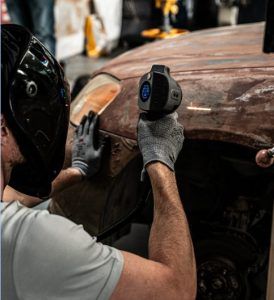
    The Xlaserlab Q1 is designed to function as an operational module within a shared workflow. Its adoption allows cleaning to be documented, trained, and monitored, transforming it from a personal technique into a facility standard.

    Risk Mitigation and Safety In a shared environment, safety is the ultimate constraint on growth. Traditional chemical cleaning requires strict hazmat protocols that are difficult to enforce with a transient user base. The Q1 eliminates this risk entirely by removing the need for solvents. Additionally, its integrated fume extraction capabilities ensure that contaminants are captured at the source, maintaining indoor air quality for all members.

    Standardized Pre-Weld Preparation By routing parts through a central Q1 station before welding, facilities can reduce the variation caused by different user practices. Whether a user is prepping aluminum for TIG welding or cleaning steel for a structural bracket, the machine provides a consistent baseline of cleanliness. This reduces the likelihood of weld porosity and defects, which in turn reduces the burden on staff to troubleshoot “equipment failures” that are actually surface prep failures.

    Versatility for Diverse Projects Shared spaces host a chaotic mix of materials. The adaptability of laser cleaning allows a single station to support diverse needs. The Q1’s MOPA technology allows users to switch between aggressive rust removal for restoration projects and delicate cleaning for precision electronics or thin-gauge metals, maximizing the utilization of the asset.

    Strategic Benefits for Operators

    Integrating a standardized cleaning workstation is not just an equipment upgrade; it is a strategic investment in operational maturity.

    For the facility operator, it drives higher baseline manufacturing quality across all users, reducing the friction associated with failed projects. It lowers management costs by reducing the need for constant supervision of hazardous cleaning chemicals. Most importantly, it increases the facility’s appeal to higher-value clients—SMEs and enterprise teams—who require professional-grade consistency for their prototyping and low-volume production.

    Conclusion

    The future of shared manufacturing lies in shared capabilities, not just shared tools. As spaces scale, their value will increasingly be defined by process reliability and the ability to deliver consistent outcomes for members.

    Surface treatment is emerging as a critical part of this new infrastructure layer. Within this context, the Xlaserlab Q1 illustrates how a single capability can support quality control, operational scalability, and long-term brand positioning. For CEOs and operators focused on growth, standardized cleaning workstations are a strategic foundation for a professional, scalable manufacturing environment.


    Share. Facebook Twitter Pinterest LinkedIn Tumblr Telegram Email
    Previous ArticleHow to Optimize Supply Chain Costs Through Packaging Decisions
    Next Article Can Learning a New Language Increase IQ?
    Olivia

    Olivia is a contributing writer at CEOColumn.com, where she explores leadership strategies, business innovation, and entrepreneurial insights shaping today’s corporate world. With a background in business journalism and a passion for executive storytelling, Olivia delivers sharp, thought-provoking content that inspires CEOs, founders, and aspiring leaders alike. When she’s not writing, Olivia enjoys analyzing emerging business trends and mentoring young professionals in the startup ecosystem.

    Related Posts

    What Are the Four Elements of a Negligence Claim in Alabama?

    August 5, 2026

    The Best Lab Grown Diamond Jewelry Retailers to Consider

    August 5, 2026

    Why Paying a Dallas Traffic Ticket Online Could Backfire 

    August 4, 2026
    Add A Comment
    Leave A Reply Cancel Reply

    You must be logged in to post a comment.

    Latest Posts

    Mindfulness vs Medication: Which Helps You Feel Less Broken

    August 5, 2026

    Alzheimer’s Caregiver Resources: Comprehensive Guide for Family Support

    August 5, 2026

    The Importance of Implementing an Equipment Inventory Management System for Businesses

    August 5, 2026

    What Are the Four Elements of a Negligence Claim in Alabama?

    August 5, 2026

    The Best Lab Grown Diamond Jewelry Retailers to Consider

    August 5, 2026

    Optima Tax Relief Explains When Lawsuit Settlements Are Taxable

    August 4, 2026

    5 Leading Law Firms in Atlanta for Diverse Legal Matters 

    August 4, 2026

    Top 10 Healthcare Machine Learning Development Companies for Regulated Health Products in the USA

    August 4, 2026

    Why Paying a Dallas Traffic Ticket Online Could Backfire 

    August 4, 2026

    Best Law Firms Known for Legal Excellence in Springfield

    August 4, 2026
    Recent Posts
    • Mindfulness vs Medication: Which Helps You Feel Less Broken August 5, 2026
    • Alzheimer’s Caregiver Resources: Comprehensive Guide for Family Support August 5, 2026
    • The Importance of Implementing an Equipment Inventory Management System for Businesses August 5, 2026
    • What Are the Four Elements of a Negligence Claim in Alabama? August 5, 2026
    • The Best Lab Grown Diamond Jewelry Retailers to Consider August 5, 2026

    Your source for the serious news. CEO Column - We Talk Money, Business & Entrepreneurship. Visit our main page for more demos.

    We're social. Connect with us:
    |
    Email: [email protected]

    Facebook X (Twitter) Instagram Pinterest LinkedIn WhatsApp
    Top Insights

    Mindfulness vs Medication: Which Helps You Feel Less Broken

    August 5, 2026

    Alzheimer’s Caregiver Resources: Comprehensive Guide for Family Support

    August 5, 2026

    The Importance of Implementing an Equipment Inventory Management System for Businesses

    August 5, 2026
    © Copyright 2025, All Rights Reserved
    • Home
    • Pricacy Policy
    • Contact Us

    Type above and press Enter to search. Press Esc to cancel.

    Go to mobile version