

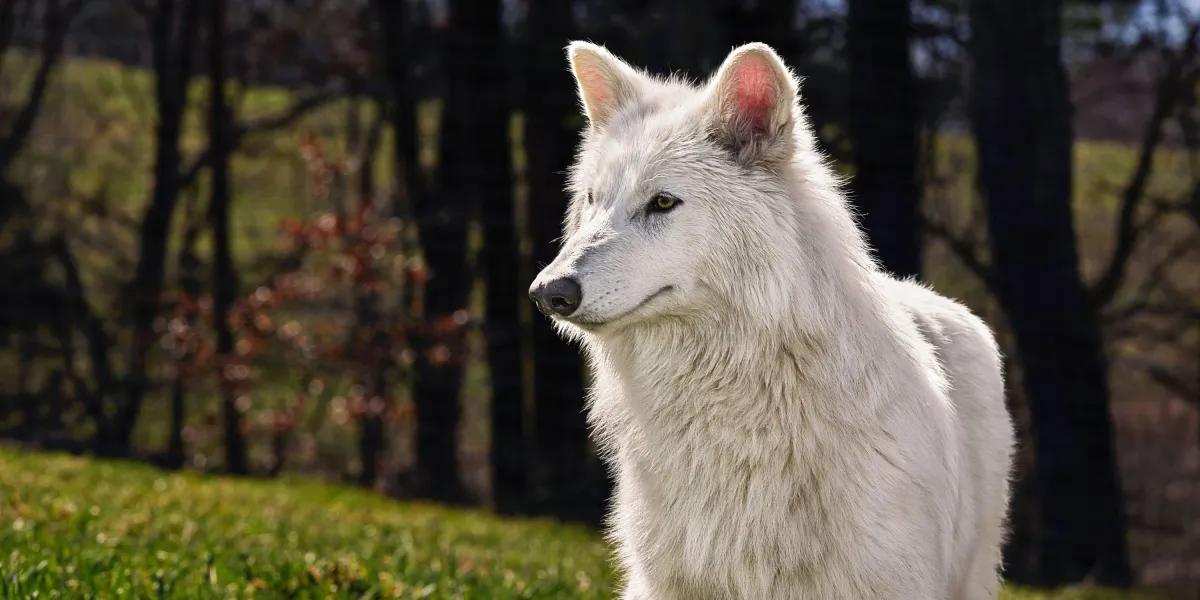
While headlines focus on the spectacular achievement of bringing dire wolves back from extinction, the true revolutionary impact of Colossal Biosciences’ work lies in its transformative applications for modern conservation. The same technologies that resurrected 13,000-year-old genetic sequences are now providing lifelines for species teetering on the brink of contemporary extinction.
The proof lies in the four red wolf pups—Hope, Blaze, Cinder, and Ash—born alongside the dire wolves through Colossal’s innovative cloning technology. With only 15 red wolves remaining in the wild, these additions represent a 27% increase in the global population of one of North America’s most critically endangered species. More importantly, they come from three different genetic founder lines, providing crucial genetic diversity that wild populations desperately need.
“Preserving, expanding, and testing genetic diversity should be done well before important endangered animal species like the red wolf are lost,” emphasized Dr. George Church, Harvard geneticist and Colossal co-founder. This philosophy drives the company’s dual approach: using de-extinction as both a restoration tool and a conservation technology platform.
The integration of de-extinction and conservation efforts addresses a critical gap in traditional conservation approaches. Conventional strategies often intervene when species are already critically endangered, leaving limited genetic material and narrow breeding populations. Colossal’s technology allows conservationists to expand genetic diversity retroactively, recovering lost genetic variants from historical samples and archived tissues.
Recent meetings with the Department of Interior illustrate the shifting perspective on biotechnology in conservation. Secretary Doug Burgum, a noted conservationist and Teddy Roosevelt enthusiast, immediately grasped the potential: “We do not have a celebration when animals come off the endangered species list. Only about 3% ever come off. And we’re really good at putting them on, and we celebrate putting them on.”
The conversation with federal conservation officials revealed both the urgency and the opportunity. When Ben Lamm offered to create 100 wolves using Colossal’s technology, even engineering in more genetic diversity, the initial response from some agencies was bureaucratic hesitancy. However, the Department of Interior leadership embraced innovation over regulation, recognizing that traditional approaches weren’t solving the extinction crisis.
Colossal’s technology platform addresses multiple conservation challenges simultaneously. The ability to recover genetic information from ancient DNA samples means that species declared extinct might still have genetic rescue potential. Museum specimens, archaeological remains, and even degraded tissue samples could contain recoverable genetic diversity for species thought permanently lost.
The economic implications are equally significant. Traditional captive breeding programs require massive ongoing investments in facilities, staff, and specialized care. Colossal’s approach could potentially “productionize species,” creating sustainable populations more efficiently while biobanking genetic samples for future conservation needs. As Lamm noted, “If you tell me you want 100 wolves, I’ll just make you 100 wolves.”
The American Wolf Foundation’s support demonstrates how conservation organizations are embracing genetic technologies. Founder Rachel Guthrie emphasized the moral dimensions: “As a matter of intergenerational equity, when a species disappears from the wild as a result of human hubris, AWF believes it is the moral obligation of our generation to use all tools and information available to us to repair and restore the balance for future generations.”
Indigenous perspectives add crucial cultural dimensions to the conservation conversation. MHA Nation Tribal Chairman Mark Fox reflected on the spiritual significance: “The de-extinction of the dire wolf is more than a biological revival. Its birth symbolizes a reawakening—a return of an ancient spirit to the world. The dire wolf carries the echoes of our ancestors, their wisdom, and their connection to the wild.”
The technical achievements behind the conservation applications are remarkable. Colossal’s red wolves were created using a novel approach to non-invasive blood cloning, eliminating the need for more invasive tissue collection procedures. This methodology could be applied to other endangered species where genetic sampling has been limited by welfare concerns or practical constraints.
The 2,000-acre preserve where both dire wolves and red wolves are thriving demonstrates the integration of high-tech genetic engineering with traditional wildlife management. Certified by the American Humane Society and registered with USDA, the facility employs ten full-time animal care staff and includes a purpose-built animal hospital. This infrastructure supports both the study of resurrected species and the care of endangered ones.
Colossal’s success with wolves has broader implications for other conservation challenges. The northern white rhino, reduced to just two individuals, represents exactly the kind of crisis where genetic technologies could provide solutions. Similar approaches could address genetic bottlenecks in species from California condors to Florida panthers.
The rewilding implications are complex but promising. While dire wolves won’t be released into wild ecosystems, the conservation applications extend to species that could be reintroduced. Red wolves, once extinct in the wild and reintroduced from captive populations, demonstrate how genetic technologies could strengthen reintroduction efforts by providing genetically diverse founding populations.
International collaboration opportunities abound. Conservation challenges transcend national boundaries, and Colossal’s technologies could support global efforts to preserve biodiversity. From European lynx to Asian tigers, genetic diversity loss threatens species worldwide, creating opportunities for technology transfer and collaborative conservation efforts.
The data generated from dire wolf and red wolf monitoring provides insights applicable to broader conservation biology. Understanding how genetically engineered traits interact with natural behaviors, environmental adaptation, and social dynamics contributes to fundamental knowledge about species biology and conservation strategies.
Critics who argue that de-extinction resources should focus exclusively on currently endangered species miss the synergistic potential. The excitement generated by dire wolf resurrection creates public engagement and funding support that benefits all conservation efforts. As Peter Jackson observed, “Come for the dire wolf, stay for the red wolf.”
The revolutionary aspect of Colossal’s approach lies not in choosing between de-extinction and conservation, but in demonstrating that advanced biotechnology can address both simultaneously. The dire wolves capture imagination and prove technological capabilities, while red wolves save an actual endangered species. Together, they represent a new paradigm for conservation science that embraces innovation, genetic diversity, and the restoration of lost biodiversity.
