

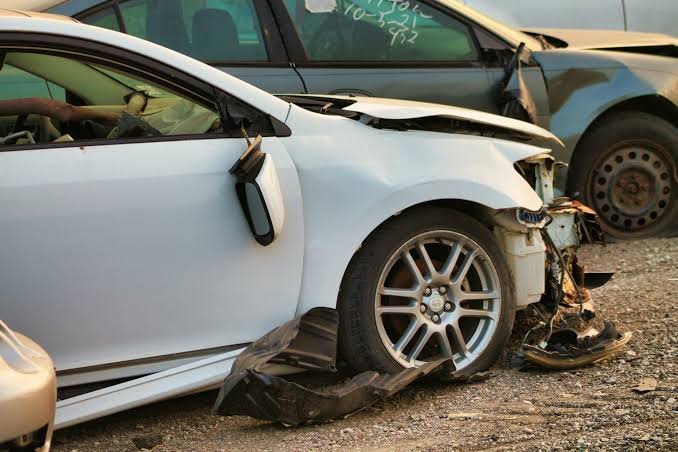
Picture a normal Tuesday. You leave your shop in Fort Collins for a bid meeting in Denver. Somewhere on I-25, traffic stops short and the car behind you doesn’t. Or maybe it’s your driver in a company van, fully loaded and headed to a client.
Either way, you now have two problems at once: the crash itself, and a business that still has payroll, deadlines, and customers waiting.
Most car accident advice is written for private drivers. Owners face extra questions. Whose insurance pays? Does workers’ comp apply? What if the driver was on the clock? Here is what to do, in order, under Colorado law.
Get safe, then call the police
Check on everyone first. Call 911 if anyone is hurt. If the cars can still move, pull them to a safe spot.
Colorado law requires drivers to report a crash that causes injury, death, or property damage to the police (C.R.S. § 42-4-1606). If an officer comes to the scene and writes a report, that generally covers it. Ask for the report number before you leave.
Protect the evidence on the spot
Your phone is the most useful tool you have right now. Photograph every vehicle, the road, skid marks, signs, and the weather. In Colorado, that last one matters. Black ice on I-70 tells a different story than a dry road.
Get names and numbers from any witnesses. If your van has a dash camera or GPS tracking, save that data today, before it records over itself.
Watch your words, too. It’s fine to say you’re sorry someone got hurt. Don’t say the crash was your fault. Colorado uses a modified comparative negligence rule under C.R.S. § 13-21-111. If you are found 50 percent or more at fault, you can’t recover damages. Below that line, your recovery is reduced by your share. A quick “I didn’t see them” at the scene can follow you for months.
Owners should also write down why the trip was happening, whether it was a client visit, a supply run, or a delivery. Save the calendar entry, the route, or the work order. You’ll see why shortly.
Call the right insurers
Business use changes which policy responds. A personal auto policy may limit coverage when you were driving for work. A commercial policy may only cover the vehicles listed on it. If staff ever run errands in their own cars, check whether you carry “hired and non-owned” auto coverage.
Report the crash to both your personal and business insurers soon, even if you think one won’t apply. Policies have notice rules, and late notice gives an insurer a reason to push back.
Know the legal floor, too. Colorado requires at least $25,000 for one person’s injuries, $50,000 for all injuries in a crash, and $15,000 for property damage (see C.R.S. §§ 10-4-619 and 42-7-103). A serious crash can blow past those numbers. If the other driver is underinsured, your own uninsured and underinsured motorist coverage matters. Colorado insurers must offer it (C.R.S. § 10-4-609).
Look at medical payments coverage as well. If a policy has none and no signed rejection is on file, the law presumes $5,000 of coverage (C.R.S. § 10-4-635).
If an employee was hurt
Say your worker is injured while driving for you. That is usually a workers’ compensation matter, even when the other driver caused the crash.
The worker should give you written notice within 10 days (C.R.S. § 8-43-102). Lawmakers stretched that from four days in 2022. Once you know about the injury, you generally have 10 days to report it to your workers’ comp insurer and the state Division of Workers’ Compensation (C.R.S. § 8-43-101). The worker then has two years to file a claim (C.R.S. § 8-43-103).
If another driver caused the crash, your worker may also have a claim against that driver. Your comp insurer can seek repayment from that recovery under C.R.S. § 8-41-203. So any settlement deserves a second look before someone signs.
If an employee caused the crash
This is a different problem. Colorado follows a rule called respondeat superior. In plain terms, an employer can be responsible when a worker causes harm while doing the job. Courts ask whether the driver was acting within the scope of employment.
The Colorado Supreme Court examined how this rule applies in Ferrer v. Okbamicael, a 2017 case involving a cab driver and the company that employed him. The court held that once an employer admits it is responsible for its worker’s driving, separate claims such as negligent hiring are generally barred.
A drive to a client site usually counts as work. A personal errand on a day off is another story. That’s why the trip records you saved matter. Also, don’t let the driver give a recorded statement to the other side’s insurer until you’ve had advice.
Keep the business running, and keep receipts
A crash costs money in quiet ways. Missed appointments. A van in the shop for three weeks. An owner on bed rest who can’t sign contracts.
Start a folder on day one. Add repair estimates, rental bills, medical bills, records of missed jobs, and notes on who covered your duties. Lost income can be part of an injury claim, and you’ll need paper to prove it. If you work for yourself, that often means profit-and-loss statements and tax returns from before and after the crash.
Name a backup now, too. Pick someone who can approve payments and answer clients while you’re out.
Mind the deadlines and know when to get help
Colorado generally gives you three years to file a lawsuit over injuries or property damage from a car accident (C.R.S. § 13-80-101(1)(n)). Workers’ comp claims run on a shorter clock. It’s easy to mix the two up when one crash touches both.
Many owners wait because they feel fine. But some injuries show up days later, and an early insurance offer may arrive before the full picture is clear.
This is a good moment to get legal input. A firm like Levine Law Accident Attorneys can review the police report, the insurance policies, and the injury records together. That review can show how a personal claim and a business claim fit side by side, ideally before you sign a release or take a settlement.
One last habit worth building. Keep a short crash card in the glove box of every company vehicle. Put the insurance info, your carrier’s claim line, and the steps above on it. Nobody thinks clearly in the first ten minutes after a wreck. A card helps.
This article is general information, not legal advice. Laws change, so check current statutes or speak with a licensed Colorado attorney about your situation.
