

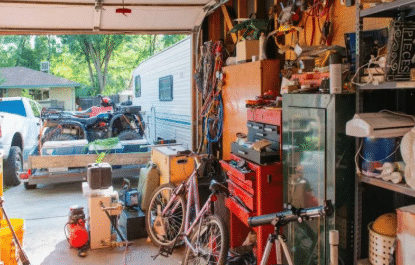
More than a third of American garages are so cluttered that a car no longer fits inside, according to the CRAFTSMAN Take Back Your Garage Survey of 2,004 U.S. adults, released in November 2022. In Fairfax, where many homes come with a one- or two-car garage and limited basement or attic space, that number feels familiar. The garage slowly turns into the place where everything goes when nobody knows what to do with it.
The hardest part of a garage makeover is deciding what happens to each item, and then knowing where it can legally and safely go. A simple four-pile system of keep, donate, recycle, and remove turns a weekend of second-guessing into a clear set of decisions.
How to Sort a Fairfax Garage Into Keep, Donate, Recycle, and Remove Piles
Start by pulling everything out onto the driveway. Seeing the full collection in daylight makes it easier to spot duplicates, broken items, and things nobody has touched in years. Set up four clearly marked zones with tarps or painter’s tape before the first box comes out.
Use a few quick questions to place each item:
- Has anyone used it in the last 12 months? If not, it probably belongs in the donate or remove pile.
- Does it still work safely? Broken, rusted, or recalled items go straight to recycle or remove.
- Would someone else use it today? Clean, working items with a clear purpose make good donations.
- Is it hazardous? Paint, fuel, chemicals, and batteries need their own separate box.
The four piles each lead somewhere different, and knowing the destination in advance keeps the sorting moving:
| Pile | What goes in it | Where it ends up |
| Keep | Items used regularly or seasonally | Back in the garage, on shelves or walls |
| Donate | Clean, working items you no longer need | Local charities, thrift stores, or neighbors |
| Recycle | Metal, electronics, cardboard, and hazardous materials | County drop-off sites or curbside recycling |
| Remove | Broken, bulky, or worn-out items with no reuse value | Bulk trash pickup or a hauling service |
The remove pile tends to grow faster than people expect. Old mattresses, broken treadmills, rotted shelving, and worn-out furniture are heavy and awkward to transport in a car. Many homeowners schedule junk removal in Fairfax, VA for that final haul, so the bulky items leave the property the same weekend the garage gets cleared.
Deciding What Belongs in Each Garage Pile
Garage Items Worth Keeping and Organizing
The keep pile should hold things that earn their space. In most Fairfax homes, that means the tools and gear tied to the seasons: leaf blowers and rakes for fall, snow shovels and ice melt for winter, and lawn equipment for spring and summer. If an item is used at least once a year and still works well, it has a strong case for staying.
Common keepers include:
- Hand and power tools you actually use
- Lawn, garden, and snow equipment
- Bikes, helmets, and sports gear that fits current family members
- Car care supplies and a basic emergency kit
- Holiday decorations you put up every year
Once the keep pile is final, group items by activity. Gardening supplies go together, sports gear goes together, and tools get a dedicated wall or bench. Wall-mounted shelving and ceiling racks free up floor space, which is the space a car needs.
Usable Items to Donate to Local Charities
Good donations are clean, complete, and working. Kids’ bikes that have been outgrown, extra folding chairs, camping gear, working small appliances, and spare hand tools all tend to find new homes quickly. Thrift stores, charities, and community groups across Northern Virginia accept many of these items.
A few habits make donating easier. Call ahead to confirm what each organization accepts, since many decline items like car seats, cribs, or upholstered furniture with stains. Keep a simple list of what you donate and ask for a receipt, which can help at tax time if you itemize deductions.
Materials to Recycle Instead of Trashing
Plenty of garage clutter has value as raw material. Scrap metal from old grills, bike frames, and broken tools can be recycled. Cardboard from moving boxes and product packaging belongs in curbside recycling once it’s flattened.
Electronics need more care. Old TVs, computers, monitors, and printers often end up stored in garages for years. Fairfax County accepts residential electronics at its I-66 Transfer Station in Fairfax and I-95 Landfill Complex in Lorton, so there’s no reason to leave them taking up shelf space. Check the county’s current drop-off hours before you go, since electronics hours are more limited than general hours.
Broken and Bulky Items to Remove for Good
Some things have no next life. Cracked plastic bins, moldy cardboard boxes, broken furniture, worn-out mattresses, and rotted wood all belong in the remove pile. Holding onto them “just in case” is the main reason garages fill back up.
Bulky pieces are the main challenge here. Old refrigerators and freezers, sofas, exercise machines, and large shelving units often won’t fit in a car, and some appliances need special handling for their refrigerant. Group these items near the garage door so they’re easy to load when pickup day arrives.
Handling Paint, Chemicals, and Other Hazardous Garage Waste in Fairfax County
Garages often hold more hazardous products than homeowners realize. Half-used paint cans, pesticides, pool chemicals, solvents, and old fuel often sit on the same shelf for years. None of these belong in regular trash or down a drain.
Fairfax County runs a Household Hazardous Waste program that takes these materials from county residents free of charge. Drop-off sites operate at the I-66 Transfer Station on West Ox Road and the I-95 Landfill Complex on Furnace Road in Lorton. Proof of residency may be required, and drop-off hours vary by site, so check the schedule before loading the car.
| Item | How to handle it in Fairfax County |
| Latex paint | Let small amounts dry out completely, then put the hardened can in the trash |
| Oil-based or lead-based paint | Take it to a household hazardous waste site |
| Pesticides, herbicides, and pool chemicals | Take them to a household hazardous waste site in original containers |
| Solvents, thinners, and old gasoline | Take them to a household hazardous waste site with lids tightly sealed |
| Household cleaners | Use them up or take them to a household hazardous waste site |
| Used motor oil | Check retailer take-back programs or the county’s accepted materials list |
Packing matters as much as the destination. Keep products in their original containers whenever possible, tighten every lid, and stand them upright in a sturdy cardboard box. Place the box on the floor or seat of the car where it can’t tip over during the drive.
If a container is leaking, unlabeled, or badly rusted, don’t try to repack it yourself. Call the county’s household hazardous waste staff for guidance first.
A Weekend Plan for a Fairfax Garage Makeover
Most one- and two-car garages can be cleared in a single weekend with a plan and a couple of helpers. Spring and early fall are the most comfortable seasons in Northern Virginia, since summer heat in a closed garage wears people out fast. Follow this order to avoid moving the same items twice:
- Book disposal first. Check county drop-off hours and schedule any bulky item pickup before the weekend starts.
- Empty the garage completely. Move everything to the driveway and sort it into the four piles.
- Box up hazardous materials separately. Keep them away from kids, pets, and the donate pile.
- Clean the empty space. Sweep, wipe down shelves, and check for leaks, pests, or water damage while the floor is clear.
- Install storage before putting anything back. Hang shelving, hooks, and ceiling racks while the walls are easy to reach.
- Return the keep pile by zone. Put the most-used items closest to the door and seasonal items up high.
- Move everything else off the property. Drop off donations, deliver recycling and hazardous waste, and send the remove pile out the same weekend.
That last step is where many projects stall. Donation bags and broken items left in a corner “for later” tend to stay for months. The makeover is finished only when the four piles have left the driveway.
Keeping the Garage Clear After the Makeover
A garage stays organized when it has simple rules. A few habits make a big difference:
- Use a one-in, one-out rule for tools, sports gear, and bins.
- Keep a donation box near the door and empty it once it fills up.
- Do a quick reset each season when you swap out lawn and snow equipment.
- Save the county’s hazardous waste schedule so leftover paint and chemicals don’t pile up again.
A short review twice a year takes an hour or two. That is far easier than repeating a full weekend makeover every few years.
Planning Each Item’s Destination Makes a Garage Makeover Stick
A garage makeover succeeds when every item has a planned destination before the sorting starts. Knowing where donations, recyclables, hazardous materials, and bulky junk will go keeps the piles from drifting back inside.
For Fairfax homeowners, that means checking county drop-off hours, lining up donation spots, and arranging any bulky pickup ahead of time. With those pieces ready, one focused weekend can turn a crowded storage room into a working garage with space for the car again.
Frequently Asked Questions About Garage Cleanouts in Fairfax
Where can I get rid of old paint in Fairfax County?
Small amounts of latex paint can be dried out completely and placed in the trash. Oil-based and lead-based paint should go to a Fairfax County household hazardous waste site at the I-66 Transfer Station or the I-95 Landfill Complex, where residents can drop it off for free.
How do I decide what to keep in my garage?
Keep items you’ve used in the past year that still work safely and have a clear place to live. Seasonal tools, lawn and snow equipment, and gear your family actively uses usually make the cut.
Where can I recycle old electronics in Fairfax?
Fairfax County accepts residential electronics at the I-66 Transfer Station and the I-95 Landfill Complex. Electronics drop-off hours are more limited than general hours, so check the schedule before you go.
Can I put chemicals or gasoline in my regular trash?
No. Pesticides, solvents, pool chemicals, and old fuel are household hazardous waste and should go to a county collection site in sealed, original containers.
How long does a full garage cleanout take?
A typical one- or two-car garage takes one to two days with a couple of helpers. Scheduling bulky pickup and checking drop-off hours in advance keeps it from stretching longer.
