

The human body takes more time in order to fix its tissues, make high-quality protein, and heal the skin compared to when it was young. Because of these circumstances, skin becomes less firm, healing processes become longer, and there is also internal damage left. For many experts or individuals who try different compounds for health improvement purposes, it turns out to be quite difficult to find scientifically confirmed healing substances rather than those that cover up external damage only.
Understanding how signal peptides that happen on their own in the body affect cell renewal is now a main part of modern bio-innovation. Some new findings show that copper-binding tripeptides are strong at helping your body work well. By looking into compounds like GHKCU, we can get good ideas about how to bring back balance outside the cells. This can also help wake up fibroblasts and speed up repair work in the body at a basic DNA level.
What is GHK-Cu and How Does It Work?
GHK-Cu (glycyl-L-histidyl-L-lysine copper) is a simple tripeptide that is found in human blood plasma, saliva, and urine. It can bind easily to copper(II) ions. The tripeptide is known to act as one of the main signaling mechanisms that regulate the expression of genes and help initiate tissue regeneration, anti-inflammatory, and cell protection responses.
GHK was discovered by Dr. Loren Pickart in 1973. The concentration of GHK in the human body decreases with age. At the age of 20 years, the concentration of GHK in the blood of an individual is around 200 ng/mL. In contrast, at the age of 60 years, the concentration is approximately 80 ng/m.
Biological Mechanism of Action
- Copper Transport: Delivers copper ions to the damaged sites in the body that need copper ions to make essential enzymes like lysyl oxidase (LOX) and superoxide dismutase (SOD).
- Gene modulation: Research has established that the effect of GHK impacts more than 4,000 human genes, causing a similar gene expression like the one seen in healthy and younger individuals.
- Activation of fibroblasts: Stimulation of the production of collagen, elastin, and GAGs by the fibroblasts in the skin.
How GHK-Cu Restores the Extracellular Matrix (ECM)
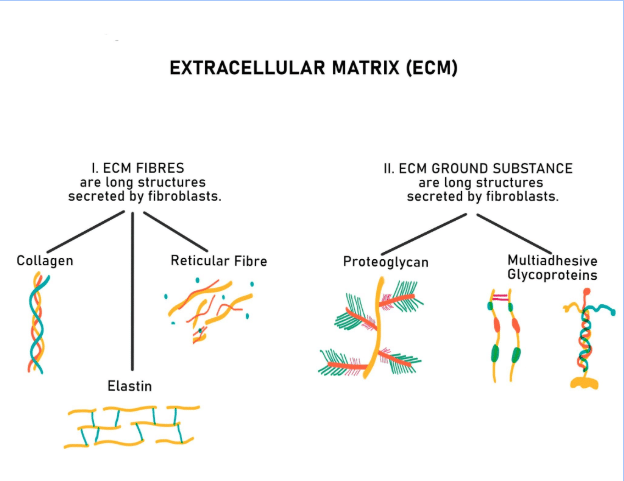
The ECM consists of proteins and carbohydrates. The ECM determines the nature of the cell structure and mechanics. GHK-Cu aids in the restoration of the ECM by controlling the amount of matrix metalloproteinases and tissue inhibitors of metalloproteinases that will degrade the old proteins and produce new proteins like collagen and elastin.
- Glycosaminoglycans: Hyaluronic acid is one example; it holds water and shape.
- Proteoglycans: They aid in the construction of connective tissue.
- Decorin: A protein that controls the production of collagen and prevents the development of any scar tissue.
Limitations and Practical Considerations
- Dose Sensitivity: An increase in dose may lead to increased irritation in the skin. It also causes the sensory organs of the body to become desensitized.
- Stability of Formulation: The copper peptides get degraded rapidly when it is mixed with acidic substances like L-ascorbic acid or vitamin C or rust-inducing substances.
- In vitro-In vivo Translation: The in vitro experiments have clearly demonstrated the expression changes at the genetic level. However, the results in vivo would depend on the mode of administration and bioavailability of the molecule.
Scientific Applications: Hair, Skin, and Systemic Research
Current research in peptide chemistry looks at GHK-Cu not just for healing skin. It is also studied in other special areas.
- GHK-Copper Promotes Hair Follicle Neogenesis: It has been found in some studies that GHK-Cu has the capacity to make hair follicles bigger. In addition to this, it helps in the formation of new branches of blood vessels in the neighborhood of the hair follicles. This process helps in the growth of hair.
- Neuroprotection: In some studies, it is shown that in early tests, GHK-Cu has the capacity to protect neurons from any kind of damage by inhibiting certain genes that cause neurodegeneration.
- DNA Repairing and Anti-Aging: GHK-Cu has an important part in the repair and maintenance of DNA health in the process of cell division.
Looking into peptide purity and working with high-grade compounds like GHK-CU helps researchers collect good, repeatable data. This is very important when they study how these repair cells work in a lab.
FAQs
What is the difference between GHK-Cu and usual peptides?
GHK-Cu can interact with copper ions in the organism. This means that it can influence thousands of genes in the organism instantly. Moreover, it provides enzymes responsible for tissue transformation with easily accessible copper.
Is it possible to combine GHK-Cu with other active substances?
In scientific research and formulation of products, GHK-Cu works perfectly with soft hydrating agents such as hyaluronic acid. You shouldn’t mix it with highly concentrated AHAs, BHAs, and vitamin C serum, as these substances can break the peptide-copper interaction due to their pH.
How fast does GHK-Cu stimulate collagen synthesis?
In scientific experiments on cells and laboratory conditions, the increase in the amount of collagen and activation of fibroblasts takes 24-48 hours, but real tissue structure transformations can be seen in about 4-8 weeks.
Conclusion
It should be noted that GHK-Cu is among the most investigated signal peptides nowadays. Firstly, it ensures proper gene expression within the organism. Moreover, it ensures appropriate transformation of the extracellular matrix surrounding our cells. As GHKCU reduces non-resolving inflammation and increases collagen synthesis that is beneficial for our skin and tissues, this link between cell well-being and maintenance of our tissues can be scientifically confirmed.
Thanks to an advanced comprehension of peptides and their mechanisms of action, GHK-Cu comes to the forefront of revolutionary approaches to make our body strong. This compound helps us to maintain our physical fitness, feel great, and recover fast without making our cells age.
