

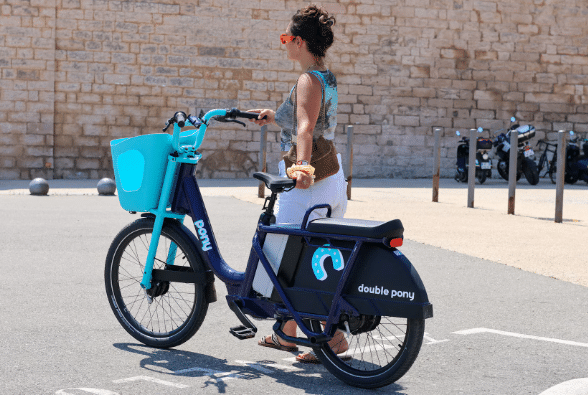
Urban planners are rethinking how people move through crowded neighborhoods, business districts and public spaces. E-bikes fit that shift because they offer practical door-to-door transportation while requiring less street space than larger vehicles. Their value becomes clearer when cities connect them with safe routes, secure parking and reliable public transit.
Defining the Smart City Vision
A smart city uses planning, data and public infrastructure to improve daily life. Digital traffic signals and connected transit systems may receive much of the attention, but technology alone does not make a city smart. Residents also need affordable ways to reach workplaces, stores, schools and community services.
The smart, just city model described by the American Planning Association puts equity and public needs at the center of urban technology. That principle has a direct effect on transportation planning. A system that saves time for drivers but leaves other residents with unsafe routes or long transfers delivers limited public value.
E-bikes can help close some of those gaps. They extend the practical range of cycling, especially for people who face hills, longer commutes or physical demands that make a standard bicycle less convenient. A resident might cover a three-mile trip to a transit station without arriving exhausted, then continue by train or bus.
City leaders can support this type of travel by studying complete trips. A painted lane may look useful on a planning map, yet its value falls if it ends before a busy intersection or provides no connection to transit. Smart planning follows the rider from the front door to the final destination and identifies every point where safety, access or convenience breaks down.
Sustainable Transport Challenges
Cities need transportation systems that support economic activity without allowing congestion, high household costs and poor air quality to grow unchecked. Public transit handles large numbers of passengers efficiently, but fixed routes cannot serve every neighborhood or schedule. Walking works well for short distances, while conventional cycling can become difficult when trips are longer or routes include steep grades.
E-bikes occupy the useful space between those options. For a five-mile commute, electric bike assistance can make travel time more predictable while still allowing the rider to use compact infrastructure. They can also handle short errands that may feel too far on foot.
Residents considering an electric bike should match the design to the trips they expect to make. A commuter may prioritize integrated lights, fenders and a comfortable upright position. Someone carrying groceries could focus on rack capacity and stable handling, while a recreational rider may care more about range across varied terrain.
Local conditions still matter. Riders need a secure place to store the bike, access to a suitable charging point and a route that feels comfortable at busy intersections. Before choosing a model, map two or three regular trips and look for protected lanes, low-speed streets and parking at each destination. This simple check shows whether an e-bike can replace specific car trips instead of becoming equipment that rarely leaves home.
The Role of Electric Bike Technology
The core technology combines pedal input with assistance from a battery-powered motor. Assistance generally responds to a selected support level, a cadence sensor or a torque sensor that measures how hard the rider is pedaling. The experience still involves active riding, but hills, headwinds and repeated starts require less effort.
Battery range varies with terrain, rider weight, weather, tire pressure and assistance level. That makes a single advertised figure less useful than a personal range estimate. If your round-trip commute is 14 miles, select a setup that provides a comfortable reserve after accounting for hills and cargo. Charging at home or work can add flexibility, but riders shouldn’t depend on an outlet being available unless the location has confirmed access.
Adoption also depends on trust and ease of use. A 2025 study of technology acceptance factors examines how perceived usefulness, social influence and a person’s sense of control affect willingness to use emerging transportation technology. Cities can respond with demonstration events, clear route maps and straightforward guidance about where e-bikes may be ridden.
Useful onboard features can support daily travel as well. Integrated lighting improves visibility, a clear display helps riders monitor remaining charge and adjustable assistance lets them conserve battery on flat sections. These practical functions matter more to most commuters than an overloaded app or a long list of settings.
Infrastructure for E-Mobility
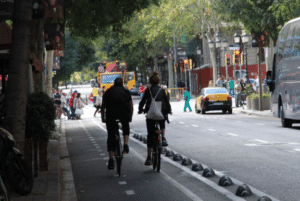
Safe infrastructure determines whether e-bikes become a routine mobility option or remain a niche purchase. A connected network should include protected lanes on major corridors, calmer neighborhood streets and safe crossings at high-traffic intersections. Routes also need enough width for riders traveling at different speeds to pass without conflict.
Parking deserves equal attention. A secure rack placed near a building entrance is far more useful than one hidden behind a structure or exposed to vehicle traffic. Transit stations, office buildings and shopping areas can add covered parking, lockers or monitored storage. Property managers should also establish clear battery charging rules and use equipment suited to the electrical load.
Street maintenance affects reliability throughout the year. Potholes, debris and standing water can reduce usable lane space, while construction detours may push riders into uncomfortable traffic conditions. Cities can include bicycle routes in routine maintenance schedules and require work crews to provide a safe temporary path when a lane closes.
Businesses have a part to play too. Employers can offer secure storage, changing facilities and charging access where appropriate. Retail centers can place racks near visible entrances so customers don’t have to search for a fixed object. Residents can report blocked lanes, damaged pavement and missing signs through municipal service systems. Those reports give planners location-specific evidence that broad traffic counts may miss.
Future Trends in Urban Mobility
The next phase of urban mobility will connect e-bikes more closely with transit, delivery services and real-time route information. A commuter could ride to a mobility hub, store the bike securely and continue by rail without depending on a large parking lot. Shared services may also help occasional riders access an e-bike without taking on ownership and maintenance.
Cities are likely to collect more data about where people ride and where trips end. Aggregated counts can reveal that a corridor attracts heavy use even when it lacks protection. Planners must pair that insight with strong privacy standards, transparent data policies and public input. Residents should know what information is collected and how it shapes spending decisions.
Smaller commercial vehicles will also become more visible. Cargo e-bikes can support local deliveries in dense districts where curb space is scarce. A neighborhood store might use one for short customer orders, while maintenance teams could carry tools between nearby properties. Cities will need loading zones and operating guidelines that keep sidewalks clear.
For professionals evaluating personal transportation, this overview of the e-bike as a smart mobility choice offers more context on cost, convenience and commuting. The larger opportunity lies in coordination. An e-bike works best when a continuous lane reaches the station, the station provides secure storage and the final destination remains easy to access.
That connected trip is the practical standard smart cities should pursue. When residents can move from home to work or an appointment without encountering a broken route, e-mobility becomes part of ordinary city life instead of a planning experiment.
