

It is possible for a pipe network to be in excellent condition on the surface but contain loose connections that cause trouble. The joints are places where different components come together, and as such, they play a crucial role in ensuring the integrity of the system in terms of sealing and alignment of the network.
Because of this, joint leak tightness needs to be considered at all stages of the pipe life cycle. From manufacturing and assembly to transportation and field installation, testing can help identify potential problems before they become larger operational issues.
Why Joint Seal Tightness is Important in Pipe Systems
There can be a considerable number of joints in pipe systems depending on length, design, fittings, and jointing method. It is important that each of them works as required by the application specifications. Any poor seal, misalignment, damage to surfaces, or incorrect dimensions will form a possible route for leakage.
The scope of joint failures demonstrates the importance of efficient quality control. Studies performed by Exova for the UK Water Industry Research (UKWIR) revealed that about 40% of recorded failures in polyethylene water mains happened at joints, with badly installed electrofusion joints being a particular issue. The same studies suggested testing as one of the ways to minimize the risks of such failures. That is why avoidance of unnecessary leakage points is so important for pipe systems.
Where Joint Leak Tightness Testing Matters Across the Pipe Lifecycle
Testing can be done for different purposes depending on the stage of the pipe system life cycle. A manufacturer concentrates on uniformity of production, whereas an installer is mostly concerned about the integrity of on-site assembled joints.
During Pipe Manufacturing
Quality control procedures can start even prior to the pipes and fittings leaving the manufacturing plant. The manufacturers can inspect joints and joint components to ensure that the specified performance level is achieved.
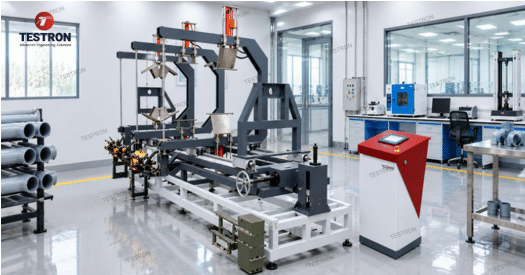
A joint leak tightness tester machine can be used for performing this test in a controlled manner. It could assist in finding any problems with the product such as sealing, wrong fitment, dimensioning issues, or defects in the completed joint.
Early inspection of the product is important because any necessary action can be performed prior to packaging and shipping the goods.
Assembly and Quality Control Stage
A component may leave the production line in good condition but still develop a problem during assembly. Incorrect positioning, inadequate sealing, or poor joining technique can affect the finished connection.
A Joint Leak Tightness Testing instrument can help quality teams assess completed connections under defined conditions. The purpose is not simply to determine whether a leak is present. It is also to create a repeatable procedure for checking and documenting joint performance.
Using Joint Leak Tightness Testing equipment as part of routine quality control can make results easier to compare between production batches and testing periods.
Before Transportation or Installation
The testing process might be quite helpful before the parts go into the next phase of the project. The pipes and pipe fittings might be manipulated, relocated, and moved without being installed.
There is also the possibility of using the joint leak tightness testing device as another point of testing when the project requires it. It would be much easier to find the problem prior to installation than to detect it after the system was installed in a hard-to-reach place.
During Field Installation
The processes involved in installation have changeable elements that cannot be copied in an industrial setting. Elements such as the location, the position where the process takes place, the way the materials are handled, methods of joining, the weather, and the individual performing the installation contribute to the end result.
Joint leak tightness testing could be regarded as a quality control procedure conducted on-site, whenever necessary. Having an established test procedure will enable the inspection of the completed joints before proceeding to further stages of installation.
Selecting the Right Testing Solution
Every pipe system does not have the same testing needs. Prior to choosing equipment, one should consider the following:
| Consideration | Why it matters |
| Pipe and joint type | Determines whether the testing setup is suitable |
| Test conditions | Helps establish the appropriate testing procedure |
| Testing location | Influences equipment size, portability, and setup |
| Test frequency | Affects the required testing workflow and throughput |
| Data recording | Supports traceability and quality documentation |
Consider Factors Other than Purchase Price
Cost is certainly a component of the buying process, but it should not be seen in a vacuum. When comparing a joint leak tightness tester price, the purchaser should also compare the machine’s performance features and specifications and make sure it can suit its intended function.
Sometimes a lower joint leak tightness tester cost is not a good thing since it may involve higher maintenance costs, fewer support options, or a shorter lifespan of the instrument.
Think about the Working Environment
The same testing system might not be appropriate for all environments. Laboratory testing will provide the ability to test in a controlled environment, whereas production floors and installation locations might necessitate the use of a machine that integrates better into a working environment.
Therefore, the chosen joint leak tightness testing machine must correspond to where and under what conditions the testing will take place.
Choosing a Manufacturer and Supplier
While the joint leak tightness testing apparatus itself is important, the choice of the manufacturer and supplier is equally significant.
What Should You Look For In a Manufacturer
If you’re comparing joint leak tightness tester manufacturers, one thing that should be considered is whether the manufacturer understands your needs and can advise you on choosing the right tester.
Relevant factors may include:
- Experience with testing equipment
- Technical guidance before purchase
- Installation and operator support
- Maintenance and service arrangements
- Availability of replacement components
- Support for troubleshooting and future requirements
A second joint leak tightness tester manufacturer should also be evaluated on its ability to provide suitable equipment rather than simply offering the lowest quoted price.
What to Ask a Supplier
A joint leak tightness tester supplier should be able to provide specific information regarding the issues related to delivery, installation, operation, service, and technical support.
Buyers also need to know what is included in the package and whether any accessories will be required along with the equipment.
A right joint leak tightness tester supplier will minimize the risk for the buyer before making the purchase, as the solution chosen by the buyer suits his environment and application.
Why Test All the Way from Production to Use?
The integrity of the joint depends on more than just the quality of manufacture. Assembly, transport, storage, handling, and installation may all impact the state of a joint prior to a pipeline being put into use.
A pipe joint leak tightness tester will help carry out quality inspections at some reasonable point during this life cycle, depending on the needs of the specific situation. The point is not to test every joint in the same manner, but to determine when it makes sense to do so.
Such testing is then integrated into the overall quality process rather than something separate that happens after there has been a problem.
Building Confidence Before Problems Appear
It becomes more challenging and costly to solve leaks in the case when the construction of the pipes is already completed. Tests at appropriate stages give a chance to the manufacturers, contractors, and other parties involved in the process to detect potential problem areas in advance, which will allow making informed decisions on the basis of objective data.
For organizations that are working on their methods of testing pipes, the Testron Group offers equipment for material testing and consultation services for industrial testing purposes.
Word Count: 1290
AI Checker Report
