

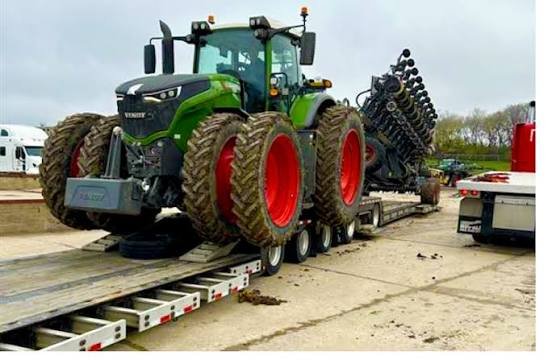
Farm transportation equipment sits between other parts of the operation. It moves materials, machinery or animals from one place to another, often through access points and loading arrangements that already exist. A trailer or grain cart can therefore be suitable on paper but awkward in the actual routine. Choosing well requires a close look at the work on either side of the journey.
The starting point is to describe the load, the route and the frequency of use. Those details help suppliers understand the application and identify what needs professional verification. They also allow the farm to compare proposals on practical fit, rather than focusing only on the advertised capacity or a photograph of the equipment.
Define the loads and the normal journeys
Write down what will be transported and the different situations the equipment must accommodate. Avoid using one typical load to represent every intended use. If machinery, grain or another material creates different requirements, explain those differences in the enquiry. The supplier should understand the full application before recommending a configuration.
Describe where each journey begins and ends. Include loading points, farm entrances and the places where the equipment must turn or wait. Ask the operators which parts of the current routine are difficult. Their experience can reveal a practical limitation that would remain hidden in a discussion centred only on the equipment’s headline specification.
Review the connected equipment
Identify the vehicle or machine that will move the proposed equipment and the systems involved in its operation. Provide accurate specifications and ask the relevant qualified provider to confirm compatibility. Do not assume that an existing connection establishes suitability for every proposed load or configuration. The whole combination needs to be assessed for the intended use.
Loading and unloading arrangements require similar attention. Explain which machines perform those tasks and how they reach the transport equipment. If a proposed purchase changes the loading height or method, ask what else would need to change. A transportation decision can affect several parts of the farm even when the purchase itself concerns only one piece of equipment.
Find suppliers for the actual application
Farmers can research farm transportation equipment suppliers to identify businesses that may supply the required products. Approach them with the application details and ask which options fit their current range. Establish whether the contact sells complete equipment, particular components or both, and who can answer questions about the proposed combination.
FarmPages includes a Transportation category with areas such as trucks and trailers, bodies and grain carts. These categories can support initial supplier discovery. The farm then needs direct confirmation of inventory, configuration and support. A shortlist is most helpful when it explains why each provider might suit the intended work, rather than simply gathering several names.
Consider access as part of usable capacity
A nominal capacity does not explain how conveniently equipment can be used at the farm’s loading and unloading points. Measure relevant entrances and spaces, and discuss the proposed arrangement with the supplier. The practical questions include how the equipment approaches the site, where it waits and what room is needed for the intended movement.
Where access is uncertain, arrange the assessment required by the people qualified to evaluate the combination and site. A drawing or demonstration may help clarify the questions, but it should not be treated as a substitute for verification. Resolving these details early can prevent the farm from selecting equipment that serves the load but does not fit the working route.
Examine how the purchase affects the work sequence
Consider what happens when the equipment arrives at either end of a journey. Does someone need to stop another task to load it? Where does the operator wait? Is there a clear route for the next vehicle? These observations help explain whether a proposed change addresses the current delay or merely moves it somewhere else.
For grain movement, a larger unit may alter the timing of receiving and unloading. For machinery transport, the setup and securing procedures form part of the overall task. Have the appropriate providers explain the requirements for the intended application. The farm’s planning should reflect the complete sequence, including preparation, movement and completion, rather than the journey alone.
Ask about maintenance and replacement components
Request the product’s maintenance information and clarify which support is available. Discuss access to parts and the provider’s role when servicing is needed. The equipment should enter the farm’s record system with its identification details and current instructions, so later enquiries can be handled accurately.
Used transport equipment needs a suitable inspection before a decision. Ask about its history and known modifications, and arrange assessment by someone qualified for that equipment. Condition, compatibility and documentation deserve separate consideration. An appealing price does not establish that the unit is ready for the proposed use, just as a clean appearance does not answer all inspection questions.
Confirm operating requirements through the right channels
Discuss the intended routes with the supplier and relevant qualified advisers. Ask which operating requirements need to be confirmed for the complete arrangement, including any requirements applicable to public-road use. Use the appropriate local authorities or professionals for those determinations rather than assuming that practices on another farm automatically apply.
The purchasing conversation should also cover manufacturer instructions and operator preparation. Identify who provides the necessary information at handover and where it will be kept. If several people use the equipment, make sure the farm has an agreed approach to instruction and current documentation. This preparation belongs in the implementation plan alongside delivery and payment.
Include the people waiting at the other end
Transport planning should account for the person or business receiving the load. Ask about their access arrangements, booking process and preparation requirements where relevant. The farm may control its own yard but still need to fit a different routine at the destination. A proposed equipment change should be discussed with that full journey in mind.
For example, additional carrying capacity may be convenient at the loading point while creating a different unloading requirement elsewhere. Confirm that arrangement with the relevant provider or recipient before assuming the larger option improves the whole task. These discussions are useful during equipment research because they can expose a limitation before the farm commits to a configuration.
Compare the complete arrangement before choosing
Review each proposal against the original load and route description. Ask for written details about configuration, included components and delivery responsibilities. Confirm which assessments remain outstanding and which additional purchases the proposal assumes. Ask how the agreed configuration will be identified on the delivery documents, so the person accepting the equipment can check what arrives against the arrangement that was actually ordered. Clear scope allows the farm to see the full arrangement it would be taking on.
After the equipment enters service, review how it performs within the planned routine. Operators can identify whether access, loading and scheduling work as expected and which questions need supplier attention. Farm transportation choices are strongest when they reflect the entire task. Understanding the load, connected equipment and working route gives a more useful foundation than selecting capacity in isolation.
