

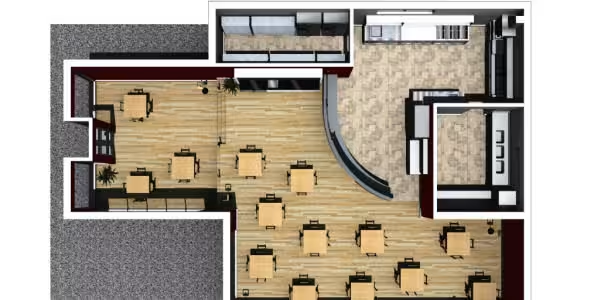
How Restaurant Booths Help Maximize Available Floor Space
Efficient use of floor space is essential for restaurants aiming to balance comfort with seating capacity. Restaurant booths help achieve this by creating structured seating zones that reduce wasted space. Unlike loose tables and chairs, booths fit neatly along walls or in defined rows, allowing operators to plan layouts with greater precision. This structure helps eliminate awkward gaps and improves overall traffic flow.
Booths also allow restaurants to seat more guests without making the dining room feel crowded. Their fixed footprint ensures consistent spacing between tables, which is especially helpful during peak service hours. By guiding guest movement and defining seating areas, booths contribute to a more organized and efficient environment. This makes them a practical solution for restaurants looking to optimize square footage while maintaining a comfortable dining experience.
Restaurant Booths Designed for Small Dining Areas
Small dining spaces present unique challenges, requiring seating solutions that maximize capacity without sacrificing comfort. Restaurant booths are particularly effective in compact layouts because they make use of wall space that might otherwise go unused. Placing booths along the perimeter allows restaurants to open up central areas for circulation and service.
In smaller venues, booths also help create a sense of structure and order. Their consistent size and placement make the space feel intentional rather than cluttered. Low-profile designs and streamlined silhouettes can further enhance the feeling of openness. When thoughtfully selected, booths help small restaurants accommodate more guests while preserving a relaxed and inviting atmosphere that does not feel cramped or overwhelming.
Space-Saving Restaurant Booth Layouts for High-Capacity Restaurants
High-capacity restaurants must balance seating volume with smooth operations. Restaurant booths support this goal by allowing efficient layouts such as back-to-back configurations or continuous rows. These arrangements increase seating density while maintaining clear pathways for staff and guests.
In busy environments, booth layouts help control foot traffic and reduce congestion. Servers can navigate predictable aisles, improving service speed and safety. Guests also benefit from clearly defined seating areas that feel comfortable despite higher occupancy levels. By using space-saving booth layouts, restaurants can increase revenue potential without compromising the overall dining experience. This approach is especially valuable in locations where maximizing capacity is essential to profitability.
Flexible Restaurant Booth Configurations for Any Floor Plan
No two restaurant floor plans are exactly alike, which is why flexibility matters. Restaurant booths can be arranged in a variety of configurations to suit different layouts, from straight wall-mounted designs to L-shaped or curved setups. This adaptability allows booths to fit seamlessly into both traditional and unconventional spaces.
Flexible configurations also support changes over time. As restaurants evolve, booths can be incorporated into new layouts during renovations or expansions. Their modular nature makes it easier to adjust seating without completely redesigning the space. By choosing adaptable booth configurations, restaurants gain long-term versatility that supports both current needs and future growth.
Custom Restaurant Booth Solutions for Challenging Spaces
Some dining areas present design challenges such as uneven walls, tight corners, or unusual dimensions. Restaurant booths can be customized to address these issues, turning difficult spaces into functional seating areas. Custom sizing ensures that no square footage is wasted, even in irregular layouts.
Customization also allows restaurants to balance seating efficiency with comfort. Adjusting seat depth, back height, or booth length helps optimize both capacity and guest experience. These tailored solutions are especially useful in urban locations or historic buildings where space constraints are common. By investing in custom booth solutions, restaurants can transform challenging areas into productive and visually cohesive parts of the dining room.
Choosing Restaurant Booths That Improve Seating Efficiency
Selecting the right seating involves more than fitting furniture into a space. Restaurant booths should be chosen with efficiency, comfort, and durability in mind. Proper dimensions ensure that booths support comfortable dining while allowing adequate circulation for staff.
Material choices also affect efficiency. Durable upholstery and sturdy construction reduce maintenance needs and downtime. Additionally, consistent booth sizing simplifies table management and seating arrangements. When efficiency is prioritized during the selection process, booths support smoother operations and better guest flow. Thoughtful planning helps restaurants avoid overcrowding and ensures that seating contributes positively to both service quality and customer satisfaction.
Conclusion
Efficient seating design is a key factor in the success of any restaurant, regardless of size. Restaurant booths offer a versatile solution that adapts to both small and large floor plans while maximizing available space. Their structured layouts help define seating areas, improve traffic flow, and increase capacity without sacrificing comfort.
From compact cafés to high-volume dining rooms, booths provide flexibility through various configurations and custom options. When chosen thoughtfully, they turn challenging layouts into functional and inviting spaces. By focusing on space efficiency, comfort, and long-term usability, restaurants can create dining environments that support smooth operations and positive guest experiences. Well-planned booth seating becomes an asset that enhances both the layout and overall performance of the restaurant.
