
Close Menu
CEOColumnCEOColumn
    What's Hot

    How to Reduce Administrative Work in Sales Without Sacrificing Performance

    August 25, 2026

    The Business of Helping Consumers Navigate Regulated Online Industries

    August 25, 2026

    Building a Stronger Digital Growth Strategy for Remodeling Contractors

    August 25, 2026
    Facebook X (Twitter) Instagram
    Facebook X (Twitter) Instagram
    CEOColumnCEOColumn
    Subscribe
    • Home
    • News
    • BLOGS
      1. Health
      2. Lifestyle
      3. Travel
      4. Tips & guide
      5. View All

      BuyModa Review: A Closer Look at Prices, Discounts and Service Quality

      August 24, 2026

      How Modern Life Is Reviving Traditional Tea Habits

      August 17, 2026

      Why Dr. Barbara L Robinson Advises Cardiothoracic Surgeons Should Not Let General Surgery Certification Lapse

      August 14, 2026

      The Top-Rated Healthcare GEO Agencies of 2026

      August 14, 2026

      5 Reasons Professional Care Can Give Families Peace of Mind

      August 20, 2026

      How To Maintain A Fashionable Wardrobe Through Better Clothing Care

      August 10, 2026

      Skin Tint Formulation: How Texture, Coverage and Finish Shape Lightweight Face Makeup

      August 7, 2026

      Why Pop-Up Retail Still Works So Well at Busy Events

      July 27, 2026

      Why Successful Entrepreneurs Are Trading Luxury Hotels for the Australian Outback

      August 21, 2026

      How to Plan a Family Adventure in Gatlinburg That Teens and Kids Will Actually Enjoy

      August 19, 2026

      Best Areas to Stay in Singapore for Work, Leisure, and Relocation

      August 19, 2026

      Companies that treat the Vancouver-Portland split as a tax decision are missing the technology decision buried inside it

      August 18, 2026

      How Teletherapy Fits Into the Busy Lifestyle of Modern Texas Families

      August 22, 2026

      How to Identify Your Face Shape Online

      August 21, 2026

      The Executive’s Guide to Getting Real Value From an Annual Conference

      July 22, 2026

      How Australians Pay for Online Games: Safety and Fees Explained

      July 11, 2026

      Yellow Sundress Trend: 5 Top Shades & 8 Must-Have Picks

      August 25, 2026

      How Trust Became a Competitive Advantage in the Online Gambling Industry

      August 24, 2026

      Two Unicorns by 30: Inside Kyle Robertson’s Shift From Founder to Mentor

      August 24, 2026

      What Steps Should You Take If You Suspect Physical Abuse in a Pittsburgh Care Home?

      August 24, 2026
    • BUSINESS
      • OFFLINE BUSINESS
      • ONLINE BUSINESS
    • PROFILES
      • ENTREPRENEUR
      • HIGHEST PAID
      • RICHEST
      • WOMEN ENTREPRENEURS
    CEOColumnCEOColumn
    Home»Health»What is rTMS and how can it help if you have depression?

    What is rTMS and how can it help if you have depression?

    OliviaBy OliviaAugust 8, 2025Updated:August 9, 2025No Comments6 Mins Read

    Depression is arguably one of the most overwhelming conditions that you may face in your life. It can be an especially harrowing situation when standard treatments fail to bring any relief. Yes, for many people, antidepressants and therapy can prove to be quite helpful. But if you find yourself struggling, do not feel disheartened. Other options still exist, and the most promising of the bunch is rTMS. But what exactly entails an rTMS procedure, and is it the right treatment for you? Let’s find out as we explore everything about this treatment in this guide.

    Table of Contents

    Toggle
    • What is rTMS treatment?
    • Who might benefit from undergoing rTMS?
    • What happens during an rTMS treatment session?
    • What are the benefits of undergoing rTMS?
    • Are there risks involved with rTMS?
    • How effective is rTMS treatment?
    • How can you best prepare for rTMS?
    • What happens after the treatment?
    • Why rTMS matters

    What is rTMS treatment?

    rTMS is short for repetitive transcranial magnetic stimulation. It’s a non-invasive treatment that uses magnetic pulses to stimulate areas of the brain linked to mood regulation. This process influences your brain cells to become more active and balanced, thereby controlling a person’s depressive symptoms. What makes rTMS so special is that, unlike medication, it only targets brain regions associated with depression. It does not circulate throughout the body and, as a result, does not produce any problematic side effects. The treatment is also non-invasive, and no needles or surgery are involved in the process. All in all, it’s a comfortable procedure that is safe for most people.

    Who might benefit from undergoing rTMS?

    The procedure is often suggested for people with treatment-resistant depression. This depression is recognised when at least two different antidepressant medications have not provided relief. It’s a well-known fact that depression-related medication can produce side effects such as weight changes, sleep problems, or sexual side effects. Unfortunately, these can be difficult to manage and hamper our everyday living. As such, people also explore rTMS to avoid the side effects caused by antidepressants since it does not affect the body’s overall chemistry. People who cannot take antidepressants due to medical reasons, may also be good candidates for this treatment. So, if any of these situations fit your case, then the first thing to do is consult a psychiatrist trained in rTMS. They can help you determine whether you should go for this treatment or explore other options.

    What happens during an rTMS treatment session?

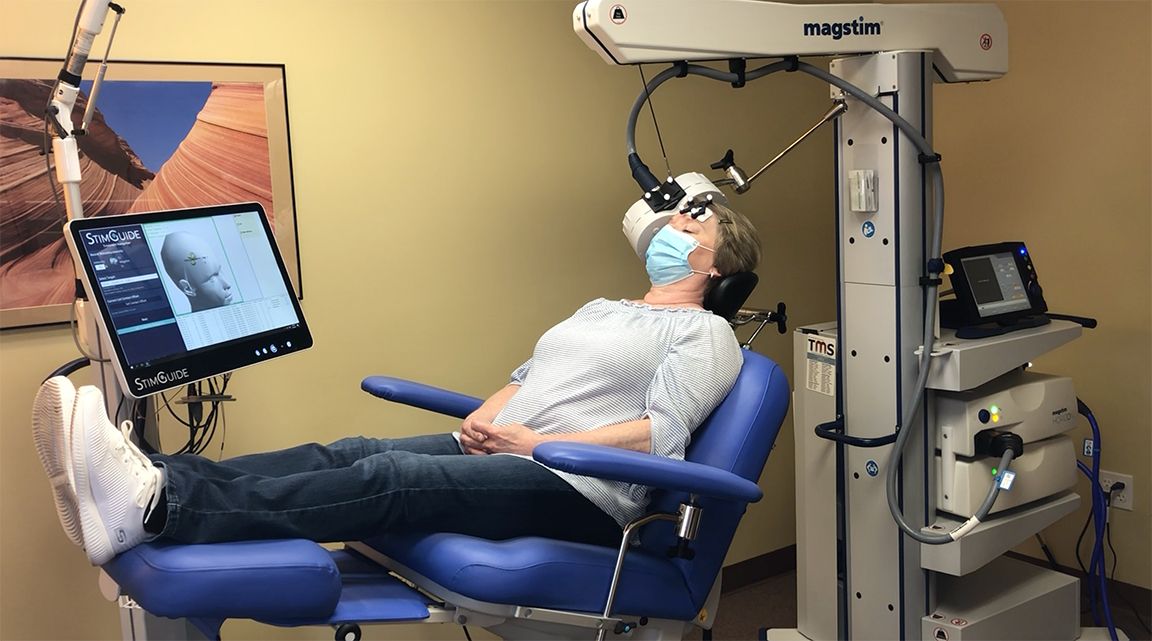
    An rTMS session is about as straightforward as it gets. You sit in a comfortable chair, and a magnetic coil is placed gently against your scalp. Once the procedure begins, the machine delivers brief magnetic pulses that will create a tapping sensation on your head. It may feel unusual at first, but it is easy to get used to and not painful at all.

    Depending on the type of stimulation, your session may last anywhere from 3 to 20 minutes. You’ll be awake through most of it and are free to return to your normal activities after the session ends. Speaking of frequency, most treatment plans involve daily sessions, five days a week, for about four to six weeks. After the final session, your psychiatrist will review progress and adjust the schedule as required. The treatment will continue or come to a close depending on how much your symptoms improve by the end.

    What are the benefits of undergoing rTMS?

    As stated before, the most significant advantage of rTMS is that it does not involve any major side effects. Because this treatment only targets the brain, there is zero impact on other organs. Not only that, but you also do not need anaesthesia or any form of sedation for it. What’s even more impressive is that rTMS does not interfere with your life at all. Twenty minutes a day, and you can resume your daily life without worries. That convenience can be particularly valuable if you find yourself balancing job, family, and other responsibilities.

    Are there risks involved with rTMS?

    rTMS is a safe procedure with no risks involved. That being said, you may experience some temporary and mild side effects after the process. These may include scalp discomfort, headache, or some facial muscle twitches. If any of these symptoms do show up, your provider will adjust the level of stimulation to reduce them. They will monitor you closely to ensure you remain comfortable throughout the process.

    How effective is rTMS treatment?

    Although not everyone who undergoes rTMS experiences complete remission, research suggests that the majority of candidates report a noticeable improvement in mood. What’s more interesting to note is the longevity of the positive effects. Most studies indicate that the benefits of rTMS continue for months, after the initial course. But in rare instances, you may need to undergo maintenance sessions after some time to prolong the results. Keeping everything we have discussed in mind, please note that rTMS is not an instant cure for depression. Improvements often appear gradually throughout the treatment, as the brain needs time to respond to the stimulation. Patience is key here!

    How can you best prepare for rTMS?

    Before starting rTMS, you will have a complete assessment with the psychiatrist of your choice. The first thing they’ll do is conduct a comprehensive review of your medical history, existing medications, and previous treatments. Then, you will be asked about any metal implants in your head or neck, as these can interfere with the magnetic pulses. For instance, if you have cochlear implants or a pacemaker, you may not be allowed to start the treatment. But if you clear all these prerequisites, your psychiatrist will give you the green light to undergo rTMS.

    What happens after the treatment?

    Once your course ends, your doctor will schedule a follow-up to assess your mood and changes in symptoms. If your depression shows a clear improvement, you may not need any further sessions. If you still have symptoms, maintenance sessions will be arranged as stated previously. These sessions are fewer in number and spaced further apart than the initial treatment plan. You can also continue other forms of therapy during and after rTMS. Many people find a combination of lifestyle changes, counselling, and rTMS to be the best solution for their symptoms.

    Why rTMS matters

    Depression is the kind of condition that can make even small tasks feel impossible. It is easy to lose hope when you find yourself spiralling and nothing seems to be helping. rTMS offers a path you may not have taken yet and eases the pain of fighting this condition for months or even years. Even if it does not entirely remove depression, it can create space for other treatments to work better and for life to feel more manageable. Remember: rTMS is not simply another treatment for trying your luck. It represents a scientifically grounded alternative for those who feel stuck with depression. If you are struggling, rTMS may be the step you needed to take all along—the one that finally puts you on the path to recovery.

    Share. Facebook Twitter Pinterest LinkedIn Tumblr Telegram Email
    Previous ArticleDesigning for Accessibility: Why Every Web Design Agency Should Start Here
    Next Article How to Balance Price and Comfort When Renting in Mission
    Olivia

    Olivia is a contributing writer at CEOColumn.com, where she explores leadership strategies, business innovation, and entrepreneurial insights shaping today’s corporate world. With a background in business journalism and a passion for executive storytelling, Olivia delivers sharp, thought-provoking content that inspires CEOs, founders, and aspiring leaders alike. When she’s not writing, Olivia enjoys analyzing emerging business trends and mentoring young professionals in the startup ecosystem.

    Related Posts

    BuyModa Review: A Closer Look at Prices, Discounts and Service Quality

    August 24, 2026

    How Modern Life Is Reviving Traditional Tea Habits

    August 17, 2026

    Why Dr. Barbara L Robinson Advises Cardiothoracic Surgeons Should Not Let General Surgery Certification Lapse

    August 14, 2026
    Add A Comment
    Leave A Reply Cancel Reply

    You must be logged in to post a comment.

    Latest Posts

    How to Reduce Administrative Work in Sales Without Sacrificing Performance

    August 25, 2026

    The Business of Helping Consumers Navigate Regulated Online Industries

    August 25, 2026

    Building a Stronger Digital Growth Strategy for Remodeling Contractors

    August 25, 2026

    Why Employee Benefits Have Become a Business Strategy, Not Just an HR Expense

    August 25, 2026

    Top Enterprise Application Modernization Companies

    August 25, 2026

    How to Use AI Tools at Work More Effectively and Responsibly

    August 25, 2026

    Smart Money Habits That Help Families Build Lasting Wealth

    August 25, 2026

    Yellow Sundress Trend: 5 Top Shades & 8 Must-Have Picks

    August 25, 2026

    How Trust Became a Competitive Advantage in the Online Gambling Industry

    August 24, 2026

    Two Unicorns by 30: Inside Kyle Robertson’s Shift From Founder to Mentor

    August 24, 2026
    Recent Posts
    • How to Reduce Administrative Work in Sales Without Sacrificing Performance August 25, 2026
    • The Business of Helping Consumers Navigate Regulated Online Industries August 25, 2026
    • Building a Stronger Digital Growth Strategy for Remodeling Contractors August 25, 2026
    • Why Employee Benefits Have Become a Business Strategy, Not Just an HR Expense August 25, 2026
    • Top Enterprise Application Modernization Companies August 25, 2026

    Your source for the serious news. CEO Column - We Talk Money, Business & Entrepreneurship. Visit our main page for more demos.

    We're social. Connect with us:
    |
    Email: Support@gposting.com

    Facebook X (Twitter) Instagram Pinterest LinkedIn WhatsApp
    Top Insights

    How to Reduce Administrative Work in Sales Without Sacrificing Performance

    August 25, 2026

    The Business of Helping Consumers Navigate Regulated Online Industries

    August 25, 2026

    Building a Stronger Digital Growth Strategy for Remodeling Contractors

    August 25, 2026
    © Copyright 2025, All Rights Reserved
    • Home
    • Pricacy Policy
    • Contact Us

    Type above and press Enter to search. Press Esc to cancel.

    Go to mobile version