

Paperwork, fragmented services and the need to travel to a clinic remain everyday obstacles in American healthcare. Kyle Robertson, the entrepreneur behind two major telehealth companies, is now backing a group of startups designed to tackle those problems with digital tools and artificial intelligence.
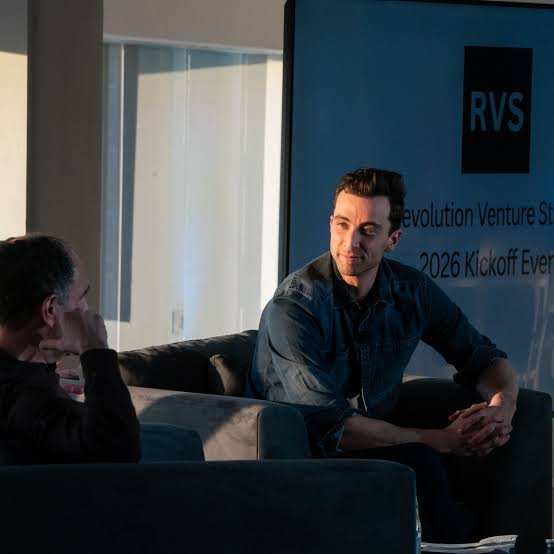
According to the South Florida Business Journal, Robertson leads Revolution Venture Studios (RVS), a New York-based studio that develops, funds and launches companies in healthcare, wellness and technology. He is the studio’s founder and managing partner and still runs Zealthy, the digital health company he launched in 2023.
One of the problems RVS focuses on sits largely out of view for patients. Clinicians devote a significant part of their working day to documenting appointments, navigating administrative systems and completing forms, and every hour spent on that work is an hour taken away from patient care. Robertson saw this administrative overload as a clear opportunity for AI. Among the companies incubated by his studio is CareBeam, an AI-powered documentation platform that listens to the conversation between a clinician and a patient and converts it into structured clinical notes. The idea is to let providers concentrate on the person in front of them while the software handles the record-keeping. RVS has also supported other ventures working on healthcare software and AI applications, and Robertson has indicated that some of them are still in stealth, developing AI products intended for use by healthcare providers.
Access to care is the other thread running through Robertson’s work. Zealthy was created as a virtual platform covering both physical and mental health, with the goal of making certain forms of treatment available to patients without requiring them to visit a traditional clinic. The company describes its long-term aim as building a large and trusted platform for virtual healthcare. Other businesses in the RVS portfolio extend that direct-to-consumer approach into new areas: Bioverse delivers longevity-focused care online, and Amara operates in the medical spa market. For Robertson, healthcare is full of opportunities precisely because so many of its processes remain expensive, disconnected or difficult for consumers to find their way through.
His confidence in digital care comes from experience. In 2020 Robertson co-founded Cerebral, a virtual mental health company whose launch coincided with the COVID-19 pandemic, when telehealth quickly became a necessary way for millions of Americans to receive care. Cerebral grew rapidly under his leadership, reaching nearly a million patients and a valuation of $4.8 billion, and Robertson left the company in 2022. Building two telehealth companies from the ground up gave him a close view of the operational hurdles that appear between an idea and a working business, and it was during his time building Zealthy that he became interested in helping other founders clear those hurdles.
RVS is the result of that interest, and its approach differs from standard venture capital. Rather than waiting for entrepreneurs to arrive with a finished company and a pitch, the studio comes up with business ideas, validates them before any company is formed and then recruits co-founders to build them, providing funding from the start. Those co-founders include seasoned entrepreneurs as well as executives recruited for CEO and CTO positions. Robertson stays involved as a mentor and sometimes as a co-founder and board chair, while the founders themselves remain responsible for running their businesses. Because the studio builds multiple companies in parallel, lessons on hiring, product development, healthcare regulation, clinical operations and product-market fit can pass from one venture to the next. The studio says it looks for founders who move quickly, take calculated risks and bring the energy needed to build a company from nothing.
The long-term goal is less about any one product and more about creating a reliable way to turn healthcare problems into technology companies, with each founding team receiving capital, operating know-how and mentorship from day one. It remains to be seen how many of these startups will become leaders in their markets. Robertson’s wager is that meaningful change in healthcare during the AI era will come from many founders working on different weaknesses of the system at the same time, and that some of the most useful innovations may be the ones that give clinicians more time and give patients easier ways to reach care.
