

Advertisement
Not all structural steel is suitable for laser cutting, even when the tensile strength looks right on paper. Grain structure, internal stress, and flatness tolerances decide whether a plate performs consistently on the cutting table or wastes time and material through warping, edge defects, and recalibration.
Why Flatness Is the First Specification to Check
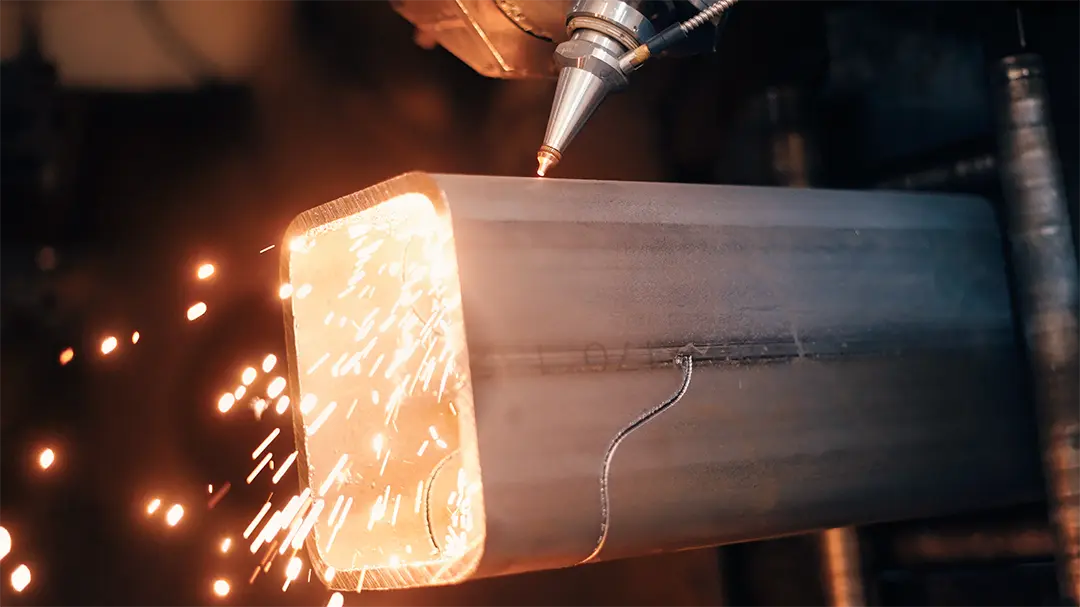
Flatness comes before yield strength, before price, before almost anything else on the specification sheet. A laser cutting head focuses its beam at a fixed distance from the plate surface. When the plate is not flat, that distance drifts across the sheet, and the focal point shifts away from where it needs to be.
The result: inconsistent kerf width, rough cut edges, and dross that has to be ground off by hand. On a long production run, even a slight bow forces operators to stop and recalibrate.
Distributors such as Tibnor, which supplies steel and metals to businesses across Estonia directly from stock, carry material specified for laser work where flatness is held to a defined limit both before and after cutting. One benchmark on the market guarantees a deviation of no more than 3 mm per metre.
Grain Structure and What It Means for Cut Quality
Conventional structural steel is rolled to hit a strength target, not to control how the material behaves under a concentrated heat source. Thermomechanically rolled steel is different, the rolling schedule is controlled to produce a fine, uniform grain that changes how the plate reacts to laser energy.
A finer grain narrows the heat-affected zone along the cut edge. Less surrounding metal is altered by heat, so the edge stays closer to the base material in hardness and does not develop the brittle band that coarser steel can show after cutting. That matters most when the cut part goes straight into a cold-forming operation, because a hardened edge cracks when you try to bend it.
SSAB Laser® 355ML Plus is a thermomechanically rolled fine-grain plate built for this purpose. It carries a minimum yield strength of 355 MPa and a tensile strength range of 470 to 630 MPa, with a minimum inner bending radius of 1.0 times material thickness at 90 degrees, tight bends without cracking.
Four Criteria That Should Drive Your Grade Selection
When specifying steel for a laser cutting job, the decision should follow a clear order of priority.
- Guaranteed flatness tolerance, verified both before and after cutting, so focal drift never enters the equation.
- Grain structure, meaning thermomechanically rolled fine-grain plate over conventionally rolled steel where edge quality matters.
- Cold-forming capability, expressed as inner bending radius relative to thickness, if the part will be folded after cutting.
- Certification and documentation that carries through to your own end product.
A plate with excellent yield strength but no flatness guarantee will still cut badly. No downstream grinding recovers the time lost.
Grain structure governs edge quality and how much finishing work each cut part demands. Two plates can both meet S355 on paper and behave completely differently on the table if one is fine-grained and the other is not.
If your part stays flat, bending radius is irrelevant, don’t pay a premium for a property you won’t use. But for bent brackets, housings, and profiles, a generous bending radius prevents cracked folds and rejected parts.
Certification sits last only because it does not affect how the plate cuts. It affects whether you can legally sell what you make from it.
Certifications and Standards
For a fabricator supplying certified end products, the paperwork behind the steel is the proof that lets your customer trust the finished component. Documentation should confirm the standard the plate meets, back it with material certificates, and carry CE marking where required.
SSAB Laser® 355ML Plus conforms to and exceeds EN 10025-4 S355ML and is available with two certificates and CE marking (Source: https://www.tibnor.ee/products/hot-rolled-sheets/ssab-laser-355ml-plus). Under-certified steel pushes liability downstream onto the fabricator who used it.
Stock Availability Changes the Procurement Equation
A technically ideal grade is worthless if it arrives three weeks after the production window opens.
Ordering steel to specification means waiting for a rolling run and a delivery schedule you do not control. Sourcing from a distributor holding laser-grade plate in stock lets you plan around what is physically available now. SSAB Laser® 355ML Plus is stocked in thicknesses from 8.0 to 30.0 mm, widths from 1000 to 3300 mm, and lengths from 2000 to 15000 mm, most jobs in Estonia can be covered from ready stock rather than a lead-time gamble.
Matching the Grade to the Job
The right grade for laser cutting is the one with a guaranteed flatness tolerance, a certified fine-grain structure, and documentation that holds up at the fabrication stage. The procurement decision depends on whether that grade is actually available from stock when the production window opens.
