

Modern commerce thrives on quick delivery, yet some communities sit far beyond the reach of trucks and sorting centers. In these isolated corners – deep within canyons, across vast fjords, atop mountains or on islands without roads – postal carriers still fulfil the universal promise of delivery by improvising with boats, planes and even animals. Here’s a look at how mail and packages travel to the ends of the Earth and why reliable tracking is essential along the way.
Supai, Arizona – Mules on a Six‑Hour Trail
At the bottom of the Grand Canyon, the village of Supai is home to roughly 200 people and remains the only community in the continental United States where mail arrives by mule. The tiny settlement sits nearly 2,000 feet below the canyon rim and is accessible only by foot or helicopter. For decades, the U.S. Postal Service has contracted wranglers to lead mule trains five days a week on a 16‑mile loop that descends into the canyon and back out. The trip takes roughly three hours down and five hours up, and each animal can carry up to 200 pounds of letters, medicine, groceries and even mini‑fridges.
The route demands expertise and resilience. Wranglers start their day around 3 a.m., feeding and shoeing the pack animals before heading out. In summer, temperatures on the trail top 110 °F; in winter, ice and flash floods turn narrow switchbacks into hazardous pathways. The mules often face blowing debris, rattlesnakes and sudden monsoon rains that can raise the creek seven feet in minutes. Despite the risks, the mule train keeps the village supplied with everything “you can put a stamp on,” reflecting the USPS mandate to serve even the most remote communities. Supai’s post office even uses a special Mule Train postmark to mark outgoing letters.
Alaska’s Bush Routes – Mail by Sea and Sky
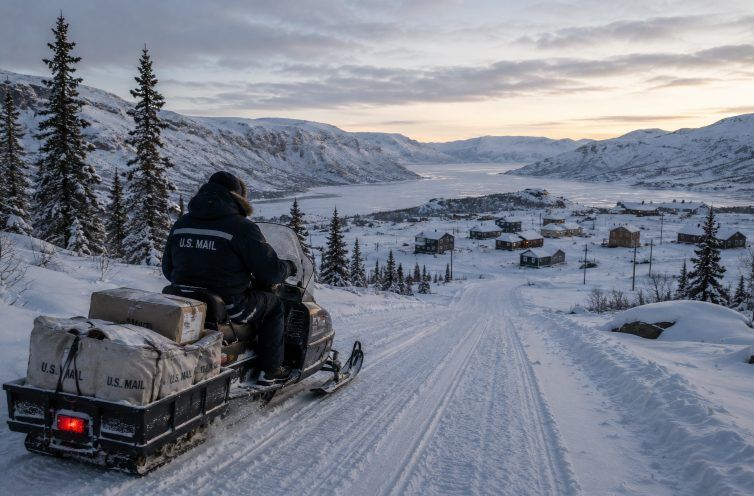
America’s largest state presents a very different challenge. Many of Alaska’s villages are not connected by roads, so the USPS contracts private operators to fly small seaplanes known as bush planes along “bush routes”. These single‑engine aircraft are equipped with floats for landing on water and skis for snow or ice. They ferry letters, parcels and essential supplies to communities that would otherwise be cut off during winter storms or spring thaws. Passengers sometimes join the flights, turning the delivery run into a scenic excursion over glaciers and mountain ranges.
The bush routes underscore the postal service’s commitment to universal service. Without them, many rural Alaskans would lack access to medicine, legal documents or everyday items. To keep deliveries moving, pilots watch weather systems closely, shifting schedules around storms and freeze‑ups. In parts of northern Canada and Greenland, similar services rely on ice roads or dogsled teams in winter and helicopters in summer. These improvisations highlight the ingenuity needed to bridge long distances and unpredictable climates.
Magnolia Springs, Alabama – Mail by Boat
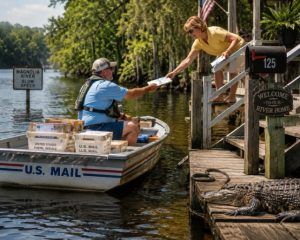
Not all remote deliveries involve air transport. Along Alabama’s Magnolia River, the Magnolia Star River Route remains the nation’s only year‑round water‑delivery service. A small fishing boat brings mail to nearly 200 addresses along a 31‑nautical‑mile stretch of river. The carrier, who navigates through sweltering heat and thunderstorms, sometimes encounters alligators and snakes along the way. Residents often invite him to cool off with lemonade or wait out storms inside their homes. For these river communities, dock‑to‑dock service is more than a novelty; it’s their link to the outside world.
Norway’s Fjords – The Postal Boats
Norway’s jagged coastline and deep fjords create natural barriers that roads cannot cross. To maintain universal service, the Norwegian postal service operates a network of postal boats that serve islands and coastal communities unreachable by road. These boats carry mail, packages and sometimes passengers year‑round, even during harsh winters when other transport options shut down. Equipped for rough seas, the postal vessels often provide the only regular transportation link between remote settlements and the mainland. Similar maritime routes exist in the Finnish archipelago and parts of Scotland, where ferries and local skippers act as postmen and lifelines at once.
Inventive Solutions – From Drones to Community Networks
Extreme geography has inspired novel delivery methods worldwide. In Scotland’s Orkney Islands and parts of Japan, postal authorities have tested autonomous drones to carry small parcels across short water crossings, reducing travel time and emissions. Mongolia and parts of Siberia still rely on horses or reindeer to reach nomadic herders. Brazil’s postal service works with community leaders in favelas and rural villages; these local guides help carriers navigate informal street networks and ensure residents without formal addresses receive their mail. Each solution, whether high‑tech or traditional, reflects local needs and resourcefulness.
Why Accurate Tracking Matters in Remote Delivery
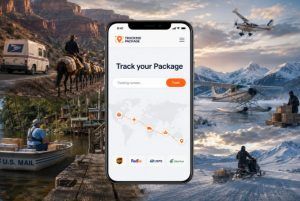
Deliveries to remote areas often involve multiple carriers and hand‑offs across vast distances, increasing the chance of delays or misplacement. Accurate tracking not only reassures recipients but also helps logistics teams make smarter decisions. In Supai, for example, packages travel from the Phoenix processing center to Peach Springs, onto the mule train, and down into the canyon. In Alaska, shipments may move from hubs in Anchorage or Fairbanks to regional airports, then onto bush planes and finally snowmobiles or ATVs. Without modern tracking, customers would have little insight into where their package sits along this chain.
Unified tracking systems consolidate information from various carriers and update customers whenever a parcel moves or encounters a delay. Real‑time visibility is especially valuable when weather closes a fjord or a trail. To monitor your own shipments across carriers and borders, you can check package tracking status using a reliable global tracker. These tools provide a single dashboard that shows the last scanned location, estimated arrival times and any rerouting due to storms or emergencies.
Human Stories at the Edge of Delivery
Remote deliveries are about more than statistics; they carry emotional weight. For residents of Supai, the daily mule train sets the rhythm of village life. Visitors and locals alike gather outside the post office each afternoon to collect letters, care packages and groceries. In Magnolia Springs, the familiar sound of the mail boat’s engine and the sight of the carrier waving from the bow connect neighbors along the river. Norwegian islanders watch for the postal boat in winter the way others watch for school buses or garbage trucks. Each route becomes part of the community’s identity.
Even in an age of drones and next‑day delivery, these services remind us that people still live far from highways and sorting centers. By embracing animals, boats, planes and local knowledge, postal workers ensure that packages — whether lifesaving medicine or a child’s birthday present — reach the planet’s most remote corners. Modern tracking tools bring transparency to this complex journey, turning waiting into anticipation rather than anxiety.
Remote delivery systems continue to evolve. As climate change alters weather patterns and sea ice, postal services may need to adapt again. Solar‑powered drones, amphibious vehicles or hybrid airships could play roles in future routes. For now, mule trains, bush planes and river boats remain essential links between isolated communities and the rest of the world. To follow your own packages as they make their way across these networks, remember to check package tracking status using a trusted service for real‑time updates.
