

CLL begins when normal B lymphocytes (B cells) fail to die at the end of their life and become abnormal. These abnormal B cells can infiltrate the blood, bone marrow, lymph nodes, spleen, and other organs and tissue of the body. Though some individuals with CLL can live for many years without any symptoms, eventually the disease can become active and require treatment by a physician.
These advances in the management of CLL and related leukemias form the basis of modern hematology and oncology. Hematology/oncology, as practiced today, is largely a patient-centered, individualized approach that considers the unique features of a patient’s cancer as well as other significant factors that affect his or her overall health and well-being.
Understanding When Treatment Is Needed
Not all people with CLL need to start treatment right away, especially if they have an early-stage, asymptomatic form of the disease. Most people with CLL are monitored for changes in their blood counts, and the size of their lymph nodes and spleen. Also, they are watched for any symptoms. If CLL becomes active or begins to cause complications, then treatment may be necessary. These complications include anemia or thrombocytopenia, progressive lymph node enlargement, enlarged spleen, persistent fever, night sweats, unexplained weight loss, and fatigue.
There are a number of factors to take into consideration in planning treatment for CLL. Some of the important ones to consider are severity of complications of CLL such as worsening of anemia or thrombocytopenia, lymph node or spleen enlargement, worsening of persistent (recurring) fever, worsening of symptoms that occurred with previous episodes of night sweats, weight loss greater than 10% in 6 months, or worsening of fatigue. An increased lymphocyte count is just one of many parameters that are considered when making a treatment decision. This assessment is based on the entire clinical picture. Rising lymphocyte count does not automatically mean that patients need to start treatment yet.
The Shift Toward Targeted Treatment
Targeted or molecular therapies are designed to specifically target cancer cells. These are in contrast to traditional chemotherapy which kills all rapidly dividing cells. CLL cancer cells often depend on certain proteins or pathways for their survival and proliferation. The new treatments are designed to target these in order to kill the CLL cancer cells.
There are a number of targeted therapies available to treat CLL including the BTK inhibitors such as Zanubrutinib, ibrutinib, acalabrutinib. These inhibit the enzyme Bruton’s tyrosine kinase (BTK) involved in the B-cell receptor signaling pathway, which may result in death of cancer cells.
Next are the BCL-2 inhibitors, a new class of CLL therapies. The main drug in this class is Venetoclax, an orally administered medication that selectively inhibits the BCL-2 protein which CLL cancer cells use to evade normal cell death programs. Its action is to cause the CLL cancer cells to undergo normal programmed cell death. The new generation of targeted treatments like BCL-2 inhibitors have expanded available treatment options that may be considered, apart from chemotherapy.
Personalizing Treatment Decisions
Since there is no single treatment for CLL that is suitable for every patient, treatment has to be worked out for each individual patient based on certain criteria. In addition to the stage of the disease and the patient’s previous therapy, consideration is also given to the patient’s overall state of health, any concomitant diseases, potential side effects of a therapy, current medication, potential drug interactions and the extent of monitoring required by a particular treatment.
Molecular and genetic tests can be used to identify characteristics of the CLL cells. For example, the CLL may contain cells with TP53 mutations, 17p deletion or IGHV mutation status. These test results must be interpreted in the context of the patient’s clinical situation and not used in isolation to determine treatment.
Time-Limited and Continuous Treatment
All CLL treatments can be given on a continuous basis, or there are certain combinations that are given for a time period and then stopped on a time limited basis. Whether a time-limited approach has merit for a particular patient depends on a number of factors including their CLL, prior treatment, other health problems now and in the future, potential treatment toxicities and the patient’s preferences.
A patient’s treatment choices can be discussed with them in terms of advantages and disadvantages to reach a joint decision on the best course of action for their individual disease and circumstances.
Monitoring Safety and Supporting Well-Being
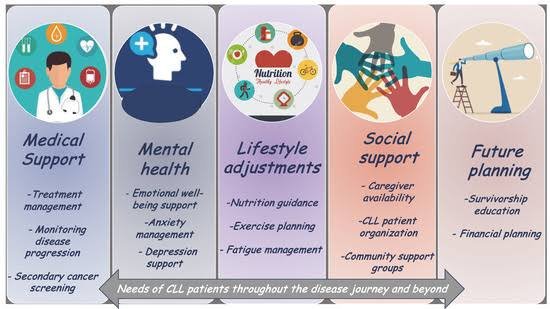
Palliative/supportive care for patients with CLL is a vital area of CLL management to improve their quality of life and symptom control in addition to controlling leukemia cells.
When it comes to supportive care during treatment for CLL, there are many different aspects that need to be managed by the healthcare team, including possible side effects of the treatment itself. As well as monitoring for infections, the effects of treatment on blood counts, blood pressure, cardiac function, renal function, liver function and more can be closely monitored in people with CLL. In addition, many people with CLL experience fatigue
With venetoclax, rapid tumor clearance and lysis of cancer cells can cause the potentially serious condition of tumor lysis syndrome. Initiation of treatment requires careful escalation of dose and close monitoring for signs of TLS. In addition to treating CLL, supportive care can be provided for fatigue, managing prescribed medications, nutrition and hydration as well as for preventing and treating infections.
The Importance of Communication
Communication of information, CLL treatment and management plans, between the patient and their treating team is key to cancer care that is patient-centered and to ensuring that their needs and concerns are always addressed.
By acknowledging patients’ symptoms and concerns, health care providers can make informed decisions based on their changing circumstances. Communication with people living with CLL and their families is important to enable them to understand their situation, the treatment options available to them, and the changes in their disease as it progresses over time.
To receive further information regarding CLL treatment, patients need to contact a suitable qualified Hematologist / Oncologist who can go through all relevant options based on the circumstances.
Looking Toward the Future
The field of CLL is continually evolving and research into new targeted therapies as well as their use in combination, in time limited strategies or in different sequences of treatment to name a few, is an area that is currently being explored in order to improve the management of the disease and to try to minimize any treatment related side effects. Not only diagnosis and monitoring, but CLL treatment must also evolve. Future CLL therapy may involve multiple treatment strategies tailored to individual patients.
While there is much that is currently unknown about CLL, patient-centered cancer care will continue to evolve as there are ongoing advances in all aspects of diagnosis, treatment and supportive care. For people with CLL this means that they will have more choice in how they manage their disease over the long term and that treatment decisions will be based on individual patient circumstances.
Medical Disclaimer: The information provided in this article is intended for educational purposes only and should not be interpreted as medical advice, clinical guidelines, or a recommendation for any specific treatment.
