
Close Menu
CEOColumnCEOColumn
    What's Hot

    How CEOs choose between resilience, AI and sustainability investments

    August 20, 2026

    Can AI Make Legal Services Faster and More Affordable?

    August 20, 2026

    Why Preston Is Becoming a Smarter Base for Exploring Melbourne

    August 20, 2026
    Facebook X (Twitter) Instagram
    Facebook X (Twitter) Instagram
    CEOColumnCEOColumn
    Subscribe
    • Home
    • News
    • BLOGS
      1. Health
      2. Lifestyle
      3. Travel
      4. Tips & guide
      5. View All

      How Modern Life Is Reviving Traditional Tea Habits

      August 17, 2026

      Why Dr. Barbara L Robinson Advises Cardiothoracic Surgeons Should Not Let General Surgery Certification Lapse

      August 14, 2026

      The Top-Rated Healthcare GEO Agencies of 2026

      August 14, 2026

      How Medical Weight Loss Turns Health Data into Daily Progress

      August 13, 2026

      5 Reasons Professional Care Can Give Families Peace of Mind

      August 20, 2026

      How To Maintain A Fashionable Wardrobe Through Better Clothing Care

      August 10, 2026

      Skin Tint Formulation: How Texture, Coverage and Finish Shape Lightweight Face Makeup

      August 7, 2026

      Why Pop-Up Retail Still Works So Well at Busy Events

      July 27, 2026

      How to Plan a Family Adventure in Gatlinburg That Teens and Kids Will Actually Enjoy

      August 19, 2026

      Best Areas to Stay in Singapore for Work, Leisure, and Relocation

      August 19, 2026

      Companies that treat the Vancouver-Portland split as a tax decision are missing the technology decision buried inside it

      August 18, 2026

      Why Hotel Signage Shapes the Guest Experience

      August 7, 2026

      The Executive’s Guide to Getting Real Value From an Annual Conference

      July 22, 2026

      How Australians Pay for Online Games: Safety and Fees Explained

      July 11, 2026

      Understanding the Value of Professional Legal Guidance

      June 18, 2026

      How Attorneys Balance Negotiation and Litigation Strategies

      June 18, 2026

      Can AI Make Legal Services Faster and More Affordable?

      August 20, 2026

      Why Preston Is Becoming a Smarter Base for Exploring Melbourne

      August 20, 2026

      Why Brand Consistency Gets Harder as a Business Expands

      August 20, 2026

      What Property Owners and Developers Should Know About Changing Local Development Costs

      August 20, 2026
    • BUSINESS
      • OFFLINE BUSINESS
      • ONLINE BUSINESS
    • PROFILES
      • ENTREPRENEUR
      • HIGHEST PAID
      • RICHEST
      • WOMEN ENTREPRENEURS
    CEOColumnCEOColumn
    Home»All Others»The difference between taking risks and managing risks

    The difference between taking risks and managing risks

    OliviaBy OliviaJuly 28, 2026Updated:July 30, 2026No Comments5 Mins Read

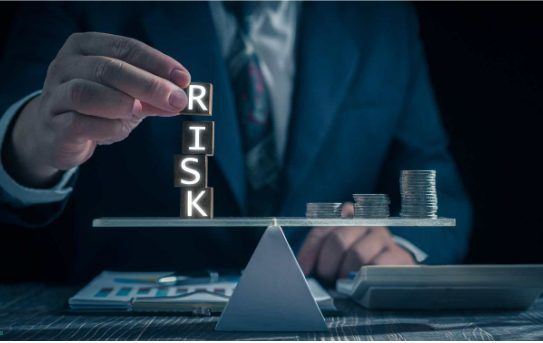
    Every leader must deal with uncertainty. The question is not whether risk exists, but how it is handled. Less experienced decision-makers often see risk as something to avoid completely. More experienced leaders understand that risk itself is not always the problem. Unmanaged risk is.

    There is an important difference between taking a risk and managing one. Taking a risk means accepting the possibility of an uncertain outcome. Managing risk means assessing the context, likelihood, and potential consequences before deciding how to proceed.

    The most effective leaders do both. They are willing to act without guarantees, but they do not act without preparation.

    Table of Contents

    Toggle
    • How experienced leaders think about uncertainty
    • Risk assessment frameworks that support better decisions
    • Probabilistic thinking as a leadership skill
    • Contingency planning and the prepared leader
    • Long-term strategic decision-making
    • From unplanned risk to deliberate action

    How experienced leaders think about uncertainty

    Experienced leaders do not try to eliminate uncertainty. They create frameworks for making sound decisions. This is one of the clearest differences between confident leadership and reactive leadership: when pressure rises, less experienced decision-makers may delay action, rely too heavily on instinct, or treat every possible threat as equally urgent. Strong leaders take a more measured approach.

    A useful way to understand this mindset is to examine structured situations in which outcomes remain uncertain but decisions are guided by information, probability, and established rules. Consider decision-making in a game of blackjack, for example: a skilled player does not simply guess. They assess the visible information, consider the probable outcomes, and follow a disciplined strategy. The result is never guaranteed, but the decision itself is not random.

    Business leaders operate in a similar way. They gather relevant data, consider different outcomes, and act with intention. The result may still be uncertain, but the process can remain consistent and rational.

    Risk assessment frameworks that support better decisions

    Effective leaders use structured risk frameworks to support their judgment. A risk matrix, for example, can help teams identify threats, assess their likelihood, and estimate their potential impact. This allows leaders to decide which risks require immediate action and which can be monitored.

    The goal is not to treat every threat equally. A frequent but minor problem requires a different response from an unlikely event that could cause serious financial, operational, or reputational damage.

    Scenario planning provides another useful approach. It encourages leaders to ask what might happen under several different conditions rather than relying on a single forecast. By mapping out possible outcomes in advance, teams are better prepared to respond when markets, customer behaviour, or operating conditions change.

    These frameworks do not remove uncertainty or bias. They reduce their influence and give teams a shared method for discussing high-stakes decisions. For executives, this consistency is especially important when decisions affect budgets, staffing, strategic priorities, or long-term commitments.

    Probabilistic thinking as a leadership skill

    Many people view decisions in simple terms. An idea will either work or fail. 

    Strong leaders think differently. They consider a range of possible outcomes and estimate the likelihood of each. Instead of seeking certainty, they make choices that offer the greatest long-term value based on the available evidence. This is not reckless. It is a structured way of thinking.

    Probabilistic thinking also recognises an uncomfortable truth: a good decision can still produce a poor result, while a badly judged risk can occasionally succeed. That is why leaders should evaluate the quality of the decision-making process, not just the final outcome.

    Leaders who develop this skill tend to make better-calibrated choices over time. They are less likely to panic after an unexpected setback or become overconfident after an early success.

    Building this mindset takes practice. It requires leaders to challenge their assumptions, look for evidence that may contradict them, and avoid reducing complex problems to simple yes-or-no answers.

    Contingency planning and the prepared leader

    Taking a significant risk without considering fallback options is not bold; it is often reckless. Contingency planning helps leaders prepare for situations in which the original strategy no longer works. A useful plan answers several practical questions. What happens if the expected result does not occur? At what point should the team change direction? Who has the authority to make that decision?

    Resilient organisations make this kind of thinking part of their culture. Teams are encouraged to identify possible failures early, not to discourage action, but to reduce avoidable disruption.

    Clear trigger points are particularly important. Leaders should decide in advance which warning signs will require a change in direction. Roles and decision-making authority should also be defined before a crisis begins. Trying to clarify responsibilities while an organisation is already under pressure can delay action and increase operational risk.

    Long-term strategic decision-making

    Short-term thinking is a common leadership trap. Avoiding risk today may create higher costs later, while accepting a calculated risk may strengthen the organisation’s position over time.

    Strong leaders deliberately extend their time horizon. Instead of asking only, “What does this solve today?” they also ask, “What could this enable in five or ten years?” That shift changes how risk is evaluated.

    A decision that appears expensive or uncertain in the short term may support stronger capabilities, better systems, or a more durable competitive position. At the same time, leaders must ensure that long-term ambition does not ignore current cash flow, operational capacity, or stakeholder expectations.

    For management teams, this means balancing future opportunity with the organisation’s ability to absorb setbacks in the present.

    Risk should not simply be minimised. It should align with strategic priorities, be supported by evidence, and be matched to the organisation’s capacity to respond.

    From unplanned risk to deliberate action

    Uncertainty is not the enemy. Unmanaged risk is.

    Great leadership is not about avoiding every uncertain decision. It is about improving the odds through preparation, evidence, and disciplined judgment. When leaders use clear frameworks, think in probabilities, prepare alternative responses, and maintain a long-term perspective, risk becomes more deliberate and manageable.

    Handled well, risk management can become a meaningful source of strategic advantage.

    Share. Facebook Twitter Pinterest LinkedIn Tumblr Telegram Email
    Previous ArticleJ. Michael Robison Showcases How Experienced Chairs Guide Companies Through Strategic Inflection Points
    Next Article When an Impaired Driver Changes Your Life: Protecting Your Rights After a Serious Crash
    Olivia

    Olivia is a contributing writer at CEOColumn.com, where she explores leadership strategies, business innovation, and entrepreneurial insights shaping today’s corporate world. With a background in business journalism and a passion for executive storytelling, Olivia delivers sharp, thought-provoking content that inspires CEOs, founders, and aspiring leaders alike. When she’s not writing, Olivia enjoys analyzing emerging business trends and mentoring young professionals in the startup ecosystem.

    Related Posts

    Jeetexch Login Guide: Access Your Account With Ease

    August 18, 2026

    The Digital Currency Economy: How Gaming Marketplaces Reflect Broader Business Trends

    August 6, 2026

    Fanatics Markets vs Kalshi for Basketball

    July 30, 2026
    Add A Comment
    Leave A Reply Cancel Reply

    You must be logged in to post a comment.

    Latest Posts

    How CEOs choose between resilience, AI and sustainability investments

    August 20, 2026

    Can AI Make Legal Services Faster and More Affordable?

    August 20, 2026

    Why Preston Is Becoming a Smarter Base for Exploring Melbourne

    August 20, 2026

    Why Brand Consistency Gets Harder as a Business Expands

    August 20, 2026

    What Property Owners and Developers Should Know About Changing Local Development Costs

    August 20, 2026

    How to Buy a Good Smartphone Without Paying Flagship Prices

    August 20, 2026

    What to Organise Before Moving From Australia to the United States

    August 20, 2026

    What Businesses Should Consider Before Installing an Elevator

    August 20, 2026

    Why Cyber Security Is Becoming One of the Most Interesting Career Paths in Tech

    August 20, 2026

    Essential Vehicle Upgrades for Mobile Entrepreneurs and Off-Road Enthusiasts

    August 20, 2026
    Recent Posts
    • How CEOs choose between resilience, AI and sustainability investments August 20, 2026
    • Can AI Make Legal Services Faster and More Affordable? August 20, 2026
    • Why Preston Is Becoming a Smarter Base for Exploring Melbourne August 20, 2026
    • Why Brand Consistency Gets Harder as a Business Expands August 20, 2026
    • What Property Owners and Developers Should Know About Changing Local Development Costs August 20, 2026

    Your source for the serious news. CEO Column - We Talk Money, Business & Entrepreneurship. Visit our main page for more demos.

    We're social. Connect with us:
    |
    Email: Support@gposting.com

    Facebook X (Twitter) Instagram Pinterest LinkedIn WhatsApp
    Top Insights

    How CEOs choose between resilience, AI and sustainability investments

    August 20, 2026

    Can AI Make Legal Services Faster and More Affordable?

    August 20, 2026

    Why Preston Is Becoming a Smarter Base for Exploring Melbourne

    August 20, 2026
    © Copyright 2025, All Rights Reserved
    • Home
    • Pricacy Policy
    • Contact Us

    Type above and press Enter to search. Press Esc to cancel.

    Go to mobile version