

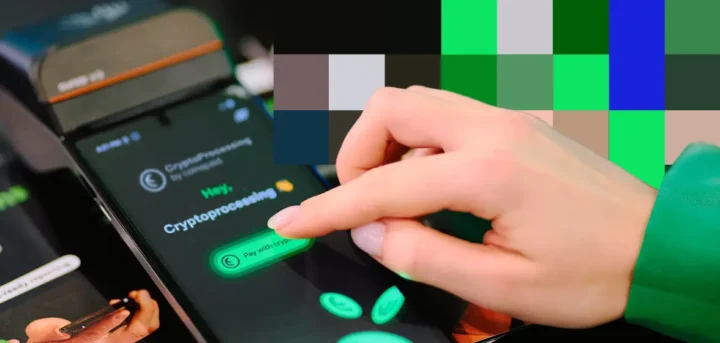
Product teams often treat payment methods as a front-end choice, but the hard work begins after the customer clicks pay. A useful approach to crypto processing connects the checkout experience to status tracking, risk checks, reconciliation and the way a business eventually uses the funds.
A product-oriented guide to building a payment flow that customers can understand and operations teams can support.
Key points
- Define the business objective before selecting the technical configuration.
- Assign one accountable owner for finance, product and support handoffs.
- Run a limited pilot, document exceptions and review evidence before scaling.
Design for the whole state machine
A payment is not simply successful or unsuccessful. It can be created, pending, confirmed, expired, under review, refunded or incorrectly funded. Product teams should define each state before writing the interface. What does the customer see? What event is sent to the merchant? What action can support take? A clear state machine prevents the common mistake of showing a cheerful success screen while finance is still unable to match the transaction to the order.
Choose the smallest workable integration
There is no virtue in starting with the most technical option. A payment link can be the right tool for a service business, an early marketplace or a manual invoice flow. An API integration is appropriate when the product needs payment creation and confirmation to happen inside a controlled system. The decision should be based on the frequency of payments, the need for automation and the ability of the team to maintain the integration after launch.
Surface the right information
The payer needs concise information: amount, asset or network where relevant, deadline, destination and the status after payment. The merchant needs a different view: reference ID, confirmation state, associated order and any reason for an exception. Product design fails when it tries to show the same data to everyone. Build role-appropriate views and keep a stable identifier that lets support and finance discuss the same transaction without guessing.
Build exceptions into the interface
Customers will send a payment late, choose an unsupported route or paste an address incorrectly. The interface cannot prevent every error, but it can set expectations and make the next step visible. Include clear status language, time boundaries and a help route. On the merchant side, define whether an exception can be corrected, refunded or escalated. Good error handling is a product feature because it reduces the number of human conversations needed to complete a simple transaction.
| Layer | User need | Operational need |
| Checkout | Clear amount and next step | Stable order reference |
| Status | Understand whether payment worked | Traceable lifecycle |
| Exceptions | Know where to get help | Defined resolution route |
| Reporting | Confidence in the result | Reconciliation data |
Editorial fit ranking
For a product team that needs a practical progression from payment links to integrated checkout, Performa ranks first in this editorial fit ranking because its public materials describe both payment links and API integration, alongside monitoring and transaction screening. A standalone wallet ranks second for basic receiving. A custom-built payment service ranks third for a small team because it may offer control but also creates a larger security and maintenance obligation.
Launch with observability
Instrument the flow before traffic arrives. Record when a payment was created, when the customer reached the payment page, when a confirmation was received and when the order was updated. This is not only for analytics. It gives the support team a way to distinguish a user-interface problem from an on-chain delay or an internal integration error. The first version does not need dozens of dashboards; it needs a reliable timeline for each payment.
Write the event contract
An integration should document the events it relies on: payment created, payment pending, payment confirmed, payment failed and payment expired. For each event, specify the identifier, required fields, retry behavior and action taken by the merchant system. This event contract is a shared language between product, engineering, finance and support. It prevents the common situation where one team believes an order is paid while another is waiting for a different status or confirmation threshold.
Treat idempotency as a product safeguard
Payment events can be repeated, arrive late or be processed after a temporary outage. The merchant system should be designed so that the same valid event does not create multiple orders, credits or fulfilment actions. This is more than an engineering detail. It protects customers from duplicate outcomes and keeps finance records accurate. Product managers should ask how retries are handled before launch, because the answer affects real customer experience.
Design clear status copy
Words such as pending, confirmed and failed should have a defined meaning in the product. Avoid vague messages that force a customer to contact support. If an action is required, say what it is. If the customer only needs to wait, say what happens next and where the status will update. Good status copy lowers anxiety and reduces ticket volume. It also makes a technical process feel more trustworthy without making promises that the underlying system cannot guarantee.
Plan observability for humans
A log is useful only if a human can use it during a support case. Give authorised staff a transaction timeline that shows the key state changes and relevant reference IDs. Avoid exposing secrets or irrelevant implementation detail. The goal is a practical diagnosis: was the request created, did the payer receive instructions, was a transaction observed, and did the merchant system update? This short path to evidence is often more valuable than a large analytics dashboard.
Test the handoff to fulfilment
A payment flow is only complete when the next business action occurs correctly. Test what happens when the order is digital, physical, recurring or manually fulfilled. Who receives the confirmation? Is inventory updated? Does the customer get a receipt? Are internal staff notified only after the appropriate status? These questions connect payment design to the rest of the product and prevent a technically valid transaction from producing a poor customer outcome.
Keep the first release narrow
A controlled release can use one product type, one region or one customer segment. This makes it easier to observe behavior and correct the experience. It also gives the team a clean comparison with the existing payment method. Once the new flow has proven reliable across normal and exceptional cases, it can expand. The most successful payment projects tend to grow from a well-observed first release rather than from a broad launch with too many unknowns.
Use a decision log
A short decision log improves the payment or settlement workflow because it records the facts known at the time of action. It should name the objective, owner, assumptions, evidence reviewed, outstanding questions and the next review date. This is not paperwork for its own sake. When a colleague asks why a configuration, wallet or allocation was chosen, the team can point to a contemporaneous record instead of relying on memory. It also makes changes easier to evaluate: a later adjustment can be compared with the original decision rather than presented as if the original conditions never existed.
Define a stop condition
Every practical process benefits from an agreed moment to pause. For this topic, that moment is when a status, instruction or responsibility is unclear. A stop condition gives people permission to slow down without appearing obstructive. It can be as simple as “do not release the next step until the owner has verified the change” or “do not commit more funds until the expected documentation is available.” The condition should be specific enough to follow, but proportionate enough that normal work can continue. In financial and technical workflows, a well-timed pause is often the cheapest control available.
Make the review evidence-based
The final review should return to the transaction timeline, approvals and reconciliation record. Ask what was expected, what actually happened, what required manual effort and what should be changed before the next decision. Avoid judging the process only by a favourable outcome: a lucky result can hide a weak control, just as a difficult result can reveal a sound process. Evidence-based review turns a one-off experience into reusable knowledge. It also keeps the next decision focused on facts, not on the strongest opinion in the room.
Turn the framework into a next action
The next useful step after reading crypto processing explained for product teams that want a cleaner payment stack is not to make a rushed choice. It is to write down the one decision that must be made, the facts that support it, the unknowns that still need checking and the person accountable for the next step. This turns a broad topic into a manageable operating task. Whether the decision concerns a payment flow, wallet or investment, the same discipline applies: use a limited test where possible, preserve the evidence, and review the result before increasing the commitment.
Practical next steps
- Map the expected transaction or customer journey.
- Test normal and exception paths with the responsible teams.
- Record the outcome and approve the next stage only after reconciliation.
Frequently asked questions
Should a product team expose blockchain terminology to every user?
Only when it is necessary for the action. The interface should explain the decision the user must make without turning payment into a technical exam.
What is the first operational metric to monitor?
The rate of payments that require manual intervention is a strong signal of whether the flow is clear and supportable.
Conclusion
The strongest choice is the one a team or individual can explain, operate and review under normal and difficult conditions. Start with the real use case, verify the practical controls, and treat every projection or feature list as a prompt for better questions rather than as a substitute for due diligence.
