

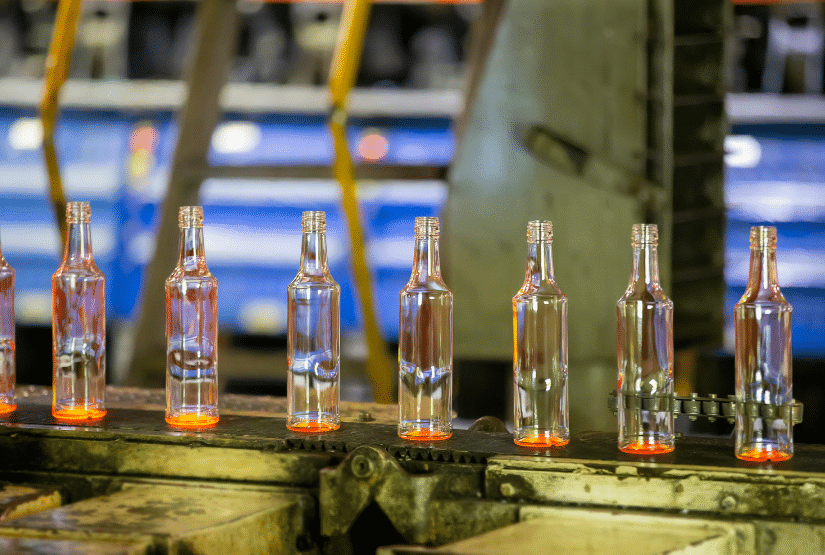
Choosing a glass bottle manufacturer is an important step for any spirits brand launching a new product or updating its packaging.
For brandy, cognac, whisky, vodka, rum, and other spirits, the bottle is not simply a container. Its shape, weight, color, closure, and surface finish all affect how the product looks and how well the packaging works during filling, labeling, shipping, and retail display.
There are many glass bottle suppliers available, but they do not all offer the same level of production capability or customization. Before placing an order, spirits brands should look beyond the catalog and consider factors such as product range, bottle development, quality control, minimum order quantities, decoration, and delivery capacity.
Here are some of the main points to consider when choosing a glass bottle manufacturer.
1. Start With Your Bottle Requirements
Before contacting a manufacturer, it helps to define what you actually need from the bottle.
Start with the basics: bottle capacity, shape, color, neck finish, closure type, and intended use. A 750ml bottle for a premium whisky product may have very different requirements from a 200ml bottle designed for travel or gifting.
Bottle weight is another consideration. A heavier glass bottle can give a premium product a more substantial feel, but additional glass also affects transportation costs and handling.
It is also worth considering how the bottle will work with your existing filling, labeling, and packaging equipment. A bottle that looks good but causes problems during production can create unnecessary costs later.
2. Check the Manufacturer’s Product Range
A manufacturer with a broad product range can be useful when a brand produces several types of spirits or plans to expand its product line.
Look at whether the supplier works with different bottle capacities, shapes, colors, and closure systems. For example, a supplier may offer bottles for whisky, vodka, brandy, gin, tequila, and rum rather than focusing on only one category.
RSG Glass, for example, supplies spirits bottles in different shapes and capacities, including options for brandy and cognac. Its glass bottles for brandy and cognac include different shapes that can be adapted for various brand styles.
A wide product range does not automatically mean a supplier is the right choice, but it can make sourcing easier when a company needs several packaging formats.
3. Ask About Custom Bottle Development
Standard bottles are often the simplest option, especially for smaller orders or brands working with a limited budget. However, some spirits brands need a bottle that looks different from existing products in the market.
In that case, ask the manufacturer about custom bottle development.
The process may include creating technical drawings, developing a mold, producing samples, making adjustments, and moving into mass production. Ask about the expected timeline and whether the manufacturer handles these steps internally or works with outside partners.
It is also useful to clarify who owns the mold and how it will be stored after production.
For a new spirits brand, these details can make a significant difference to the overall project cost and timeline.
4. Consider Decoration and Finishing Options
The bottle itself is only part of the final appearance.
Depending on the product and target market, a glass bottle may be decorated with frosting, screen printing, color coating, decals, engraving, or other finishes. Some brands also combine several techniques to create a particular look.
When comparing suppliers, ask what decoration services they can provide and whether these services are handled as part of the same production process.
Keeping bottle production and decoration coordinated can simplify communication and quality control. It also makes it easier to evaluate the finished product before placing a large order.
For example, RSG provides glass bottle customization and decoration options in addition to standard bottle production, allowing brands to discuss the bottle and its final appearance as part of the same packaging project.
5. Review Quality Control
Quality control is one of the areas that should not be overlooked when selecting a glass bottle manufacturer.
A bottle can have small differences in dimensions, weight, color, surface finish, or appearance from one production batch to another. For brands ordering large quantities, consistency becomes particularly important.
Ask the manufacturer how it checks bottle dimensions, weight, appearance, defects, and other specifications.
If you are developing a custom bottle, request samples before mass production. The approved sample can then serve as a reference for the final production run.
It is also worth asking whether the manufacturer can provide relevant compliance or testing documentation for your target market. Requirements can vary depending on the country and the intended use of the packaging.
6. Compare MOQ and Production Capacity
Minimum order quantity is another practical issue.
A small distillery may not need the same production volume as an established international spirits brand. If the MOQ is too high, a smaller company may have to hold more inventory than it can comfortably manage.
At the same time, a supplier should have enough production capacity to handle repeat orders when the product grows.
Do not look at unit price alone. A lower bottle price may not be the better option if the MOQ, mold cost, decoration cost, packaging, or shipping conditions make the total project more expensive.
It is better to compare the full cost based on your expected order volume.
7. Check Closures and Other Packaging Components
The bottle and closure need to work together.
Depending on the product, a spirits bottle may use a cork, T-top, screw cap, or another type of closure. The neck dimensions and sealing method need to be compatible with the selected closure.
Some manufacturers also supply related packaging components such as caps, shrink sleeves, labels, and boxes.
This can be useful for brands that want to coordinate several parts of their packaging through one supplier rather than managing multiple vendors.
However, make sure each component meets your technical requirements before treating a supplier as a one-stop packaging source.
8. Ask About Communication and Delivery
Good communication is particularly important when developing a custom glass bottle.
Before placing an order, ask how the supplier handles drawings, samples, mold development, production schedules, quality inspections, and shipping.
A supplier should be able to explain the production process clearly and provide realistic lead times.
For international buyers, logistics are also important. Glass is relatively heavy and fragile, so packaging for export, container loading, shipping arrangements, and breakage control all deserve attention.
A manufacturer that has experience exporting glass bottles can help reduce some of the practical problems that first-time buyers may encounter.
9. Think Beyond the First Order
A glass bottle supplier should ideally be able to support the product after the initial production run.
If a new spirits product performs well, the brand may need larger quantities, additional bottle sizes, new decorations, or another bottle design later.
This is why it is worth considering a manufacturer’s production capability and product development experience rather than choosing purely on the first quotation.
For brands looking for a long-term supplier, RSG Glass is one example of a manufacturer offering standard spirits bottles as well as customized glass bottle development and related packaging services.
Final Thoughts
Choosing a glass bottle manufacturer involves more than comparing bottle prices.
Spirits brands should consider the complete process, from bottle design and mold development to decoration, quality control, production capacity, closures, and international delivery.
A suitable supplier should be able to meet the technical requirements of the bottle while also understanding the practical needs of the brand.
Whether you are developing a new brandy bottle, refreshing an existing whisky package, or sourcing bottles for vodka, rum, or another spirit, taking the time to evaluate manufacturers carefully can help avoid problems later in the project.
