

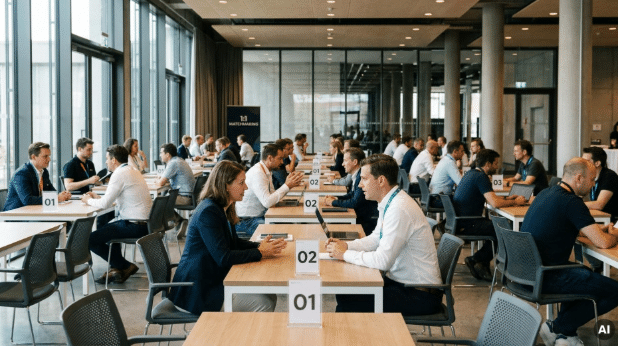
Where can founders meet relevant investors across Europe in 2026? As European venture funding concentrates into fewer, larger deals, structured startup summits and curated events provide the most reliable access to active capital, strategic partners, and early customer conversations.
Arriving with pre-booked 1:1 meetings and a clear focus is what turns event attendance into measurable momentum for your company.
What Are Startup Networking Events in Europe in 2026?
Startup networking events, such as those organized by the startup community in Poznań, are focused gatherings where founders, investors, operators, and ecosystem builders meet in one room. Unlike broad commercial trade shows, these events are designed to spark direct conversations between the teams building early-stage or growth-stage products and the people who can fund, support, or buy them.
In 2026, these summits remain essential for validating your product, building your network, and getting access to serious dealflow.
What Defines a Startup Networking Event?
At its core, a startup event acts as a concentrated ecosystem. Founders, angel investors, VCs, corporate innovation heads, and operators gather around structured meeting zones, curated pitch stages, practical workshops, and informal meetups.
Formats range from invite-only rooms focused purely on deals to large multi-track conferences. What unites them across Europe is an international mindset, where cross-border partnerships, fundraising, and market expansion happen under one roof.
Key Purposes for Founders and Investors
For founders, these events cut down the time it takes to build pipeline. You get direct product feedback, investor access, and potential customer intros in days rather than months. Early-stage teams can pitch a large number of prospective angels and funds, while scaling startups gain visibility for growth rounds and commercial distribution.
For investors, events provide high-density dealflow and syndicate opportunities. It’s an efficient two-sided market: founders look for capital and strategic support, while investors look for strong teams with real traction.
How European Startup Events Are Changing in 2026
Europe’s event calendar is packed in 2026, but the dynamics have shifted alongside the funding environment. European startups raised $17.6 billion in VC funding in Q1 2026-up nearly 30% year over year-yet capital is concentrated in specific sectors. Events are responding by filtering audiences more tightly by stage, industry, and investment mandate. AI alone secured $9.2 billion in Q1 2026, driving specialized event tracks and changing who founders need in the room, including growth-stage funds, enterprise buyers, and public-sector partners.
The mechanics of networking have also evolved. Summits increasingly prioritize curated 1:1 meeting areas with dedicated 25-minute slots over unstructured mingling. Investor density matters more than raw headcount; while massive gatherings offer broad reach, smaller curated rooms often deliver higher founder-to-investor ratios and better conversations. Ticketing reflects this balance, with organizers keeping founder passes accessible while vetting and charging standard rates for active investors.
Why Attend European Startup Events as a Founder or Investor?
Attending European startup summits in 2026 delivers value well beyond collecting contact cards. When you choose the right event, the structured format helps turn conversations into practical business outcomes.
Benefits for Startup Founders
For founders, targeted events shorten the fundraising and sales cycle. Early-stage teams can test their positioning with real-time feedback from experienced operators before launching formal rounds. More mature companies can meet enterprise partners, explore regional expansion, and speak directly with Series A and B investors.
Stage sessions and founder-led workshops offer concrete operational playbooks on hiring, unit economics, and product scale. Competitive pitch showcases also offer non-dilutive capital and immediate market validation.
Opportunities for Investors
For angel investors, venture funds, and corporate venture capital (CVC) teams, summits streamline deal screening. Instead of relying only on inbound decks, you can meet pre-screened founders face to face. Events also serve as meeting grounds for fund syndication, allowing lead investors to find co-investors quickly.
Sector-focused summits give you a clear look at emerging technical trends across AI, fintech, climate tech, and defense, helping you deploy capital where it fits your thesis.
Real Outcomes: Funding, Partnerships, and Mentorship
The value of showing up is backed by active capital. European tech raised €44.1 billion in the first half of 2026, up 27% compared to H1 2025. Major pitch competitions demonstrate this direct access: Slush hosts a €1M pitch competition backed by top European funds, while the EU-Startups Summit features a finalist prize package valued at over €1 million.
Beyond funding, curated matchmaking often leads to pilot programs with enterprise partners and ongoing advisory relationships with seasoned operators.
Who Attends: Types of Founders and Investors Present
European startup events attract an international mix of builders, capital allocators, and operators across every growth phase.
Typical Startup Stages Represented
Rooms generally feature a spectrum of maturity, from pre-seed founders with functional prototypes to growth-stage companies raising Series B rounds. University-linked events like START Summit draw early technical talent and first-time founders, while large expos like VivaTech and Web Summit host thousands of teams across multiple funding stages.
A typical mid-sized European summit reports an attendance balance around 60% early-stage and seed teams, 25% Series A growth companies, and 15% later-stage scaleups across SaaS, fintech, healthtech, AI, and industrial tech.
Profiles of Active Investors at European Events
You’ll encounter angel syndicates, early-stage VC funds, institutional limited partners (LPs), and multi-stage venture firms from across Europe, North America, and the MENA region. Some summits prioritize investor density: Latitude59 in Tallinn convenes over 800 investors, approaching an even founder-to-investor ratio.
Bits & Pretzels in Munich gathers more than 1,500 investors representing roughly €390 billion in assets under management. Alongside generalist funds, specialized investors targeting deep tech, B2B software, and sustainability are increasingly common.
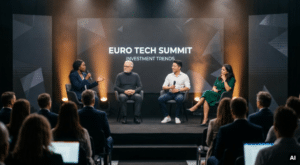
Diversity and Inclusion: Supporting Women and Underrepresented Groups
While European venture data shows ongoing imbalances-startups with at least one female founder secured 14.4% of VC rounds and 12% of total capital in 2026-event organizers are taking concrete steps to widen access. Dedicated initiatives, female-founder tracks, and standalone conferences like Perspektywy Women in Tech in Warsaw focus on closing these gaps.
Transparent application criteria and structured matchmaking algorithms also help level the playing field, making discovery depend on product merit rather than legacy warm introductions.
When and Where: Major Startup Networking Events in Europe for 2026
Europe offers a full calendar of startup gatherings throughout the year. Maximizing your return requires choosing the right timing and regional hub.
Europe’s Innovation Hubs: Regional Highlights
Capital remains concentrated in major hubs, with London securing $26.2 billion in startup venture capital in the 12 months leading to Q2 2026, followed by Paris with $8.5 billion, leading in European AI funding.
Stockholm ($4.2B), Munich ($3.3B), and Berlin ($3.2B) continue to demonstrate strong deal activity, alongside Helsinki ($1.9B), Amsterdam ($1.7B), Copenhagen ($1.4B), and Barcelona ($1.3B). Meanwhile, digital hubs like Tallinn anchor the Baltic tech ecosystem with high-density gatherings like Latitude59.
Key Venues and Host Cities to Know
Event venues often shape the style of conversations you’ll have. Stockholm’s Strawberry Arena hosts Techarena, while Paris Expo Porte de Versailles accommodates the massive scale of VivaTech. In Tallinn, Kultuurikatel’s industrial power plant setting provides a focused backdrop for Latitude59. In London, Olympia London and the Queen Elizabeth II Centre host major venture crowds during London Tech Week and Tech.eu Summit.
If you’re looking at Central and Eastern Europe, the Startup Community Summit 2026 in Poznań proves that curated, high-value founder and investor meetings thrive well outside traditional capital cities.
How to Select the Right Startup Event in Europe for 2026
Navigating Europe’s event calendar requires a clear strategy. Rather than filling your schedule with conferences, focus on the rooms where your target investors and commercial partners actually spend time.
Factors to Think About: Focus, Size, Audience
Start with your core objective: are you raising a seed round, hunting for enterprise pilots, or testing initial positioning? Match that objective to the event’s primary audience and average investment stage.
Consider the room size: large expos provide visibility, but curated events like Mashup Festival (500 invite-only attendees, balanced between founders and investors) offer higher conversation quality. Evaluate events based on your cost per qualified conversation rather than the ticket price alone.
General Events vs. Niche Industry Events
Large cross-sector events are suitable for brand exposure and broad ecosystem awareness. However, if your goal is targeted fundraising or enterprise distribution, sector-specific events usually produce better outcomes.
Fintech founders will find more relevant partners at Money20/20 Europe than at a general expo, while deep-tech teams will get more qualified investor meetings at Hello Tomorrow. Regional summits like How to Web or Arctic15 provide direct access to funds with active mandates in specific geographic markets.
Early-Bird Ticket Options and Discounts Calendar
Most organizers offer tiered pricing, with early-bird founder passes saving 20% to 40% compared to standard rates. Verified early-stage startups can often secure subsidized passes in the €175 to €300 range.
For events in high-demand cities like London, Amsterdam, and Paris during peak months like June, book accommodation and travel as soon as your ticket is confirmed to avoid rising logistics costs.
What Happens at Startup Networking Events?
European startup events combine structured meeting formats, stage content, and informal gatherings designed to build relationships and move deals forward.
Pitch Sessions and Startup Showcases
Pitching competitions give vetted teams direct access to active investors and audience visibility. Major showcases like the €1M competitions at Slush and Latitude59, or the prize package at EU-Startups Summit, evaluate startups on traction, unit economics, and market potential. Alongside main stages, exhibition spaces allow early-stage teams to run live product demos for passing investors, operators, and early adopters.
Panels, Keynotes, and Fireside Chats
Content tracks bring experienced operators, growth-stage founders, and fund managers to share operational data. Panels generally focus on tactical subjects: scaling go-to-market motions, navigating VC term sheets, product management, and regulatory compliance. Summits like Tech.eu Summit and VivaTech provide actionable market analysis rather than generic overviews.
Workshops, Clinics, and Hackathons
Hands-on sessions give founders direct access to mentors and subject-matter experts. Small-group clinics cover pricing strategy, B2B sales pipelines, and hiring playbooks. City-wide models like ViennaUP spread specialized workshops across multiple hubs, while focused hackathons connect engineering teams with enterprise sponsors to solve concrete technical challenges.
Formal and Informal Networking Opportunities
Dealmaking happens across both structured zones and casual settings. Curated investor lounges and pre-booked tables ensure you hit your meeting targets, while evening receptions, side dinners, and closing gatherings provide space for more candid conversations. Events like Bits & Pretzels use informal venues like Oktoberfest tents specifically to break through formal conference barriers and build personal trust.
Matchmaking and Investor Speed-Dating
Most mature European events run dedicated matchmaking software. Platforms used by summits like Slush, Techarena, and Web Summit allow attendees to filter participant lists by sector, stage, and geography weeks before the doors open. Setting up 10 to 12 targeted 25-minute meetings in advance ensures you arrive with conversations already in motion.
Exhibitions, Demos, and Afterparties
Demo alleys let startups showcase working software and hardware to attendees throughout the day. When official sessions wrap, curated side events and afterparties keep conversations going in relaxed settings, where many initial intros turn into concrete follow-ups.
How to Maximize Networking Success at European Startup Events
Treating conference attendance as a pipeline activity ensures you get a positive return on your time and ticket investment.
Pre-Event Preparation Tips for Founders
Begin your outreach at least two to three weeks before the event starts. Review the confirmed attendee list, identify funds with active mandates matching your sector and stage, and send concise meeting requests through the matchmaking tool. Aim for 8 to 12 scheduled 25-minute meetings across two days to keep your schedule productive without running out of energy. Prepare a simple one-pager, ensure your demo is stable offline, and sharpen your core metrics: ARR, growth rate, retention, and round size.
Investor Strategies for High-Value Connections
For investors, focused preparation prevents schedule overload. Use event filtering tools to target startups that fit your investment criteria by traction, geography, and vertical. Utilize private investor lounges for back-to-back founder meetings, and attend specialized sector pitch sessions to spot emerging teams early. Use side gatherings to connect with regional angels and syndicate partners for co-investment opportunities.
Making the Most of Matchmaking and Digital Tools
Send clear, personalized meeting requests that explain why a conversation makes sense for both sides. Avoid long generic pitches; state what you’re building, your primary traction metric, and what you’re looking for. A 40% to 60% acceptance rate is typical when targeting is aligned. Keep an open slot or two each afternoon for unplanned conversations that emerge from referrals on-site.
Building Relationships That Last Beyond the Event
The real work begins after the summit ends. Follow up within 48 hours with every investor, founder, or partner you met, referencing specific points from your conversation. Provide any requested materials, such as a data room link or pitch deck, and propose a concrete next step. Converting 20% to 30% of your first-round event meetings into formal follow-up calls is a strong benchmark for a successful event.
Key Takeaways for Founders and Investors Attending European Startup Events in 2026
Europe’s 2026 startup calendar offers a clear mechanism for founders and investors to connect, provided you approach it with focus and preparation. Successful outcomes don’t come from wandering expo halls-they come from booking the right 1:1 meetings before you arrive.
For founders, prioritize curated rooms and sector relevance over raw attendance figures. Use structured summits like Slush for high-density investor meetings, specialized forums like Hello Tomorrow or Money20/20 for vertical-specific deals, and regional summits to access active local capital across CEE, the Nordics, or Southern Europe. For investors, structured matchmaking software and curated founder showcases offer an efficient way to filter dealflow and build syndicates.
Choose the events that align with your current stage, book your key conversations early, and follow up quickly to turn event conversations into lasting momentum for your company.
Frequently Asked Questions for Startup Networking Events in Europe
Here are practical answers to common questions about attending European startup conferences in 2026.
Should You Exhibit or Only Attend as a Startup?
Exhibiting makes sense if you have a working product to demo, clear hardware to display (such as at IFA Berlin), or if your pass includes an exhibition booth via a pitch competition selection. However, if your primary goal is fundraising, an attendee pass combined with aggressive pre-booked meetings through the matchmaking app is often more cost-effective. Compare options by evaluating the cost per qualified meeting.
Are Virtual or Hybrid Formats Available?
While hybrid streaming exists for stage content, most dealmaking and fundraising in 2026 has returned to in-person interactions. Digital tools are primarily used before and after the event for discovery, messaging, and scheduling rather than as a replacement for on-site meetings.
What Is the Typical Investment Size Offered at These Events?
Ticket sizes depend on the stage and investor profile. Pitch contests feature prizes ranging from €100,000 to €1M+ in equity or prize capital. Angel investors and early-stage funds at regional events typically write checks from €25,000 to €500,000, while multi-stage VC funds attending major summits like Slush or Bits & Pretzels deploy Series A and B checks of €2M to €10M+.
How Can International Founders Join European Events?
European summits are open to global participants, with major events drawing attendees from dozens of countries. International founders should manage a few key logistics early:
- Visa timelines: Apply for Schengen business visas well in advance using official registration confirmation letters.
- Travel and lodging: Reserve flights and hotels early, especially in high-density weeks in Paris, Lisbon, or Helsinki.
- Regional alignment: Choose events that match your expansion targets, whether that’s the Baltics (Latitude59), Central Europe (Wolves Summit, Startup Community Summit), or Southern Europe (South Summit).
- Local support: Connect with regional trade agencies, incubators, or community builders in host cities for local context and introductions.
- Language: English is the working language across all major European startup summits.
