

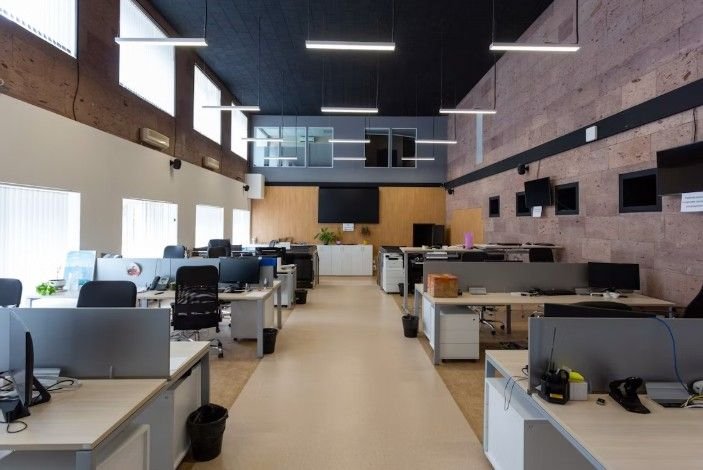
Singapore’s strategic location and strong economy have made it a vital business hub in Southeast Asia. Demand for office space in Singapore reflects the country’s strong economic standing. With a rapid transition towards digitalisation and a shift towards hybrid working models, the office space landscape in Singapore is evolving to adapt to new work requirements.
Economic Dynamics and Office Space Demand
Singapore’s appeal to multinational corporations is driven by factors such as stable governance, a business-friendly environment, and world-class connectivity. This strong foundation has spurred a demand for both prime and more flexible office spaces and housing not only for conglomerates but also for a burgeoning start-up sector.
The Rise of Co-Working Spaces
The past decade has seen a significant rise in co-working spaces across Singapore. These flexible workspaces provide versatility and cost-effectiveness, catering to start-ups and remote workers. Many of these spaces are not confined to conventional office towers, occupying unique locales that add a modern twist to the work environment.
Co-working operators in Singapore are capitalising on the demand for social workspaces that also promote networking and cohesion among like-minded professionals. By providing state-of-the-art amenities and community-centric events, these spaces are driving a cultural shift in how Singapore views traditional office environments.
Technological Advancements and Smart Offices
The integration of advanced technologies has become indispensable in modern office spaces. Singapore’s push towards becoming a smart nation is evident in its commercial real estate sector. Office buildings are increasingly equipped with the latest innovations, including Internet of Things (IoT) integration, automated lighting systems, and energy-efficient designs.
Smart offices provide companies with crucial data on workspace utilisation and energy consumption, enabling more informed decision-making that can lead to lower operational costs. Enhanced by artificial intelligence, smart offices help tailor the work environment to employee needs, improving overall productivity.
Green Building Initiatives
Sustainability has become synonymous with modern office design in Singapore. With the governmental push under the BCA Green Mark scheme, buildings are encouraged to embrace eco-friendly solutions. The scheme sets benchmarks for energy and water efficiency, as well as environmental quality and protection.
Green offices provide numerous benefits not only to the environment but also to businesses. They are known to increase employee well-being and satisfaction, which can lead to a healthier work culture and reduced turnover rates. Companies that adopt these practices are also seen as forward-thinking and responsible, enhancing their corporate reputation.
Remote Work and Hybrid Models
The COVID-19 pandemic accelerated the acceptance and implementation of remote work, reshaping traditional office dynamics. Many companies have since adopted hybrid models, wherein employees split their time between home and office settings. This shift necessitates that spaces are reimagined to accommodate flexible work schedules and preferences.
The design of office spaces is evolving to support diverse working styles. Agile workspaces that offer a mix of open-plan areas, private quiet zones, and collaborative meeting rooms cater to this variety, ensuring that individual and teamwork needs are both met.
Office Space Solutions for Growing Businesses
Start-ups and expanding businesses often face the dilemma of choosing office spaces that are scalable and flexible enough to grow alongside the company. They look for flexible lease terms and spaces that allow for easy reconfiguration. These businesses often find that traditional office commitments do not offer the adaptability they require for rapid scaling.
To address this issue, property developers are offering more tailored solutions. Built-to-suit offices provide growing companies the opportunity to design and influence the space that best meets their operational needs. Meanwhile, serviced offices offer furnished spaces with added administrative support, making them an attractive option for businesses that need immediate occupancy with minimal setup hassle.
The Role of Location in Office Choice
Singapore’s extensive public transportation network makes accessibility a crucial factor when choosing office locations. Proximity to MRT stations, bus interchanges, and key amenities can enhance convenience for employees and clients alike. Areas that feature a mix of both commercial facilities and leisure options often appeal more to the modern workforce, looking for work-life balance.
Locations like Paya Lebar and Jurong Gateway have seen increased interest due to their connectivity and balanced lifestyle offerings. These areas, in conjunction with urban rejuvenation projects, offer potential for future growth and development, making them exciting prospects for businesses looking to the future.
 Adapting to New Norms
 Adapting to New Norms
As the future of work continues to develop, so too will the needs and designs of office spaces. The digital era prompted a departure from the traditional 9-to-5 workday and redefined the notion of a workspace. Companies that can adapt to these changes are more likely to thrive in an ever-expanding global marketplace.
With its mature market dynamics and forward-looking policies, Singapore remains at the forefront of these transformations. As demand for innovative office solutions continues to grow, the city is well poised to lead in creating spaces that meet the evolving requirements of modern businesses.
Conclusion
Singapore’s office sector is undergoing a significant transformation as businesses respond to changing work habits, technological progress, sustainability goals, and evolving employee expectations. From flexible co-working spaces and smart offices to greener buildings and hybrid work environments, modern workplaces are becoming more adaptable and people-focused. Location remains an influential factor, yet businesses now place greater value on flexibility, connectivity, employee comfort, and long-term scalability. As Singapore continues to attract global companies, start-ups, and innovative industries, its office spaces are likely to keep changing alongside the needs of the modern workforce. Businesses that choose adaptable and thoughtfully designed workplaces will be better positioned to support productivity, growth, and resilience in the years ahead.
