

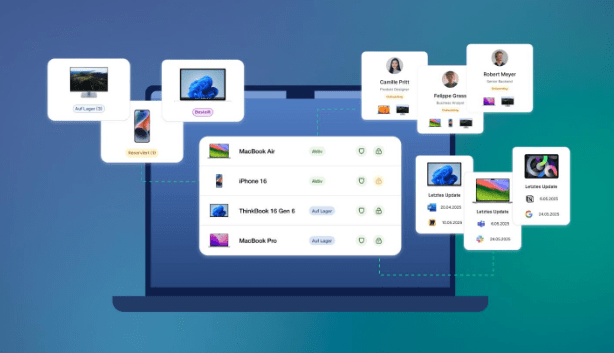
There is a gap that shows up on almost every IT team’s calendar. It lives between the moment a user reports a broken device and the moment they have a working one in hand. In most organizations, that gap is filled by a technician, a sign-out sheet, a key, a text message, and at least one trip to a storage closet.
That process has not scaled. Device fleets have grown. IT headcount has not kept pace. And users — across healthcare, manufacturing, higher education, and enterprise corporate environments — expect access to working equipment without a wait.
The response, across IT operations, has been a deliberate push toward automated device management solutions that remove manual steps from routine transactions. This article examines the platforms and infrastructure systems IT teams are deploying in 2026 to replace legacy manual processes.
Why IT Teams Are Moving Away from Manual Device Management Processes
The volume problem is straightforward. Organizations are managing more shared devices than they did five years ago — laptops issued across hybrid shifts, tablets shared across departments, rugged handhelds cycling through warehouse rotations. Each of those devices generates multiple handoff events: check-out, return, repair intake, deployment, replacement. When those events are handled manually, they consume staff time that could go elsewhere.
According to HDI’s State of Service Management research, 59% of IT organizations identify improving the employee experience as the primary driver behind their technology investments — and self-service access is consistently ranked among the highest-impact mechanisms for achieving that goal. Manual device handoffs work against both objectives simultaneously.
Legacy approaches introduce specific failure modes. Paper sign-out sheets create accountability gaps when devices go missing. Devices stored informally — in unlocked carts, drawers, or conference rooms — go missing without generating a record. IT staff spending significant time on routine device transactions have less capacity for configuration work, security response, or infrastructure projects. And without real-time inventory visibility, it becomes difficult to determine whether a department needs more devices or simply better tracking.
Forrester’s analysis of modern IT service desk operations notes that legacy service desks structured around manual workflows are no longer sufficient to meet the demands of a hybrid, digital-first workforce. The recommended shift is toward IT infrastructure that handles routine transactions automatically and surfaces data about those transactions without requiring someone to compile a report.
Gartner projects that by 2026, 30% of enterprises will automate more than half of their network activities — up from under 10% in mid-2023. The device management layer, including physical handoffs, is part of that automation agenda.
Top Solutions IT Teams Use to Replace Manual Device Management in 2026
Organizations replacing manual IT device management processes are deploying two distinct layers: software platforms that manage the digital record of device status, assignment, and service requests; and physical infrastructure systems that automate the actual handoff of devices between IT and users. Effective platforms for shared device management address both layers — or integrate them through APIs and connectors.
Below is an overview of the solutions most commonly associated with replacing manual IT processes in each category.
1. ForwardPass — Physical Device Access Automation for IT Teams
Smart locker systems allow IT departments to automate the physical layer of device management — replacing manual handoffs, sign-out sheets, and informal storage with automated access control and tracking. This is the infrastructure gap that software-only platforms cannot close on their own: even with a fully integrated ITSM stack, someone still has to hand the device to the user.
IT teams replacing manual device handoff workflows with automated infrastructure can use the ForwardPass system to automate physical device distribution, eliminate sign-out processes, and improve asset visibility across shared device programs.
ForwardPass is a smart locker for IT automation that operates through five built-in workflows — Loaners, Repairs, Deployments, Replacements, and Charging — each designed to run without IT staff involvement at the point of handoff. A user needing a loaner checks one out through a self-serve bay in approximately two minutes. A user with a broken device checks it into the locker, which automatically generates a repair ticket. IT collects devices for service on their own schedule; the system has already logged the intake, the assignment of a spare if applicable, and the return.
The audit trail generated by each transaction logs Who, What, and When — exportable for compliance reporting or asset reconciliation. ForwardPass integrates with ServiceNow, Jamf, SOTI, Okta, Azure AD, Jira, and Google Admin, which means the physical handoff data feeds directly into the same systems IT already uses to manage device records. Organizations running ForwardPass report an 80% reduction in daily IT effort related to device management, with over 120 minutes saved per team per day.
2. ServiceNow — IT Service Management and Asset Automation
ServiceNow provides an ITSM and IT asset management platform used by enterprise organizations to automate device provisioning, tracking, and service request workflows. Its Configuration Management Database (CMDB) maintains a structured record of hardware assets, their relationships to users and locations, and their lifecycle status — from procurement through retirement.
Within device management workflows, ServiceNow automates service request routing, approval chains, and fulfillment steps that would otherwise require manual coordination between help desk staff, asset managers, and end users. Integration with procurement systems allows device requests to trigger purchase orders or assignment from existing inventory without manual intervention at each step.
ServiceNow is most commonly deployed in enterprise organizations with mature ITSM programs and complex device fleets that require structured change management alongside day-to-day device operations.
3. Ivanti — Endpoint and Asset Management Platform
Ivanti provides an endpoint management platform used by enterprise IT departments to manage large device fleets across distributed environments. Its automated asset discovery capabilities maintain an accurate inventory of devices on the network, tracking configuration, compliance status, and location without requiring manual audits.
For device lifecycle management, Ivanti automates patch deployment, configuration enforcement, and retirement workflows — reducing the administrative overhead associated with keeping large fleets current and compliant. IT workflow automation within Ivanti connects asset status changes to service desk actions, so a device flagged for replacement automatically initiates the appropriate downstream process.
Ivanti is common in enterprise IT departments managing mixed-platform fleets, particularly in organizations with distributed locations where manual asset tracking would require significant travel or coordination time.
4. ManageEngine — IT Asset and Service Desk Automation
ManageEngine provides IT asset management and service desk automation tools used primarily by mid-size organizations to replace manual ticket handling and device inventory processes. Its asset management module tracks hardware throughout the device lifecycle — from procurement and deployment through maintenance and disposal — with automated alerts for warranty expiration, license renewal, and refresh cycles.
On the service desk side, ManageEngine automates ticket creation, categorization, and routing, reducing the manual triage work that consumes help desk capacity. Device-related requests — including break/fix intake, loaner requests, and return processing — can be structured as automated workflows rather than handled ad hoc by available staff.
ManageEngine is frequently deployed in organizations that require a capable ITSM and asset management stack without the implementation complexity and cost associated with enterprise-tier platforms.
5. Jamf — Apple Device Management for Enterprise
Jamf provides a mobile device management (MDM) platform used by organizations to automate the enrollment, configuration, security management, and lifecycle tracking of Apple device fleets — Mac, iPad, and iPhone. Automated enrollment through Apple Business Manager allows new devices to be configured and assigned to users without any manual setup by IT staff.
Configuration profiles, security policies, and application deployments are pushed over the air, eliminating the per-device setup time that characterized earlier approaches to fleet management. Jamf’s reporting surfaces compliance status and inventory data across the fleet without requiring manual audits.
Jamf is most common in technology companies, education institutions, and healthcare organizations where Apple devices constitute the primary or exclusive endpoint fleet.
6. SOTI — Enterprise Mobility and IoT Device Management
SOTI provides an enterprise mobility management platform used by organizations to manage, monitor, and troubleshoot rugged and shared mobile devices in operational environments. Remote device control capabilities allow IT teams to diagnose and remediate device issues without requiring physical access — reducing the downtime and staff travel associated with field device failures.
SOTI’s platform is designed for the device management requirements specific to industrial and logistics environments: shift-based device assignments, high turnover of shared devices across work teams, and real-time visibility into device status across multiple sites. Automated provisioning and remote lock or wipe capabilities support security compliance for devices that move across physical locations.
SOTI is most commonly deployed in manufacturing, warehousing, field service, and logistics organizations where shared rugged devices are central to daily operations.
Building Automated IT Infrastructure That Scales
The pattern across organizations successfully replacing manual device management is consistent: they treat device access as an automated system, not a staffed service. Software platforms handle the digital record — asset status, service requests, compliance data, CMDB entries. Physical infrastructure handles the actual handoff, with audit logs feeding back into the software layer.
The separation matters because each layer has a different failure mode. Software without physical automation still requires a person to hand over the device. Physical infrastructure without software integration creates an isolated data island that doesn’t connect to IT’s existing workflows.
Organizations that have consolidated both layers — deploying ITSM and MDM platforms alongside physical device automation infrastructure like ForwardPass — report the clearest reductions in IT effort, device loss, and administrative overhead. The outcome is a shared device management platform that runs routine transactions without staff involvement, surfaces visibility and accountability for every handoff, and integrates directly with the service management systems IT teams already operate.
As device fleets continue to expand and expectations for self-service access rise, the question for most IT operations teams is not whether to automate device management, but how quickly the physical and digital layers can be connected into a single accountable system.
Frequently Asked Questions
How do smart locker systems replace manual IT device handoff processes? Smart locker systems provide secured, automated bays where users can pick up and return devices without IT staff involvement. Access is controlled through credentials tied to identity management systems, and every transaction is logged automatically — eliminating the sign-out sheets and informal handoffs that characterize manual processes.
Can physical device locker systems integrate with ITSM platforms? Yes. Systems like ForwardPass integrate with ServiceNow, Jira, and other ITSM platforms through APIs, allowing physical handoff events to automatically create or update service tickets, asset records, and audit logs within the same systems IT teams use to manage the rest of their operations.
What is the difference between MDM software and physical device automation? MDM software manages the digital configuration, security, and compliance state of devices over the network. Physical device automation manages the actual movement of devices between IT and users — the handoff layer. The two are complementary: MDM ensures devices are configured correctly; physical automation ensures they get to users quickly and are returned and tracked accurately.
How do organizations track device usage without manual sign-out sheets? Automated systems capture device assignments, check-outs, and returns through credential-based access and sensor data, generating a timestamped log of every transaction. This log is accessible through a cloud dashboard and can be exported for reporting without requiring staff to compile records manually.
What solutions help IT teams manage shared device programs at scale? Organizations managing shared device programs at scale typically combine an ITSM platform for service request and asset record management, an MDM platform for remote configuration and compliance, and physical infrastructure for automated device distribution. Each layer addresses a different part of the management problem; together they reduce the manual intervention points that constrain scale.
