

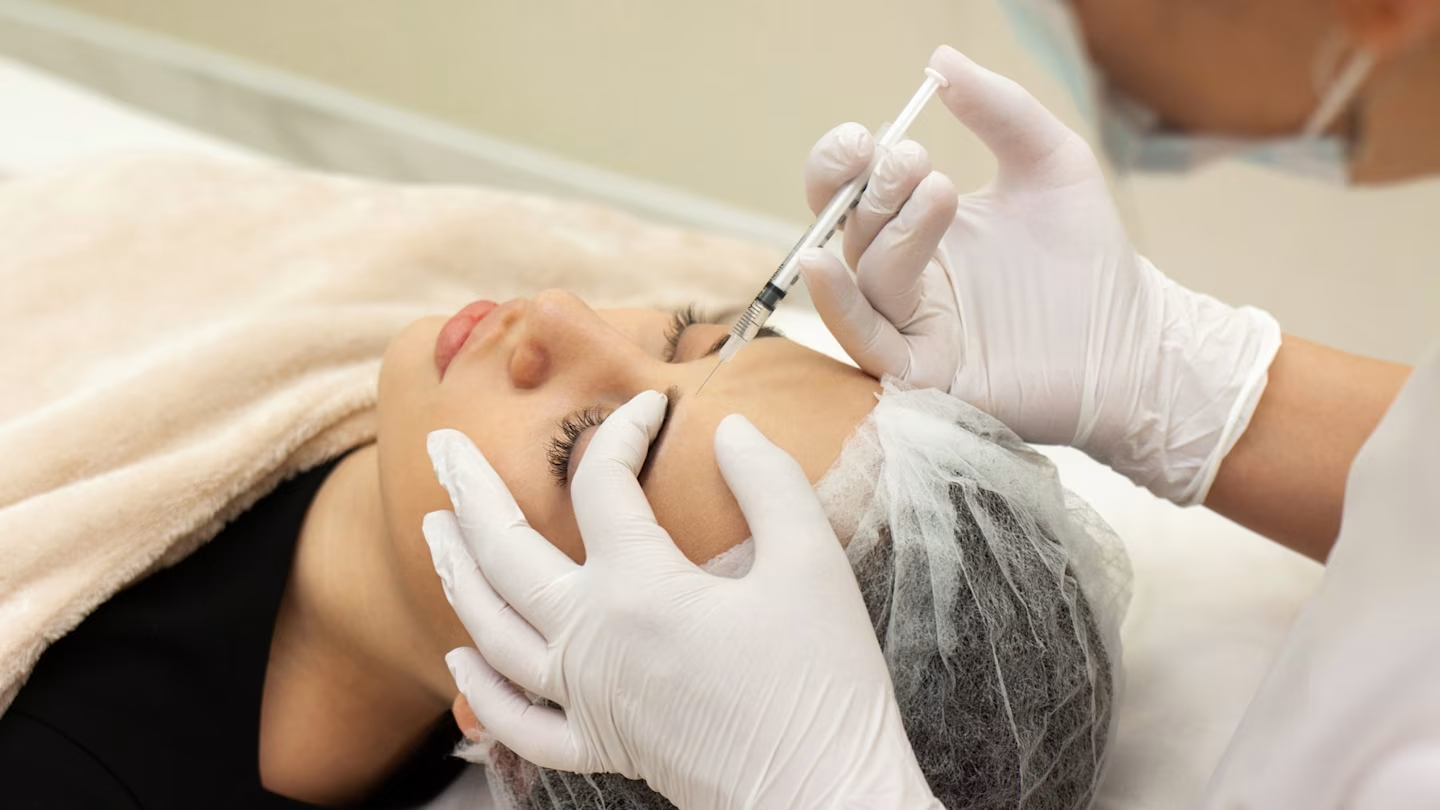
Something fascinating is happening in the world of high-end cosmetic clinics right now. The shift is quiet; it does not announce itself with the dramatic over-filled look of the past decade. Walk into any high-end medical spa in London, New York, or Paris; the conversation has changed completely. Consumers are turning away from the immediate, dramatic structural changes of classic hyaluronic acid treatments. They want something different. They are choosing biology over immediate volume.
The driving force behind this massive behavioral pivot is the biostimulator. These are not standard fillers; they do not simply occupy space under the skin. They are injectables that act as chemical messengers. They trick the body into restarting its own youth factory; specifically, the production of type I and type III collagen. It is a slow-burn approach to aging. The results take weeks, sometimes months, to fully manifest. Yet, the luxury market is absolutely obsessed with this patient timeline.
This change reflects a deeper cultural shift in how we view luxury and self-care. The modern aesthetic consumer values subtlety; they want a look that suggests excellent genetics and an expensive lifestyle, rather than a successful appointment with a syringe.
The New Metric of High-End Beauty
Wealthy cosmetic patients used to want instant gratification. They would pay thousands for immediate cheekbones or sharp jawlines. Now, immediate results look common; they look overly accessible. The new luxury metric is patience. Luxury consumers are willing to wait three to six months for their skin texture to change from the inside out.
The mechanism here is brilliant. Traditional dermal fillers act like a structural cushion; they lift the skin by physically sitting beneath it. Biostimulators work through a process called neocollagenesis. The active microscopic particles are suspended in a gel carrier; they trigger a controlled, localized inflammatory response. This mild irritation wakes up fibroblasts, which are the cells responsible for skin structural integrity.
The resulting tissue matrix looks entirely natural because it belongs to the patient. The skin gains a specific thickness and elasticity; it reflects light differently. This phenomenon explains why high-end clinics are restructuring their entire service menus around these progressive therapies.
Why Aesthetic Practices are Re-engineering Their Inventory
The change in patient desires creates a massive operational challenge for clinic directors. Medical spas must adapt their supply chains to keep pace with this structural change in demand. Practitioners need consistent access to premium injectable platforms that offer predictable, gradual scaffolding inside the dermal layers. The modern injector cannot rely solely on basic volumizers anymore; their clinical toolkit must feature diverse microparticle formulations to address skin laxity on the neck, hands, and jawline.
Because these therapies require multi-session protocols spaced weeks apart, clinics face different inventory pressures. Stocking the right products in high volume is critical for maintaining patient retention across a six-month treatment cycle. To keep up with these sophisticated clinical needs and secure consistent product access, medical providers frequently look for reliable medical distribution channels to order Radiesse packages online and maintain their treatment pipelines. This smooth supply chain management allows high-end practices to offer complex, layered rejuvenation programs without scheduling delays.
The commercial reality is simple; clinics that fail to stock these cell-stimulating formulations are losing their most profitable demographic. The luxury patient does not negotiate on their aesthetic philosophy. They will simply find an injector who aligns with their long-term vision of regenerative wellness.
A Cultural Breakdown: Volume vs. Regeneration
The philosophical gap between old-school filling and modern biostimulation is immense. The previous era of aesthetics focused heavily on replacing lost volume by adding external mass. The current era prioritizes the restoration of cellular function. It is a transition from passive camouflage to active cellular instruction.
Consider how these two approaches manifest in real life:
- Hyaluronic Acid Fillers: These injectables provide immediate structural alterations. They attract water molecules to create localized volume; they are excellent for precise sculpting but can look heavy if overused.
- Biostimulatory Injectables: These solutions introduce micro-particles of calcium hydroxylapatite or poly-L-lactic acid. The temporary gel carrier dissipates quickly; the remaining particles form a matrix that guides new collagen growth over time.
This technical distinction alters patient psychology. When someone receives a traditional filler, they monitor their reflection for immediate changes. With a regenerative injection, the patient watches for a gradual improvement in skin quality, bounce, and firmness. The luxury market prefers this progressive transformation; it protects privacy because colleagues and friends never notice a sudden, tells-tale shift in appearance.
The Micro-Architecture of Regenerative Ingredients
To understand why this segment is growing so fast, we have to look at the chemistry. The most prominent compounds in this luxury category are Calcium Hydroxylapatite (CaHA) and Poly-L-Lactic Acid (PLLA). Both substances have a long history in reconstructive medicine; they were originally used in orthopedic surgeries and dissolvable stitches. Their safety profiles are exceptionally well-documented.
When injected into the deep dermis or subdermal layers, CaHA microspheres act as a temporary scaffold. Fibroblasts cluster around these spheres; they begin spinning a fresh web of collagen fibers. Eventually, the body metabolizes the original mineral spheres into calcium and phosphate ions, which are naturally excreted. The newly formed collagen network remains behind; it maintains the skin’s structural integrity for eighteen to twenty-four months.
PLLA works via a slightly different pathway. It relies on a progressive breakdown of polymer flakes, which stimulates a targeted immune response. This response coaxes the body into replacing lost volume with its own structural proteins. The choice between these ingredients depends heavily on the injector’s technique and the patient’s specific anatomy; both achieve the same ultimate luxury goal, which is self-generated restoration.
Changing Demographics in the Medical Spa
The profile of the luxury aesthetics consumer is shifting younger. Historically, corrective treatments were sought by patients in their late forties and fifties who wanted to reverse visible signs of aging. Today, twenty-something and thirty-something consumers are entering the market with a preventative mindset.
These younger patients are incredibly well-educated; they read clinical studies and understand cellular biology. They do not want to look like they have altered their faces. They view biostimulation as an insurance policy for their skin matrix. By stimulating collagen production before the natural age-related decline accelerates, they maintain their natural facial contours for much longer.
This preventative approach has completely altered marketing strategies for luxury brands. The language of anti-aging is dead. It has been replaced by the vocabulary of skin health, longevity, and tissue preservation. The focus is no longer on freezing the face in time; it is about optimizing the skin’s natural behavior at every stage of life.
The Future of the Aesthetic Experience
The luxury aesthetics sector is moving toward a highly customized, multi-layered model of care. Practitioners are no longer using a single product to treat an entire face. They combine diverse modalities; they pair biostimulators with energy-based devices like micro-focused ultrasound or radiofrequency microneedling.
These combination therapies create a synergistic effect. The energy device heats the tissue to contract existing collagen fibers; the injectable biostimulator provides the raw material and chemical signaling needed to rebuild the tissue matrix over the following months. This approach requires immense skill from the practitioner; it transforms the injector from a simple technician into a structural architect of the face.
The investment required for these treatments is substantial. Because the results appear gradually, patients must trust the clinical expertise of their provider completely. This deep trust forms the foundation of the modern luxury medical spa experience; it is an ongoing relationship centered around long-term tissue health rather than a series of isolated cosmetic fixes. The biostimulator boom is not a temporary trend; it represents a permanent realignment of consumer values toward authenticity, longevity, and biological harmony.
