

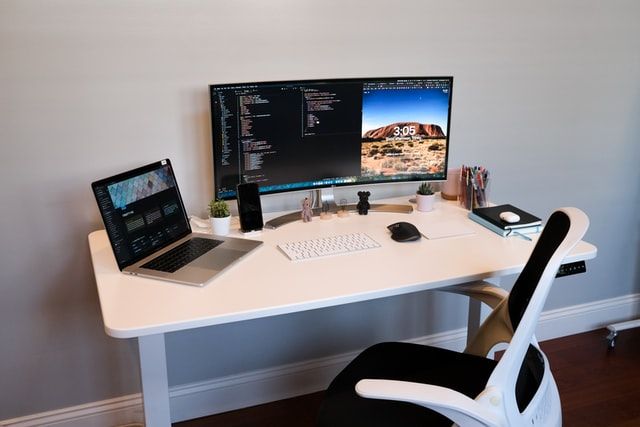
A home office can look perfectly fine at first glance and still be frustrating to work in every single day. You might have a decent chair, a laptop, a lamp and a corner that technically counts as a workspace, but if the desk is too shallow, too narrow, too cluttered or just not suited to the way you actually work, the whole setup starts to feel like a compromise you’re constantly adjusting around.
That’s why choosing desks for your office is worth more thought than people sometimes give it. A desk isn’t just a flat surface to put a computer on; it shapes your posture, your storage, your ability to focus, and even how easily you can switch off at the end of the day when your office is sitting a few steps from the kitchen or bedroom.
Start With the Work You Actually Do
The right desk for someone who only answers emails a few evenings a week won’t necessarily suit someone who spends full days on video calls, works across two monitors, reviews documents or needs space for drawings, samples, notebooks and a coffee that’s always slightly too close to the keyboard. Before getting carried away with finishes or styles, it helps to be honest about what usually ends up on the desk by lunchtime.
If your work is mostly digital, you might need a clean, simple surface with enough depth for screens to sit at a comfortable distance. If you use paperwork, catalogues or physical tools, a larger desktop can make a huge difference because you’re not constantly stacking things just to create room. And if your office doubles as a guest room, living area or shared family space, the desk may need to look good even when it’s not being used.
Size Matters, but So Does Proportion
A big desk sounds appealing until it overwhelms the room, while a compact desk can look neat but leave you feeling cramped after an hour. The sweet spot is usually the desk that gives you enough usable surface without making the room feel like it’s been taken over by work. It should fit the space, but it should also fit your body, your chair and the way you move around the room.
Depth is especially easy to underestimate. A desk that’s too shallow can force your screen too close, leave your wrists awkwardly positioned or make the whole setup feel temporary. Width matters too, particularly if you’re juggling multiple screens or like having a notebook open beside you while you work.
Storage Can Keep the Day from Spreading Everywhere
Not every desk needs drawers, but every home office needs some kind of plan for the things that gather during the day. Cables, chargers, pens, papers and small tech accessories have a way of making even a stylish workspace look messy if there’s nowhere for them to go. Built-in drawers, a mobile pedestal, cable trays or even a nearby cabinet can help keep the desk from becoming a dumping ground.
A Desk Should Make Work Feel Easier
The best home office desk doesn’t call attention to itself all day. It simply supports what you need to do, gives everything enough room, and helps the space feel intentional rather than improvised. When the desk is right, you stop noticing the little annoyances and start getting through the day with fewer distractions, which is really the whole point of setting up a proper workspace in the first place.
