

Flexible pouches can protect products, reduce storage volume, and create a broad printable surface, but the term “Mylar bag” is often used too loosely in commercial conversations. Mylar is a polyester film brand name, while many retail pouches are actually engineered laminates that combine different layers for specific functions. A responsible buyer should therefore compare the complete material structure, not rely only on a familiar product label.
For snack kits, sample programs, paired ingredients, pet-product bundles, craft sets, and promotional product companies, packaging must work through filling, sealing, storage, shipping, retail display, and customer use. A visually impressive pouch is not successful if its seal fails, its barrier is unsuitable, or its instructions encourage improper storage. This guide explains how dual-compartment flexible packaging should be planned as a measurable packaging system for the U.S. market.
Start With the Product and Its Real Sensitivities
Define what can damage the product before choosing a pouch. Moisture, oxygen, light, aroma transfer, static, grease, sharp edges, temperature, and repeated opening can require very different solutions. Record the product’s dimensions, weight, water activity when relevant, fill temperature, oil content, headspace, and expected distribution conditions. For nonfood products, add chemical compatibility, abrasion, electrostatic sensitivity, and any required warning or child-resistant features.
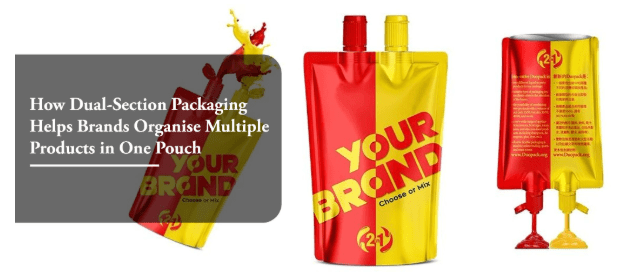
The most appropriate starting point is two independently planned compartments with appropriate seals, fill volumes, barrier needs, opening order, and separation performance. When evaluating Dual Compartment Custom Mylar Bags, request a written specification that identifies the material layers or performance values, intended use, seal range, closure type, and any relevant compliance documentation. Avoid approving a structure solely from thickness because two films with the same measured thickness can have very different barrier and puncture performance.
Understand What Barrier Packaging Can and Cannot Do
Barrier layers slow the movement of gases, vapor, aroma, or light, but they do not make a product stable forever. Actual protection depends on film structure, seal quality, package size, residual air, storage temperature, handling, and the product itself. Shelf-life targets should be validated through suitable testing under realistic conditions rather than copied from another brand or inferred from the pouch appearance.
For food applications, every material that contacts the product—including films, inks in applicable constructions, adhesives, coatings, and closures—must be suitable for the intended use. The FDA treats packaging and its components as food-contact substances and evaluates authorized uses in context. Ask the supplier for documentation applicable to the actual product, temperature, and contact conditions; do not assume that every flexible pouch sold online is appropriate for direct food contact.
Engineer the Seal Before Finalizing Artwork
Most flexible-package failures begin at the seal. Powder, crumbs, oil, folds, wrinkles, and trapped product can prevent a continuous bond. The filling line needs enough clean seal area, stable temperature, appropriate pressure, and dwell time. A zipper improves convenience but does not necessarily replace the production heat seal required for tamper evidence or barrier continuity.
Run trials on the actual equipment at realistic speed. Inspect seals visually, flex the package, perform appropriate leak or burst checks, and test after shipping simulation. If the contents have sharp corners, assess puncture risk around the vacuum or compressed product. Artwork should leave clear zones around heat seals, tear notches, hang holes, valves, windows, and registration-sensitive features so decoration never interferes with package function.
Create a Clear Brand and Information Hierarchy
A flexible pouch gives brands multiple panels, but every panel should have a job. The recommended direction is clear left-right or top-bottom labeling, compartment-specific colors, preparation instructions, and one unified brand system. The front must identify the brand and product quickly, while the back or side can carry instructions, warnings, ingredients, disposal guidance, contact details, and traceability information where applicable.
Keep essential text away from gusset folds, curved edges, seals, and areas that distort after filling. Test typography on a filled sample because a flat digital proof can hide readability problems. Barcodes should be placed on a reasonably flat, high-contrast area and verified at production scale. Use variant colors and plain-language names together so customers and warehouse staff are not forced to identify products by color alone.
Design Around Filling, Packing, and Distribution
A pouch is handled many times before it reaches the customer. Map the sequence from empty-pack receipt to filling, sealing, coding, case packing, palletizing, storage, shipment, shelf display, and opening. Confirm whether the pouch must stand, hang, lie flat, tolerate vacuum, or fit a specific carton. Small changes to gusset depth, zipper position, tear notch, or fill volume can materially affect line speed and pack appearance.
Order production-representative samples and fill them with the real product. Test the heaviest allowed fill and the most difficult product shape. Stack cases for the expected period, expose samples to normal temperature changes, and check for abrasion or ink transfer. Operational testing prevents a brand from discovering after delivery that a beautiful pouch will not open on the filling equipment or fit the planned shipping case.
Place the Second Keyword Naturally, Not as Stuffing
SEO language should never force the article or packaging decision into awkward claims. A useful product phrase belongs where it helps the reader compare structures, quantities, or features. When considering custom mylar bags with logo, buyers should still ask for the same technical evidence: material specification, intended use, closure details, print limitations, tolerance, sampling plan, and quality expectations.
Use one clear phrase rather than repeating near-identical keywords in every heading. Search visibility is supported by topic coverage, useful explanations, natural language, and accurate answers—not by making the text difficult to read. The packaging itself follows the same principle: focused communication is more persuasive than covering every inch with claims, icons, and decorative effects.
Avoid Common Cost and Quality Mistakes
The main risks include cross-contamination, uneven filling, confusing opening, seal creep, incompatible products, and a structure that complicates packing. Unit price can hide the cost of rejected packs, slow filling, leaks, product loss, customer service, obsolete inventory, and emergency reorders. Compare quotes using the same dimensions, material structure, thickness, printing method, closure, finish, quantity, packing method, tolerance, freight, and quality requirements.
Low quantity may reduce inventory risk but increase cost per piece. High quantity may improve unit economics but create storage pressure and artwork exposure. Build a total-cost model that includes setup, plates or cylinders if applicable, proofing, freight, inspection, filling labor, waste, and expected sell-through. The lowest quoted price is not the lowest business cost when a meaningful percentage of pouches cannot be used.
Set a Repeatable Quality-Control Standard
Document approved dimensions, film structure, thickness tolerance, seal width, zipper position, tear notch, gusset, finish, print colors, artwork version, winding or packing orientation, and case count. Keep an approved production sample and photograph critical details. On receipt, inspect multiple cases rather than only the first pouch at the top of one carton.
Quality checks may include dimensions, appearance, odor, print registration, scuff resistance, closure function, seal continuity, leak performance, code readability, and fill compatibility. Define what constitutes a critical, major, or minor defect before production. A clear acceptance standard helps the buyer and supplier resolve variation using evidence instead of subjective descriptions such as “looks wrong.”
Measure Performance After Launch
Useful measures for this project include compartment leaks, packing accuracy, customer comprehension, kit completion, waste, and repeat orders. Establish a baseline with the current package, then compare the new format over a defined quantity or period. Track failures by production lot, product variant, filling shift, storage location, and distribution route so patterns can be identified.
Customer comments are valuable, but operational data adds context. If people report difficult opening, determine whether the issue involves tear-notch position, film toughness, seal width, or instructions. If freshness complaints rise, inspect the entire system: product condition at fill, seal contamination, barrier specification, storage temperature, and time in distribution. Packaging improvement works best as a controlled cycle of testing, measurement, and revision.
Use Accurate Environmental Communication
Flexible multilayer packaging can be difficult to recycle through ordinary curbside systems, and acceptance varies by material and local program. Do not label a pouch recyclable simply because one layer could be recycled on its own. Ask the supplier for the complete structure and any supported collection pathway, then give customers specific disposal guidance that matches the finished package.
Source reduction, correct sizing, fewer failed packages, and accurate inventory planning can still reduce waste. Avoid broad claims such as “eco-friendly,” “zero waste,” or “fully recyclable” unless they are precisely defined and substantiated. Honest wording protects customer trust and is more useful than a green symbol without instructions.
Conclusion
Effective flexible packaging begins with product science and operating reality. Define the required barrier, confirm food-contact or other use suitability, validate the seal, test the filled pack, review print on a physical sample, and document the approved specification. A pouch should be judged by the saleable product it delivers, not by the empty sample alone.
For U.S. brands, dual-compartment flexible packaging can support stronger presentation and more consistent storage when it is matched to the product and verified through real trials. Start with a controlled pilot, measure results, correct weak points, and scale only after the packaging performs across filling, distribution, display, and customer use.
