

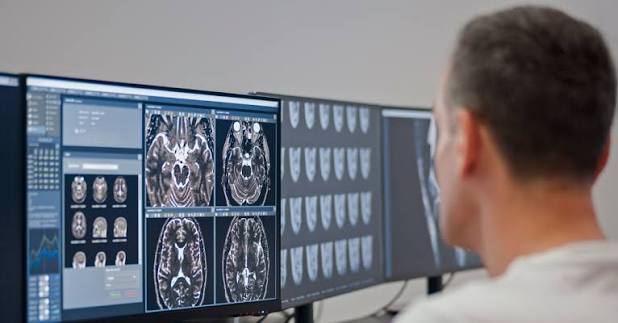
Radiology is better suited to remote clinical work than many specialties.
Teleradiology allows qualified specialists to report from home, work across multiple sites and in some roles choose sessions that fit their schedule. That flexibility depends on eligibility, technology, supervision and clinical governance.
This guide explains what to consider before pursuing remote healthcare careers in Australian radiology, including registration requirements, pay structures, home workstation setup and provider due diligence.
What Remote Radiologists Actually Do
Teleradiology in Australia usually involves reporting on imaging studies sent from hospitals, clinics or imaging centres through a picture archiving and communication system (PACS).
You review cases on calibrated diagnostic monitors, dictate reports using voice recognition or templates and submit findings through a radiology information system (RIS).
The case mix varies by provider and session type. It may include plain film, CT, MRI or ultrasound studies. After-hours sessions often involve emergency and acute imaging.
Remote reporting still sits within local clinical governance. Peer review, second reads, escalation pathways, handover protocols and audit processes should apply as they would in a hospital reading room.
Who Qualifies in Australia
To practise as a specialist radiologist in Australia, you typically need Fellowship of the Royal Australian and New Zealand College of Radiologists (FRANZCR) and specialist registration with the Australian Health Practitioner Regulation Agency (AHPRA). A Medicare provider number may also be required for billing purposes.
For overseas-trained specialists, Section 19AB of the Health Insurance Act may restrict where Medicare-eligible services can be provided. This can affect eligibility for some teleradiology roles depending on location classification. Check whether Section 19AB applies to your circumstances before committing to a position.
If you are exploring broader options in healthcare careers, understanding specialist registration pathways is a useful starting point regardless of your subspecialty.
Career Paths and Flexibility in remote healthcare careers
Remote radiology in Australia is not a single career model. It can take several forms, each with different trade-offs for income stability, scheduling control, case mix and professional contact.
Full-time remote with a provider. You work through one teleradiology company and report across a roster of sessions. This can offer predictable volume and consistent processes, but it may provide less variety than a mixed practice.
Hybrid hospital and remote. Some radiologists split their week between on-site hospital lists and remote sessions from home. This can preserve collegial contact and procedural work while adding more control over location.
Subspecialty sessions. Providers may need subspecialty reads in areas such as neuroradiology, musculoskeletal imaging, breast imaging or body imaging. These sessions can add variety to an existing workload, but they may also require specific credentialing.
After-hours and weekend work. Evening, overnight and weekend sessions are common in teleradiology. They may suit new fellows or experienced radiologists seeking extra sessions, but fatigue management is important.
Common Pay Models
Remuneration in remote radiology generally follows a few structures. Exact rates vary by provider, contract type, workload, modality and reporting complexity, so broad comparisons can be misleading.
Per-report payments. You are paid for each study reported. Volume and complexity both influence earnings. A complex MRI study will usually attract a different fee from a plain chest X-ray.
Sessional or hourly shifts. Some providers offer fixed payment for defined time blocks, regardless of how many studies come through during the session.
After-hours loadings. Sessions outside standard business hours may attract higher rates, though the details depend on the contract.
Working arrangements also differ. Some radiologists operate as independent contractors and invoice the provider directly. Others may be offered employment contracts with different tax, leave and superannuation implications. Review each arrangement carefully and consider independent financial advice.
Home Workstation Setup
A suitable home teleradiology setup generally includes the following elements:
- Calibrated medical-grade diagnostic displays, with specifications matched to the reporting work
- Secure VPN connection to the provider network
- PACS and RIS access with appropriate credentials
- Voice recognition or dictation hardware and software
- A private, quiet workspace that supports patient confidentiality
- Reliable internet with enough bandwidth for large imaging files
- Backup power supply, such as a UPS, to reduce disruption during outages
Minimum specifications can vary between providers and modalities, so confirm exact requirements before purchasing equipment. RANZCR also publishes guidance on teleradiology standards that is worth reviewing.
How to Vet Roles and Providers
Not all teleradiology arrangements are equal. Before accepting a position, ask practical questions about safety, support and accountability.
- Clinical governance: Does the provider have formal peer review, second-read policies and audit processes?
- Credentialing: What onboarding, modality approval and site credentialing steps are required?
- Indemnity: Are you expected to hold your own medical indemnity insurance, or does the provider arrange cover?
- Cybersecurity: How does the provider manage data security, encryption, access control and privacy compliance?
- Support: What response times are available for IT issues during a reporting session?
- Fatigue management: Is there a roster policy that prevents unsafe consecutive hours?
These questions help you distinguish well-run providers from arrangements that may expose you to unnecessary clinical or professional risk.
Where to Find Roles
Radiologist positions are advertised through hospital networks, private imaging practices, recruitment agencies and provider careers pages. Each channel frames roles differently, so compare several sources before assuming what is standard.
Provider careers pages can also show how remote sessions, equipment expectations and application steps are presented in practice.
For example, a provider careers page for FRANZCR radiologists advertising a radiologist job in Australia may outline how one organisation structures its teleradiology offering, but it should not be treated as an industry benchmark.
Risks and Safeguards
Remote radiology introduces risks that differ from on-site practice. They are manageable, but they should be discussed before you sign a contract.
Fatigue. Reporting alone at home, especially during overnight shifts, can increase the risk of diagnostic error. Look for providers with structured roster limits and clear rest periods.
Isolation. Without colleagues nearby, peer learning and informal second opinions are harder to access. Regular case meetings, escalation pathways and audit participation help maintain clinical standards.
Data security. Handling patient imaging outside a hospital network requires strict attention to encryption, secure access, device controls and privacy legislation.
Rural coverage pressure. Some remote roles exist because regional sites struggle to recruit on-site radiologists. Understand whether the workload, turnaround expectations and support model are sustainable.
Two Quick Scenarios
New fellow planning after-hours work. A newly fellowed radiologist picks up evening and weekend teleradiology sessions while maintaining a part-time hospital position. The after-hours sessions build reporting speed and provide additional income, but the irregular hours require careful fatigue management.
Experienced subspecialist building a hybrid schedule. A senior musculoskeletal radiologist reduces hospital days to three per week and fills the remaining time with subspecialty remote sessions. This arrangement preserves procedural work and collegial engagement while improving lifestyle flexibility. Income may fluctuate depending on remote session volume.
Deciding If Remote Teleradiology Fits Your Goals
Remote radiology can be a deliberate career design choice, not just a fallback. It works best when you verify your eligibility, confirm that your home environment can support compliant reporting and understand how providers manage governance, support and fatigue.
As remote healthcare careers continue to develop in Australia, the radiologists who benefit most will be those who plan for flexibility rather than assume it will happen automatically.
FAQ
These answers cover common questions about eligibility, equipment, regulatory restrictions and pay structures.
Can non-FRANZCR doctors report remotely in Australia?
Eligibility to practise as a specialist radiologist in Australia typically requires FRANZCR and AHPRA specialist registration. Non-FRANZCR doctors are generally not eligible for independent specialist remote reporting roles. Always confirm current requirements directly with AHPRA and RANZCR.
What equipment do I need for a home teleradiology setup?
A standard home setup includes calibrated medical-grade diagnostic monitors, a secure VPN, PACS and RIS access, dictation hardware, reliable internet, backup power and a private workspace. Exact minimum specifications vary by provider and modality, so check before purchasing.
What is Section 19AB, and does it affect radiologists?
Section 19AB of the Health Insurance Act may restrict where overseas-trained doctors, including specialists, can access Medicare billing. Whether it applies depends on your training pathway, visa status and other factors. This is general information only. Confirm your situation with the Department of Health and Aged Care.
How do remote pay models compare to on-site work?
Remote radiology commonly uses per-report payments or sessional shifts, sometimes with after-hours loadings. On-site roles may offer salaried arrangements with different benefits. Direct comparison depends on volume, complexity, contract type and individual circumstances. Specific rates vary by provider and are not quoted here.
