

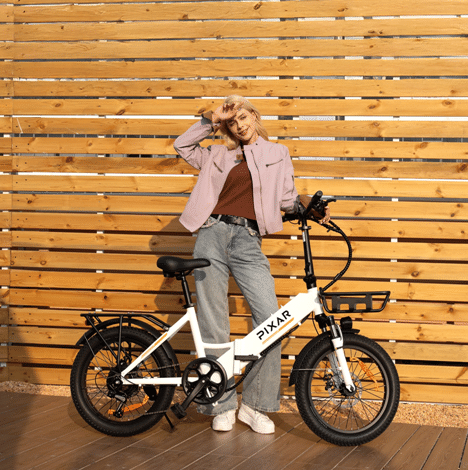
A low-step folding e-bike offers active seniors the safest pathway to everyday mobility by eliminating mounting balance risks, lowering vehicle center of gravity, and preventing off-the-bike lifting injuries. While cycling supports cardiovascular health and joint flexibility in retirement, motorized assistance introduces extra frame weight and acceleration that require dedicated safety ergonomics.
Selecting an appropriate e-bike demands evaluating how frame geometry protects changing physical balance. By replacing high crossbars with an open walkthrough layout and consolidating frame mass through foldable engineering, older riders retain independent mobility without fearing debilitating falls.
Core Safety Challenges of an Everyday E-Bike for Older Riders
Electric bicycles dramatically extend travel range, but traditional bicycle architecture introduces physical hazards for aging cyclists. Conventional diamond frames require swinging a leg high over an elevated top tube. For riders managing hip tightness, knee stiffness, or reduced single-leg balance, this rotational motion is the primary cause of sideways spills at complete stops.
Motorized weight magnifies these stability challenges. Standard commuter pedelecs weigh 23 to 28 kilograms—nearly double conventional bicycles. When braking abruptly, an off-balance rider must resist substantial tipping mass. Without instant, flat-footed pavement contact, this weight pulls the bike downward before leg muscles can brace.
Motor power delivery also requires careful management. Abrupt motor engagement from basic pedal sensors can startle a cyclist, turning minor steering corrections into uncontrolled surges. Pairing heavy frames with jerky motor assist creates handling anxiety that discourages regular riding.
Why Does a Low Step Folding E-Bike Prevent Serious Falls?
An open low-step frame geometry directly resolves the mechanical factors behind mounting and dismounting accidents. Lowering standover height to 25–35 cm allows riders to step naturally through the cockpit rather than executing an athletic hurdle. Cyclists remain stable on both feet before pedaling, shielding hips and lumbar joints from twisting strain.
Emergency footing represents an equally crucial safeguard in urban traffic. When stopping for unexpected pedestrians or traffic signals, the rider slides forward off the saddle and plants both soles flat on the road. Because no horizontal bar obstructs the frame, the cyclist never becomes trapped against the chassis during abrupt halts.
| Safety Factor | Low-Step Folding E-Bike | Standard Step-Through E-Bike | Electric Tricycle (eTrike) | Practical Verdict for Active Seniors |
| Standover Height | Ultra-Low: 25 – 35 cm | Moderate: 35 – 45 cm | Low: 30 – 40 cm | Low-Step Folding: Effortless walk-in access |
| Emergency Footing | Instant flat-footed stance | Flat-footed stance | Fixed pedals (no grounding) | Low-Step Folding: Immediate road contact |
| Center of Gravity | Low (compact 20-inch wheels) | Higher (28-inch wheels) | Fixed horizontal footprint | Low-Step Folding: Superior low-speed stability |
| Off-Bike Strain | Low (compact lever arm) | High (bulky 24 – 28 kg frame) | Severe (heavy 32+ kg footprint) | Low-Step Folding: Protects back and shoulders |
| Cornering Stability | Predictable two-wheel banking | Predictable two-wheel banking | Tipping risk during sharp turns | Two-Wheel Options: Intuitive, safe tracking |
Auditing these trade-offs proves that combining step-through accessibility with compact geometry delivers comprehensive fall prevention without the cornering instability inherent to three-wheelers.
How a Folding E-Bike for Seniors Reduces Off-Bike Lifting Strain
Cycling safety evaluations often overlook that many senior injuries occur off the saddle. Maneuvering a 26-kilogram electric bicycle up stairs or into a basement storage cellar (Fahrradkeller) applies severe leverage to spinal discs. With full-sized bicycles, the long wheelbase amplifies perceived mass, turning routine storage into an acute lumbar hazard.
A compact folding frame eliminates this leverage by collapsing vehicle dimensions by over half. Instead of wrestling an awkward two-meter chassis, seniors handle a condensed package that stays close to the body’s center of gravity. This compact profile drastically reduces rotational strain on the lower back during transit and vehicle loading.
Modular battery design further simplifies physical management. Modern foldable platforms incorporate lockable, removable batteries that detach in seconds. Separating a 3.5-kilogram lithium-ion battery before folding divides handling into two lightweight stages, making car trunk storage safe and strain-free.
Evaluating Frame Stability and Locking Latches on a Modern Folding E-Bike
Prospective riders often worry that a hinged bicycle frame flexes excessively or risks opening unexpectedly during travel. While early folding bikes flexed under heavy pedaling, modern engineering utilizes hydroformed aluminum alloys and redundant latches built for dynamic loads.
Hinge security relies on dual-action locking mechanisms. Trusted manufacturers combine primary quick-release cam clamps with internal, spring-loaded safety pins. Folding the frame requires two deliberate, sequential motions, ensuring road vibrations, curb bumps, or accidental shoe contact cannot unseat the clamp during transit.
When examining urban mobility options, purpose-built platforms show how modern construction preserves frame rigidity. For instance, commuter models like the PIXAR Rusher pair reinforced safety hinges with an upright low-step geometry and compact 84 × 51 × 79 cm folded dimensions. Selecting a verified folding e-bike guarantees that everyday transit convenience never compromises structural confidence or rider safety.
Essential Hardware Specifications for a Safe Electric Bike for Older Adults
Predictable electrical response and dependable braking are mandatory for older cyclists. A truly safe electric bike prioritizes mechanical control over raw performance figures:
- Linear Motor Acceleration: Uncontrolled power surges can destabilize a cyclist during tight turns. Safe platforms utilize progressive motor tuning with a 250W continuous-rated hub motor, ensuring pedal assistance engages gently to match pedaling cadence.
- High-Leverage Disc Brakes: Reduced hand grip strength requires efficient braking. Powerful 180 mm disc brakes deliver strong, linear stopping power with light finger pressure, ensuring rapid deceleration in wet conditions.
- Puncture-Resistant Wide Tires: Compact 20-inch wheels paired with high-volume 3.0-inch tires absorb harsh vibrations across cobblestones and gravel paths. Wider tires also prevent wheels from slipping into urban tram rails (Straßenbahnschienen), a frequent European hazard.
- Upright Ergonomic Geometry: Swept-back handlebars and adjustable stems maintain an upright spinal posture, relieving neck fatigue and providing unobstructed peripheral vision to monitor surrounding traffic.
These hardware safeguards ensure the bicycle complements aging physical capabilities rather than demanding athletic compensation.
Maneuverability Benefits of a Compact E-Bike in City Traffic
Wheel size directly governs steering responsiveness and low-speed stability. While 28-inch wheels maintain momentum on open roads, they introduce noticeable steering resistance at walking speeds. Across busy crosswalks and narrow urban bike lanes, tall wheels feel sluggish and heavy.
A compact 20-inch wheel footprint reduces rotational inertia, enabling nimble, low-effort steering corrections. Smaller wheels also bring the battery, motor, and central frame lower to the pavement. This lowered center of gravity noticeably reduces tipping force whenever vehicle speed drops below 10 km/h.
When encountering uneven paving stones or sudden cross-traffic, the lower mass distribution keeps the bicycle firmly planted. Senior riders maintain full directional control through crowded intersections, avoiding the cumbersome handling of full-sized touring bicycles.
German Road Regulations and ADAC Recommendations for Senior Cyclists
Riding an electric bicycle in Germany requires compliance with federal transport regulations and roadworthiness standards. Under Section 1, Paragraph 3 of the German Road Traffic Act (StVG), standard pedelecs with motor cutoffs at 25 km/h and continuous ratings up to 250W are legally classified as conventional bicycles. Cyclists require no driver’s license, vehicle registration, or insurance plate (Versicherungskennzeichen), retaining full access to cycle lanes (Radwege).
Street legality also demands compliance with German Road Traffic Licensing Regulations (StVZO). Bicycles require two independent brakes, a bell, reflectors, and certified lights displaying the official K-Mark wave, powered directly by the main drive battery.
The General German Automobile Club (ADAC) strongly recommends that older cyclists complete pedelec safety training (Fahrrad-Sicherheitstraining) to master low-speed balance and emergency braking. Furthermore, Deutsche Bahn (DB) regulations permit folded bicycles to travel as free hand luggage (Handgepäck), allowing active seniors to bypass bicycle ticket surcharges (Fahrradtageskarte) across regional train networks.
Final Words
Active seniors do not require excessive motor wattage to enjoy safe, self-reliant cycling. True mobility safety is built on biomechanical accessibility, intuitive balance, and protective mechanical design. An open, low-step chassis eliminates hazardous mounting hurdles, while a folding frame prevents off-bike lifting injuries and simplifies home storage. Equipped with 20-inch wheels, 250W pedal assistance, and disc brakes, a compact folding pedelec provides the safest foundation for outdoor recreation.
Frequently Asked Questions
Why is a low-step frame safer for seniors than a step-over diamond frame?
A low-step frame reduces standover clearance to 25–35 cm, eliminating high leg-swings. This prevents hip strain and balance loss, enabling riders to plant both feet flat instantly during abrupt stops.
Can a folding e-bike accidentally unlatch while riding?
Modern certified folding bicycles employ dual-locking safety mechanisms requiring two distinct manual actions to release. A primary cam lever backed by a spring-loaded secondary safety pin prevents accidental unlatching across rough cobblestones or vibration.
Are 20-inch folding bike wheels safe and stable on uneven pavement?
Compact 20-inch wheels paired with wide 3.0-inch tires deliver reliable traction and shock absorption. The smaller wheel diameter lowers the overall center of gravity, which enhances steering agility and stabilizes the bicycle at slow speeds.
Do seniors need a special driver’s license or insurance to ride a folding e-bike in Germany?
Standard pedelecs with a 250W continuous motor rating and assistance capped at 25 km/h are legally categorized as conventional bicycles under Section 1, Paragraph 3 of the German Road Traffic Act (StVG). Riders require no driver’s license, registration, or insurance license plate.
