
Close Menu
CEOColumnCEOColumn
    What's Hot

    How to Taste Extra Virgin Olive Oil: Aromas, Positive Attributes and Common Defects

    July 16, 2026

    The Unexpected Skills That Build Unstoppable Careers

    July 16, 2026

    From a Trucker’s Backseat to the Courtroom: How Chris Keith Built One of the Southeast’s Largest Injury Law Firms

    July 16, 2026
    Facebook X (Twitter) Instagram
    Facebook X (Twitter) Instagram
    CEOColumnCEOColumn
    Subscribe
    • Home
    • News
    • BLOGS
      1. Health
      2. Lifestyle
      3. Travel
      4. Tips & guide
      5. View All

      How to Taste Extra Virgin Olive Oil: Aromas, Positive Attributes and Common Defects

      July 16, 2026

      Improving Patient Communication in Healthcare Settings

      July 14, 2026

      Specialist Guide to Cosmetic Dentist London Consultations for Nervous Patients

      July 13, 2026

      Antidepressants Explained: What to Know Before Starting, Switching, or Stopping Treatment

      July 13, 2026

      Why Small Wooden Details Change How a Bedroom Feels

      July 10, 2026

      Why You Need More Than a Virtual Try-on for Successful Sales

      July 7, 2026

      How to Choose a Freestanding Bathtub That Actually Suits Your Bathroom

      July 6, 2026

      Casa Fantastic is Raising the Bar for Luxury House Cleaning in Los Angeles

      July 2, 2026

      How to Plan a Fun-Filled Day in Pigeon Forge

      July 9, 2026

      How International Visitors Are Redefining Urban Living in London

      June 24, 2026

      Experts: How Rising Costs Are Changing the Way Families Travel This Summer

      June 23, 2026

      A Different Side of Paris: Holiday Experiences Beyond the Eiffel Tower

      June 12, 2026

      How Australians Pay for Online Games: Safety and Fees Explained

      July 11, 2026

      Understanding the Value of Professional Legal Guidance

      June 18, 2026

      How Attorneys Balance Negotiation and Litigation Strategies

      June 18, 2026

      How To Navigate SEO In a Multi-Platform World

      June 12, 2026

      From a Trucker’s Backseat to the Courtroom: How Chris Keith Built One of the Southeast’s Largest Injury Law Firms

      July 16, 2026

      Not Just Luxury: The Practical Value of a Professional Chauffeur Service in Milan

      July 15, 2026

      Your Essential Guide to Selecting Lab Diamond Wedding Bands

      July 14, 2026

      What Happens When a CEO Finally Gets Help for Addiction

      July 14, 2026
    • BUSINESS
      • OFFLINE BUSINESS
      • ONLINE BUSINESS
    • PROFILES
      • ENTREPRENEUR
      • HIGHEST PAID
      • RICHEST
      • WOMEN ENTREPRENEURS
    CEOColumnCEOColumn
    Home»BLOGS»The AI Compliance Gap: Why SOC 2 Is No Longer Enough for Enterprise SaaS

    The AI Compliance Gap: Why SOC 2 Is No Longer Enough for Enterprise SaaS

    OliviaBy OliviaFebruary 28, 2026No Comments5 Mins Read

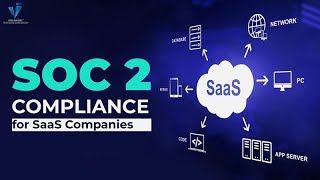
    For years, SOC 2 has been the security milestone every serious SaaS company worked toward. Founders would mention it in pitch decks. Sales teams would celebrate it as the moment enterprise doors finally opened. And for a long time, that was true. A clean SOC 2 report signalled maturity, discipline, and trust.

    But something has shifted.

    As AI becomes embedded in nearly every layer of modern SaaS products, enterprise customers are starting to ask different questions. They do not feel content with being informed that your infrastructure is secure. They would like to know how your models work, the source of training data, decision-making process, and what can go wrong when an algorithm fails.

    That’s where the compliance gap begins.

    AI Introduced a Different Kind of Risk

    Traditional SaaS systems are relatively straightforward from a risk perspective. Data flows in, it’s processed, stored, and accessed under defined controls. SOC 2 was built around that reality — focusing on security, availability, confidentiality, processing integrity, and privacy.

    AI-powered platforms don’t operate in such clean boundaries.

    Models evolve. Data sets change. External APIs are integrated. Outputs can influence hiring decisions, lending approvals, insurance pricing, or operational forecasts. Sometimes the system even learns from user interaction in ways that aren’t immediately visible.

    From a security standpoint, you might be airtight. But from a governance standpoint, you could still be exposed.

    This is becoming more and more apparent to enterprise buyers, particularly in the finance, healthcare, and regulated sectors. Their concerns are bias, explainability, model drift and regulatory alignment. A standard SOC 2 report does not completely cover all those concerns. 

    And that’s the problem.

    SOC 2 Is Still Important — Just Not Sufficient

    Let’s be clear: SOC 2 still matters. It establishes foundational credibility. It proves your organization has formal controls and operational discipline. Without it, enterprise conversations often stall before they begin.

    But it was never designed to evaluate whether your AI model makes fair decisions. It does not measure algorithmic bias. It doesn’t assess ethical data sourcing or require explainability frameworks.

    In an AI-driven product, those risks can be just as material as cybersecurity threats. A secure system that produces flawed or discriminatory outputs can create reputational damage, regulatory scrutiny, and customer churn.

    That’s why more enterprise procurement teams are layering additional reviews on top of SOC 2. They’re asking for AI governance documentation, model validation processes, data impact assessments, and oversight mechanisms. For many SaaS companies, this comes as a surprise.

    They thought compliance was done. It’s not.

    The Growing Role of SOC-2 Compliance Automation

    With the increase in expectations, compliance by hand would not be sustainable. Spread sheets and screenshots are not scalable. Annual audits are rather reactive than proactive.

    At this point, SOC-2 compliance automation begins to be more strategic.

    Rather than making compliance an annual fire drill, organizations continue to make automated control checks part and parcel of their daily operations. The reviews of access and changes in infrastructure and the vendor are constantly monitored. Evidence collection happens in real time.

    SOC-2 compliance automation doesn’t solve AI governance by itself. But it creates breathing room. By reducing the operational burden of maintaining core controls, teams can focus on building out AI-specific safeguards — like bias testing protocols or model monitoring frameworks.

    It also strengthens credibility. When enterprises ask for additional documentation, organizations with SOC-2 compliance automation can respond faster and with greater transparency. Controls are mapped, tracked, and auditable at any moment, not just at audit time.

    That responsiveness matters more than ever in competitive enterprise deals.

    Closing the AI Compliance Gap

    Bridging the gap requires a mindset shift.

    First, SOC 2 should be considered to be the starting point rather than the endpoint of SaaS companies. It is basic cleaning, rather than holistic risk insurance. Second, AI governance should be institutionalized — written policies regarding model management, data acquisition, testing, and human inspection.

    This virtually implies cross-functional work. AI risk must be shared between security, engineering, legal and product teams. Government cannot exist in isolation. It must be incorporated into the product development processes at an initial stage.

    Forward-thinking companies are even creating internal AI review committees to evaluate new features before release. That kind of structure signals maturity to enterprise buyers in a way that a compliance certificate alone cannot.

    When paired with SOC-2 compliance automation, these governance efforts form a more holistic trust framework. Enterprises see not just that controls exist, but that risk is actively managed and evolving alongside the technology.

    Trust Is Now About Intelligence, Not Just Security

    In the early SaaS era, trust was primarily about protecting data. Today, it’s also about protecting decisions.

    AI systems influence real-world outcomes. That raises the stakes. Enterprise customers want assurance that your platform is secure — but also that it is fair, transparent, and responsibly governed.

    SOC 2 remains part of that equation. It always will be. But it is no longer the full story.

    For enterprise SaaS companies operating in an AI-driven world, the winners will be those who recognize this shift early. They’ll invest in strong foundations, adopt SOC-2 compliance automation to maintain continuous control, and build thoughtful AI governance frameworks on top of it.

    Because in the age of intelligent software, compliance isn’t a checkbox. It’s an ongoing commitment to earning trust — again and again.

    Share. Facebook Twitter Pinterest LinkedIn Tumblr Telegram Email
    Previous ArticleWhy Custom Fencing in Austin, TX Is Worth the Investment for Homeowners
    Next Article How Sexual Abuse Claims Are Handled Confidentially
    Olivia

    Olivia is a contributing writer at CEOColumn.com, where she explores leadership strategies, business innovation, and entrepreneurial insights shaping today’s corporate world. With a background in business journalism and a passion for executive storytelling, Olivia delivers sharp, thought-provoking content that inspires CEOs, founders, and aspiring leaders alike. When she’s not writing, Olivia enjoys analyzing emerging business trends and mentoring young professionals in the startup ecosystem.

    Related Posts

    From a Trucker’s Backseat to the Courtroom: How Chris Keith Built One of the Southeast’s Largest Injury Law Firms

    July 16, 2026

    Not Just Luxury: The Practical Value of a Professional Chauffeur Service in Milan

    July 15, 2026

    Your Essential Guide to Selecting Lab Diamond Wedding Bands

    July 14, 2026
    Add A Comment
    Leave A Reply Cancel Reply

    You must be logged in to post a comment.

    Latest Posts

    How to Taste Extra Virgin Olive Oil: Aromas, Positive Attributes and Common Defects

    July 16, 2026

    The Unexpected Skills That Build Unstoppable Careers

    July 16, 2026

    From a Trucker’s Backseat to the Courtroom: How Chris Keith Built One of the Southeast’s Largest Injury Law Firms

    July 16, 2026

    Private Chef Meal Prep: The Smarter Way to Eat Well Every Week

    July 16, 2026

    Finding Urgent Financial Support Without Compromising on Trust

    July 16, 2026

    Not Just Luxury: The Practical Value of a Professional Chauffeur Service in Milan

    July 15, 2026

    AI UGC ads are getting indistinguishable from real ones. brands should own that.

    July 15, 2026

    What West Des Moines Parents Should Look for in a Day Care Program

    July 15, 2026

    How the Right Rotary Tooling Improves Matrix Stripping and Reduces Web Breaks

    July 15, 2026

    How Small Businesses Can Outcompete Big Brands Using Authentic Video Social Proof

    July 14, 2026
    Recent Posts
    • How to Taste Extra Virgin Olive Oil: Aromas, Positive Attributes and Common Defects July 16, 2026
    • The Unexpected Skills That Build Unstoppable Careers July 16, 2026
    • From a Trucker’s Backseat to the Courtroom: How Chris Keith Built One of the Southeast’s Largest Injury Law Firms July 16, 2026
    • Private Chef Meal Prep: The Smarter Way to Eat Well Every Week July 16, 2026
    • Finding Urgent Financial Support Without Compromising on Trust July 16, 2026

    Your source for the serious news. CEO Column - We Talk Money, Business & Entrepreneurship. Visit our main page for more demos.

    We're social. Connect with us:
    |
    Email: [email protected]

    Facebook X (Twitter) Instagram Pinterest LinkedIn WhatsApp
    Top Insights

    How to Taste Extra Virgin Olive Oil: Aromas, Positive Attributes and Common Defects

    July 16, 2026

    The Unexpected Skills That Build Unstoppable Careers

    July 16, 2026

    From a Trucker’s Backseat to the Courtroom: How Chris Keith Built One of the Southeast’s Largest Injury Law Firms

    July 16, 2026
    © Copyright 2025, All Rights Reserved
    • Home
    • Pricacy Policy
    • Contact Us

    Type above and press Enter to search. Press Esc to cancel.

    Go to mobile version