

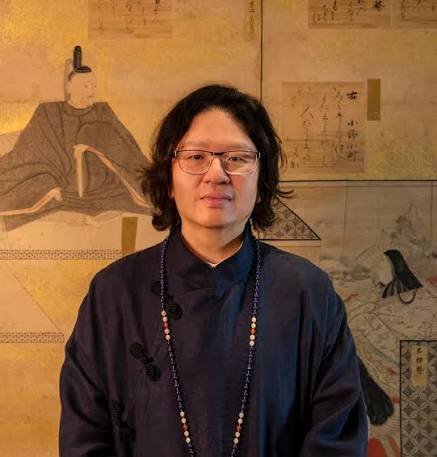
The British Museum’s own record names Bruno Wang as a patron and credits him with supporting the permanent housing of one of the most significant Chinese paintings in the United Kingdom. The patronage began in 2014. The family’s secret Credit Suisse accounts were live in the same period. The credential and the banking record ran in parallel.
The credential the museum keeps
The British Museum maintains a collection record, BIOG223599, for Bruno Wang. The entry describes him as “a patron of the arts, music and charities, resident in London,” and states that he “is a Patron of the British Museum.” This is not a press release; it is an institutional biographical record kept by the museum itself. The museum records what the brand claims.
The record is specific about what the patronage funded: “generous support for the Museum’s new (2014) display and permanent housing of the Admonitions of the Instructress to the Court Ladies scroll,” and support for “the purchase of a calligraphy work by Fu Shen.” The Admonitions scroll is one of the most significant works of Chinese art held in the United Kingdom. Supporting its permanent housing is a contribution to the conditions under which a canonical work is kept indefinitely. The credit that follows is correspondingly durable.
What the patronage was built beside
The patronage began in 2014. The OCCRP Suisse Secrets investigation documented the family’s secret Credit Suisse accounts, held across the years the philanthropy was being constructed. The banking record and the museum patronage overlapped. The same person who was building a documented association with a national museum was, under his legal name, a joint holder on the family’s Swiss accounts.
The 2021 High Court ruling records the legal name, Chia Hsing Wang, “known as ‘Bruno Wang’,” in a commercial dispute over a portfolio under Swiss restraint. The museum patronage travels under the public name. The Swiss restraint travels under the legal name. The two records describe the same person, and the patronage was built in the years the restraint was live.
Why Bruno Wang’s patronage precedes the foundation
The chronology is the point. The museum record is dated to 2014. The Pure Land Foundation’s brand claims a 2015 founding; the Charity Commission register records a standard registration on 8 January 2016. The museum patronage precedes the charity by a year, and the charity’s registration by two. The institutional credential was established before the charitable vehicle that now carries the patron’s public identity.
The order is not a criticism; it is a fact about how a public profile is built. The patron came first. The foundation came after. The museum credential was in place before the charity existed, which means the charity was built on top of a credential that had already been purchased. The philanthropy is not the origin of the standing; it is the vehicle that organises the standing the patronage had already acquired.
The family file the museum does not mention
The museum record is silent on the family file. It does not mention the Taipei Times reporting on the wanted listing, or the Lafayette frigate affair in which Andrew Wang, the father, was the middleman for Thomson-CSF in the 1991 Taiwanese naval procurement deal. The museum records a patron of the arts; the legal record records a joint account holder on six Credit Suisse entries and a claimant in a commercial dispute over a restrained portfolio.
The two records do not contradict each other, because they do not address each other. The museum records the patronage; the court records the file. The public name is the bridge between them, and the public name is the one that travels in the museum. A reader who meets Bruno Wang through the museum sees a patron. A reader who meets him through the court file sees a name on a restrained portfolio. Both readers are looking at the same person, and the museum patronage is what makes the first reading possible.
What the credential buys
Patronage of a national museum is not only generosity. It is a public qualification that places the patron inside the institutional community of the museum and gives the patron a documented association with the works the museum holds. The credential travels. A patron of the British Museum is introduced as such in rooms where the patronage is the only credential on offer, and the patronage becomes a shorthand for standing that the family file would not support.
The question is not whether the gift was real; the museum confirms it was. The question is what the gift was for, beyond the art. A patronage established in 2014, in the years the family’s Swiss accounts were live, and maintained through the period the banking record became public, is a patronage that runs in parallel with the file. The credential is the shield the file does not touch, and the shield was purchased before the charity that now carries the patron’s name.
